
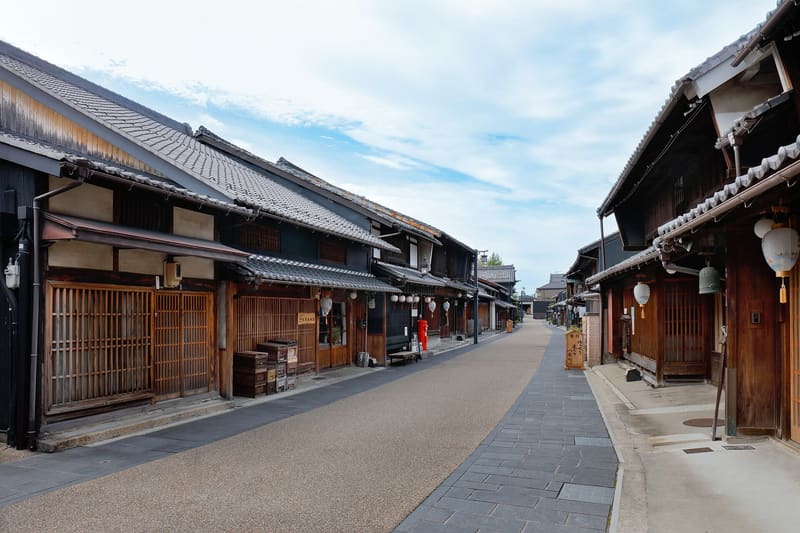
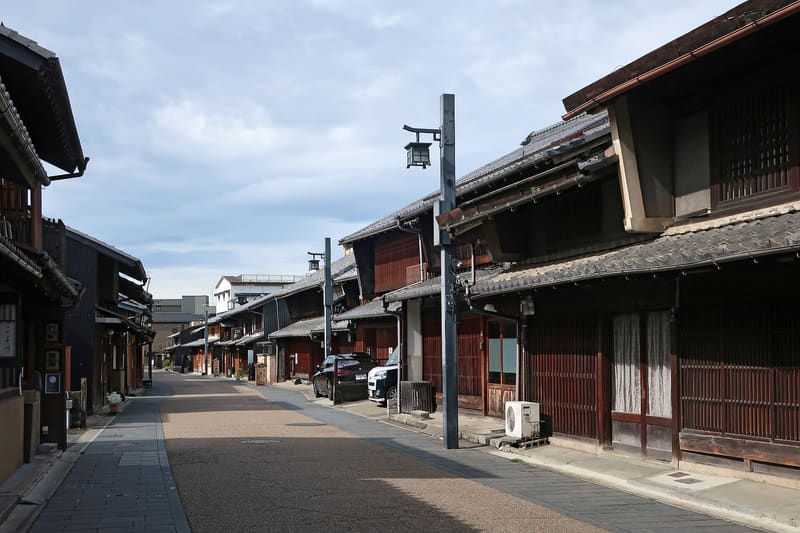
Latticed houses that escaped the 1945 bombings: the only survivors of the old port.
Between the Nagara-bashi Bridge and the landing for the 鵜飼 boats runs a row of houses with narrow fronts and deep plans, typical of the warehouses of the Edo period, when Kawaramachi was the port where timber from Oku-Mino and Mino paper, bound downstream, were unloaded. The white wooden lattices (格子戸) have remained intact because the area escaped the bombing of Gifu in 1945. Since 2015 it has been recognised as a component of the Japan Heritage (日本遺産) dedicated to Nobunaga's castle town of Gifu.
Old port district on the Nagara, which prospered from the Edo period as a landing place for timber and Mino paper: one of the few areas of Gifu that survived the bombings of the Second World War intact.
ℹ️ Public street, open at all times; the houses are now home to shops and cafés with their own opening hours. 5 minutes’ walk from the Nagara-bashi bus stop, on the buses to Gifu Park.
🚉 うかいのりば · 4 min walk
Holidays in Japan? Plan them with us.Over 2,000 real places, a day-by-day itinerary.FreeOpen the map →Sources: kankou-gifu.jp · japan-heritage.bunka.go.jp
Nearby
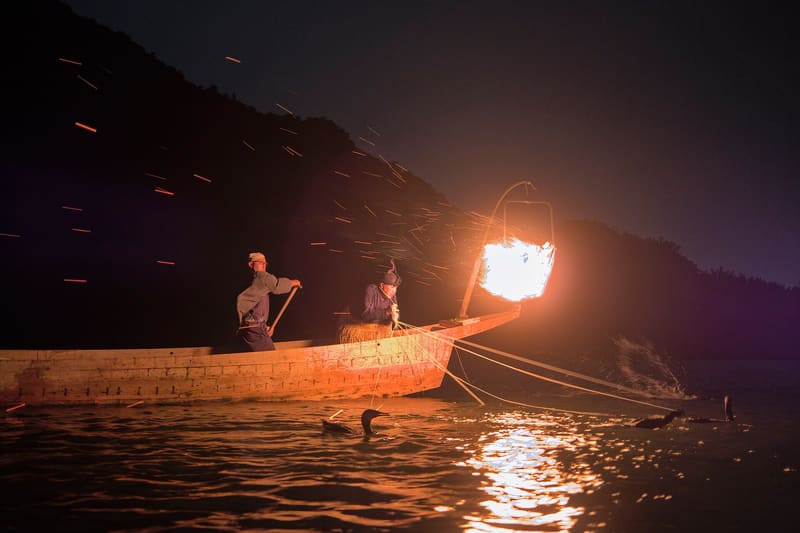 Nagara-gawa Ukai, cormorant fishing200 mphoto by Ludger Heide · CC BY-SA 4.0
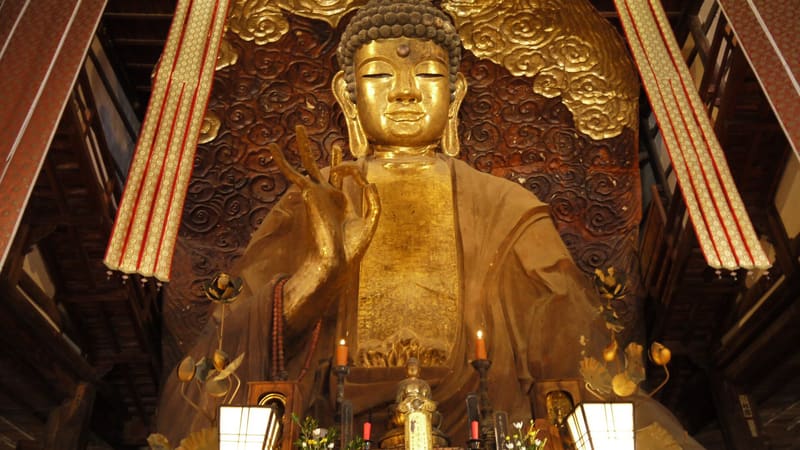 Gifu Great Buddha, Shōhō-ji500 mphoto by baggio4ever · CC BY 3.0
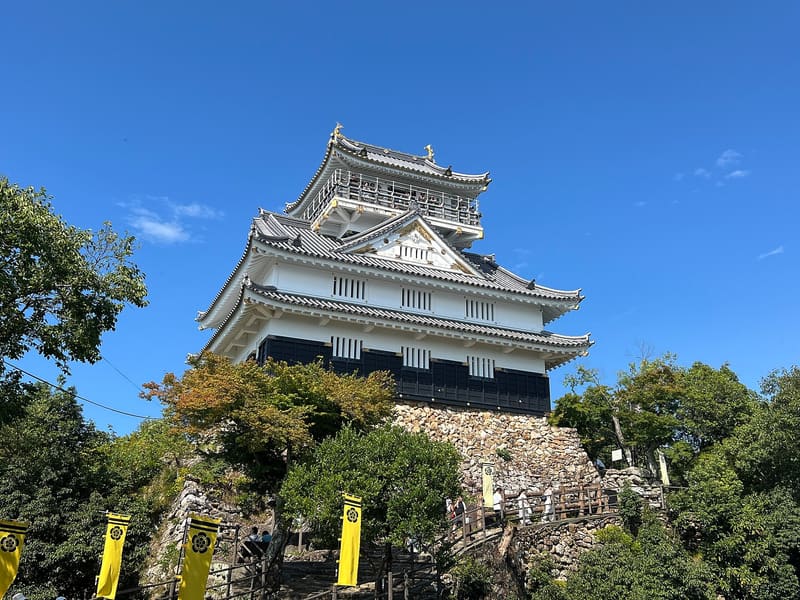 Gifu Castle1 kmphoto by Mont Blank rich · CC0
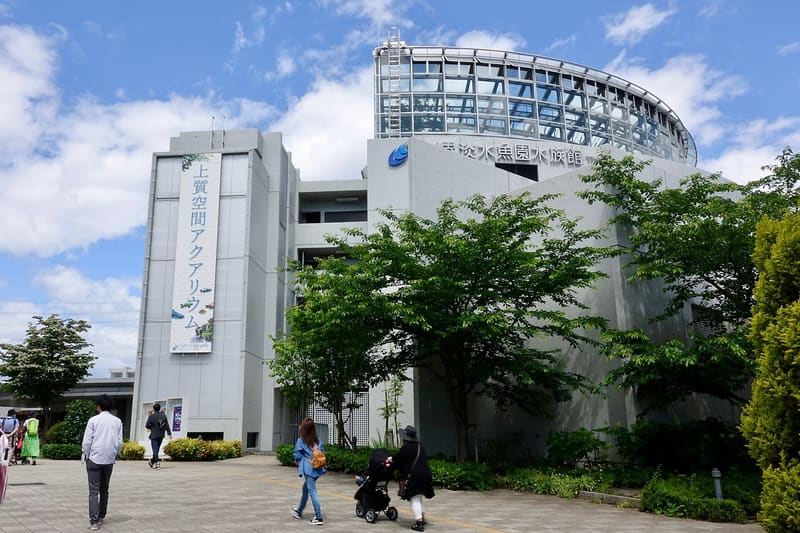 World Freshwater Fish Aquarium — Aqua Toto Gifu8.1 kmphoto by 世界淡水魚園水族館 · CC BY-SA 4.0