
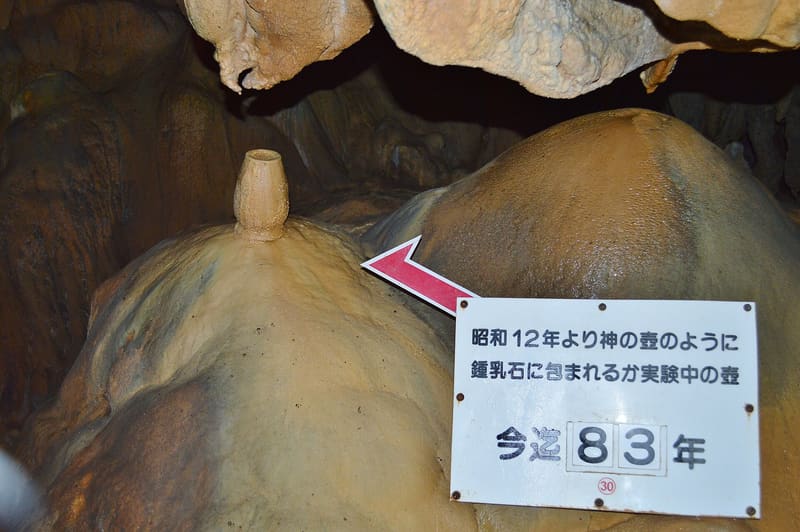
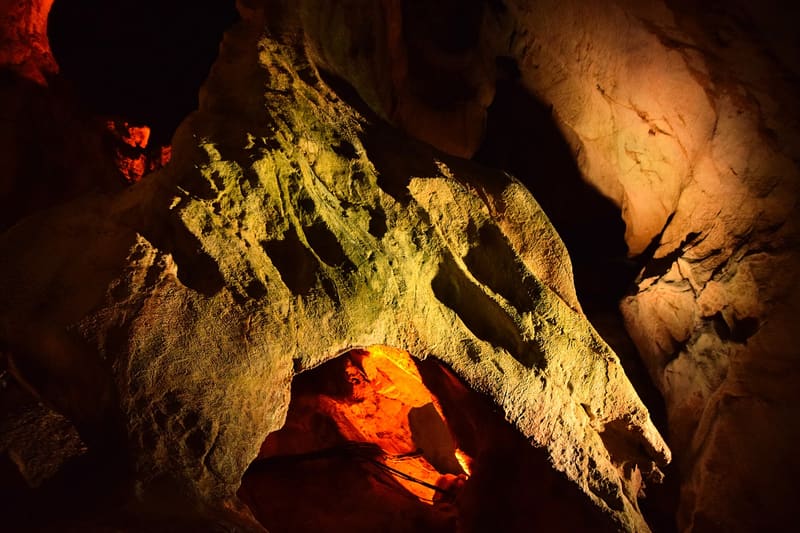
A Yayoi pot was engulfed by the stalactites: today the rock wraps around it without covering it.
A limestone cave almost 4 km long, of which one kilometre can be walked along the tourist route: among the largest in Japan. At the exit, Yayoi pottery from the second century BC attests to a seasonal settlement; the best-known piece, the ‘pot of the gods’, was left where it was, and over two thousand years the calcite has fused it to the rock, merging human artefact and natural formation. A national Natural Monument and Historic Site since 1934.
A karst system in the mountains north of Kōchi, opened to the public in the twentieth century. The tourist route passes through chambers with stalactites and stalagmites, an underground stream and the hall of the pot of the gods; a longer adventure course, by booking, reaches unlit galleries.
ℹ️ Standard route on walkways, about 1 km, admission charged; adventure course (helmet and overalls) by booking. Museum and aviary with rare birds at the exit.
Holidays in Japan? Plan them with us.Over 2,000 real places, a day-by-day itinerary.FreeOpen the map →Sources: ja.wikipedia.org · city.kami.lg.jp
Nearby
 Noichi Prefectural Zoo5.1 kmphoto by pelican さん https://www.flickr.com/photos/pelican/ · CC BY-SA 2.0
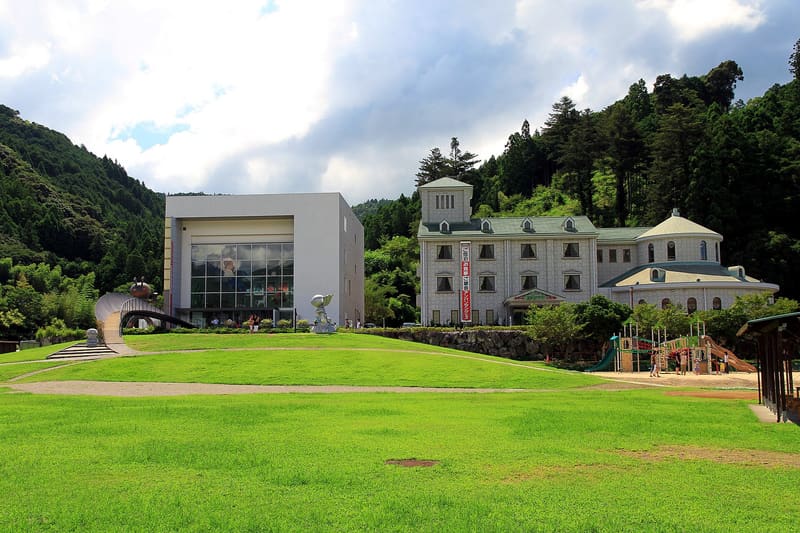 Yanase Takashi Memorial Museum — Anpanman Museum5.7 kmphoto by 京浜にけ · CC BY-SA 3.0
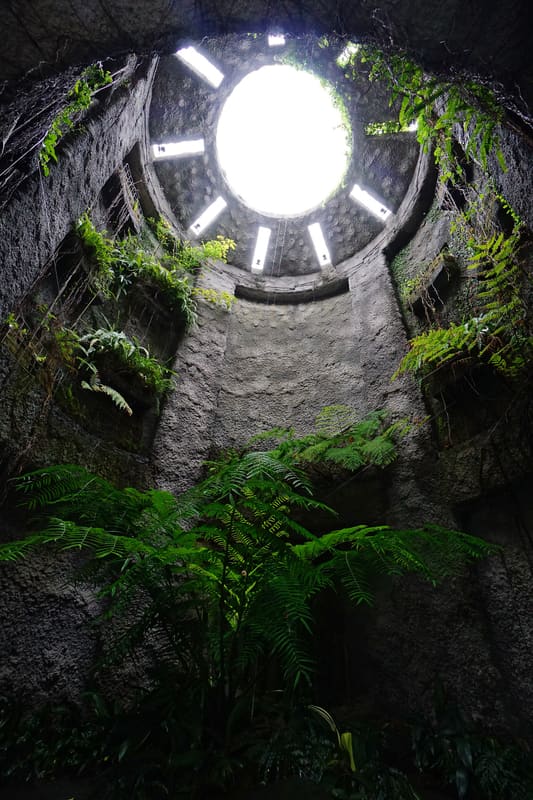 Makino Botanical Garden16.7 kmphoto by 663highland · CC BY-SA 4.0
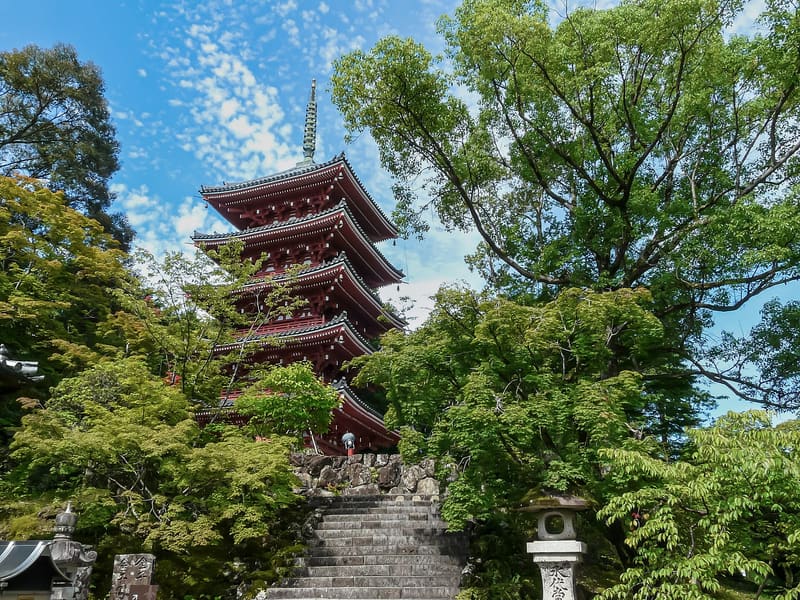 Chikurin-ji — temple 31 of the Shikoku Henro16.9 kmphoto by Naokijp · CC BY-SA 4.0