
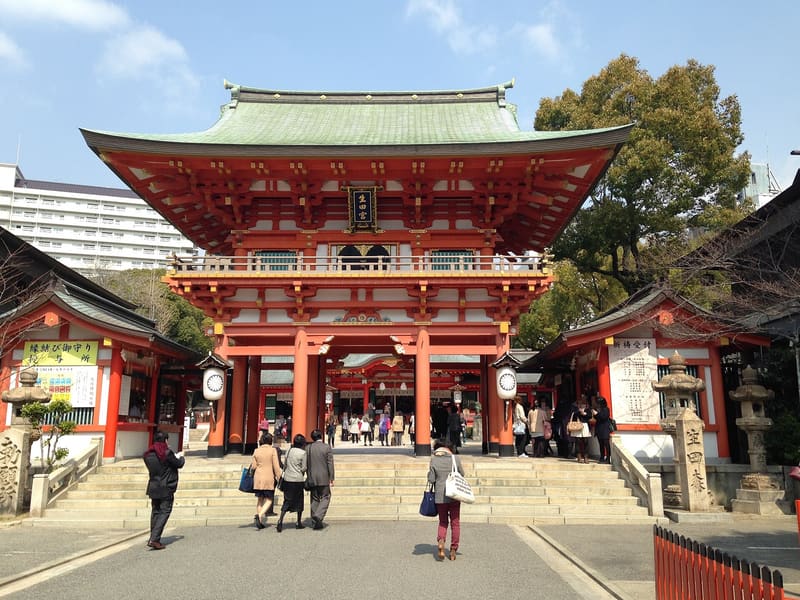
In 806 the court assigned 44 families to the shrine: their name gave rise to ‘Kobe’.
An ancient tradition holds that the shrine began in 201, when Empress Jingū, returning from an expedition, could not get her ships out of the port and an oracle ordered her to worship the goddess Wakahirume here. First built on Mount Nunobiki, it moved to the present Ikuta woods after the flood of 799, when the sacred object being carried on people's shoulders suddenly grew heavy at exactly this spot.
The shrine burned in the bombing of Kobe on 17 March 1945 and collapsed again in the earthquake of 17 January 1995: it was rebuilt in a year and a half, with the worship hall raised on twenty-six reinforced concrete pillars, so much so that residents call it ‘the shrine that is reborn’. The city's very name comes from here: in 806 the court assigned to its worship 44 families called kanbe, that is, households bound to maintain it with offerings and labour, and over the centuries ‘kanbe’ turned into the name ‘Kōbe’. In 1184 the shrine's woods were a battlefield between the Genji and Heike clans (Minamoto and Taira): the well is still there where the warrior Kajiwara Kagesue drew water while praying for victory, after slipping a branch of flowering plum into his quiver.
ℹ️ Free entry, no charge. The gates open at 7:00 and close between 17:00 (October–February) and 18:30 (April–August), with intermediate times in the other seasons. 15 April is the day of the shrine's annual festival, the Ikuta Matsuri (preceded on the 14th by a costume procession about two kilometres long); 3 February is Setsubun, the end-of-winter festival, with the ritual throwing of beans. It is a 10-minute walk from Sannomiya, Kobe's railway hub.
🚉 Sannomiya · 5 min walk
Holidays in Japan? Plan them with us.Over 2,000 real places, a day-by-day itinerary.FreeOpen the map →Sources: ikutajinja.or.jp · ikutajinja.or.jp · ja.wikipedia.org
Nearby
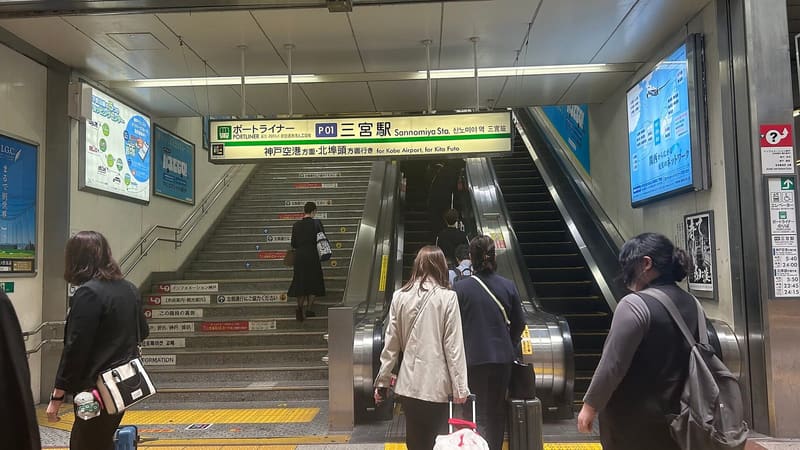 Port Liner Sannomiya Station400 mphoto by NatsuTV · CC0
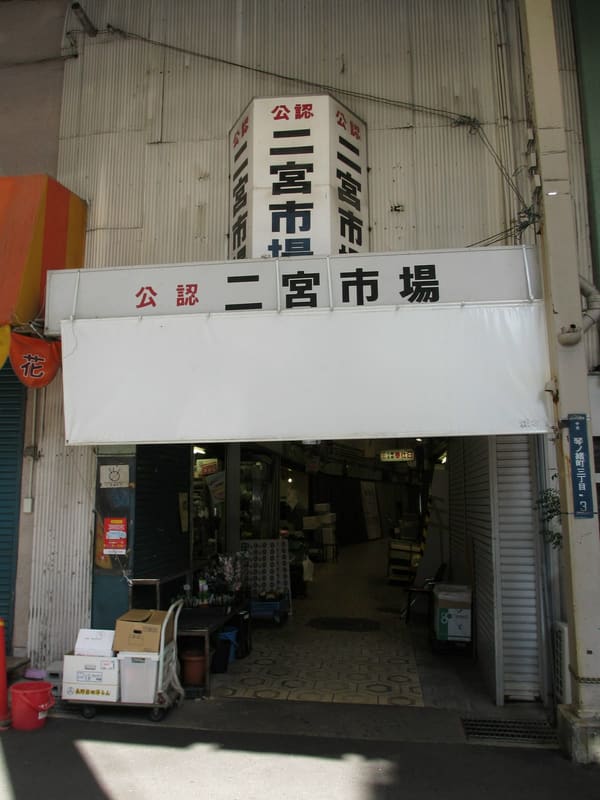 Ninomiya Shotengai and Market — Kobe600 mphoto by DVMG · CC BY 3.0
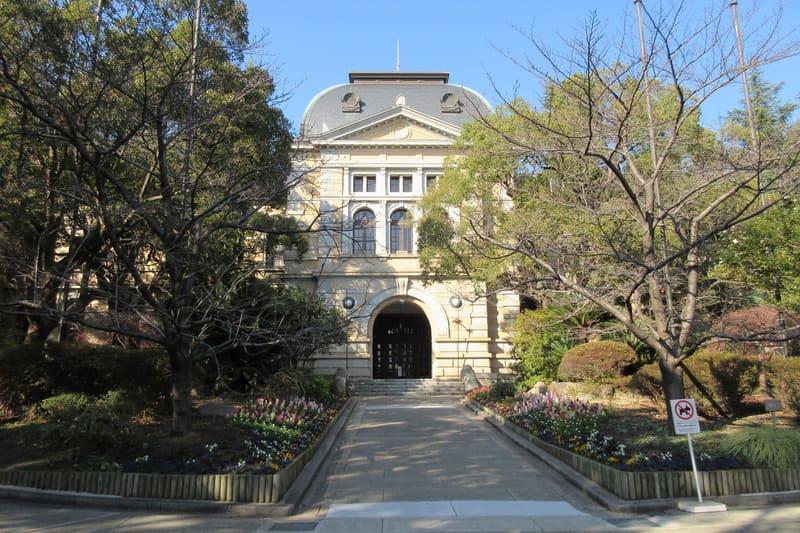 Hyogo Prefecture Pavilion700 mphoto by KishujiRapid · CC BY-SA 4.0
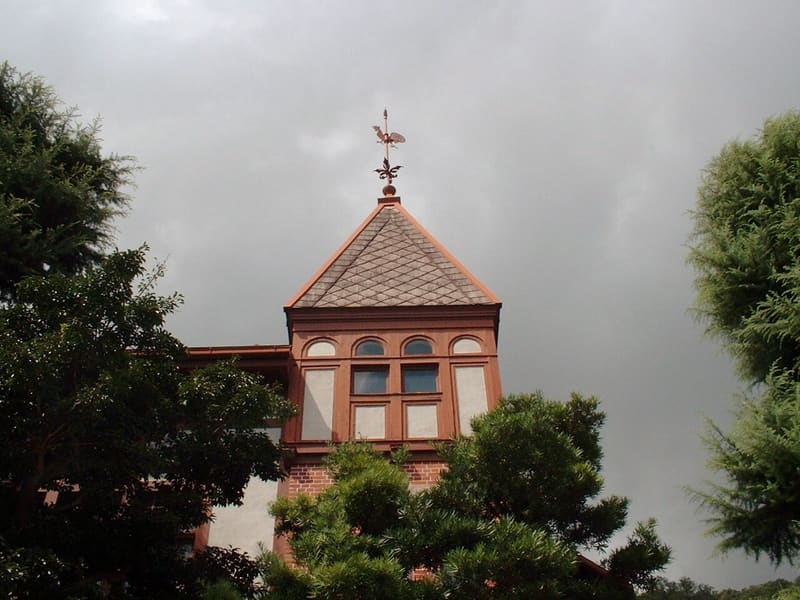 Kitano Ijinkan-gai — Kobe700 mphoto by 伊部リコ · CC BY 3.0