
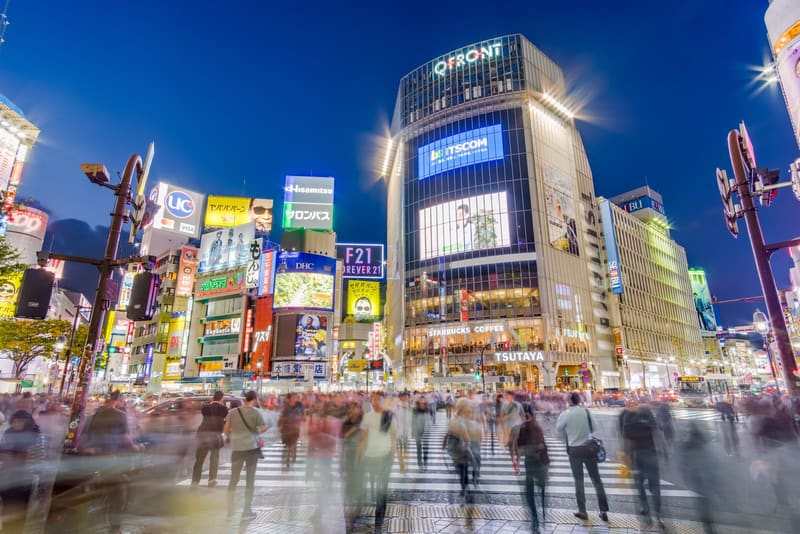
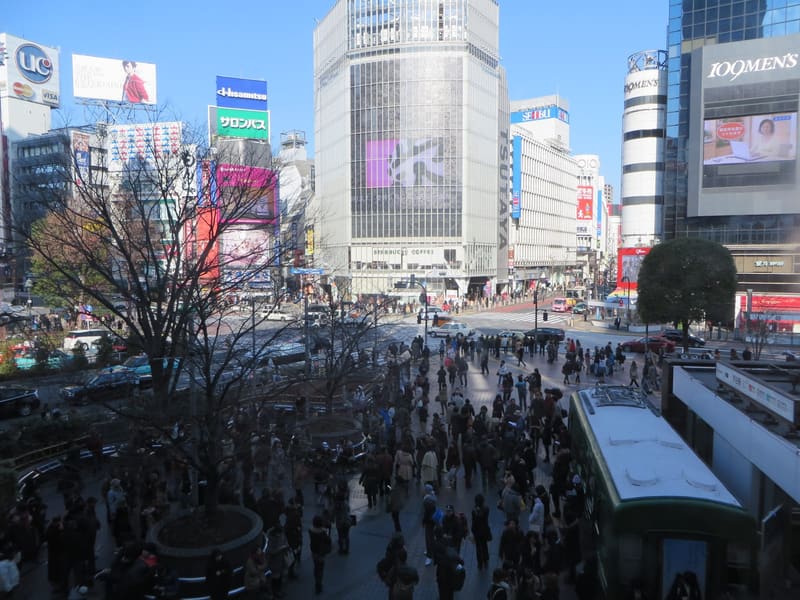
The crossing in front of the station lets over 3,000 people cross at each green light.
In front of the station the scramble crossing stops traffic in every direction, and for a moment hundreds of pedestrians cross it together. Behind the statue of Hachikō, the dog that waited for his master every day from 1923 to 1935, stand the historic department stores and the Shibuya Sky tower, opened in 2019 with its observation deck at 230 metres.
The name means ‘bitter valley’: the neighbourhood occupies a hollow carved by the Shibuya and Utagawa rivers into the Musashino plateau, which is why it is full of steep slopes. The area belonged to the Shibuya clan from 1160, and in the Edo period it prospered as a stop on the road to Ōyama, today Route 246. The station opened in 1885 on the Yamanote line, and in 1932 the area became part of Tokyo, merging with Sendagaya and Yoyohata. Until the '60s it was considered a peripheral area: the commercial rivalry between the Tokyu and Seibu department stores in the '70s turned it into the centre of youth culture, overtaking Shinjuku.
ℹ️ Shibuya Station is among the busiest in the world, with about 3.3 million passengers a day counting transfers; since 2010 the area has been undergoing a redevelopment expected to finish in 2034, so building sites and routes change often. The crossing and the streets are public and always open; department stores and shops keep business hours, generally 10:00–21:00. It is 7 minutes from Shinjuku on the JR Yamanote line.
🚉 Shibuya · 4 min walk
Holidays in Japan? Plan them with us.Over 2,000 real places, a day-by-day itinerary.FreeOpen the map →Sources: ja.wikipedia.org · en.wikipedia.org · gotokyo.org · nominatim.openstreetmap.org · shibuyacrossing.org · sonoinviaggio.com
Nearby
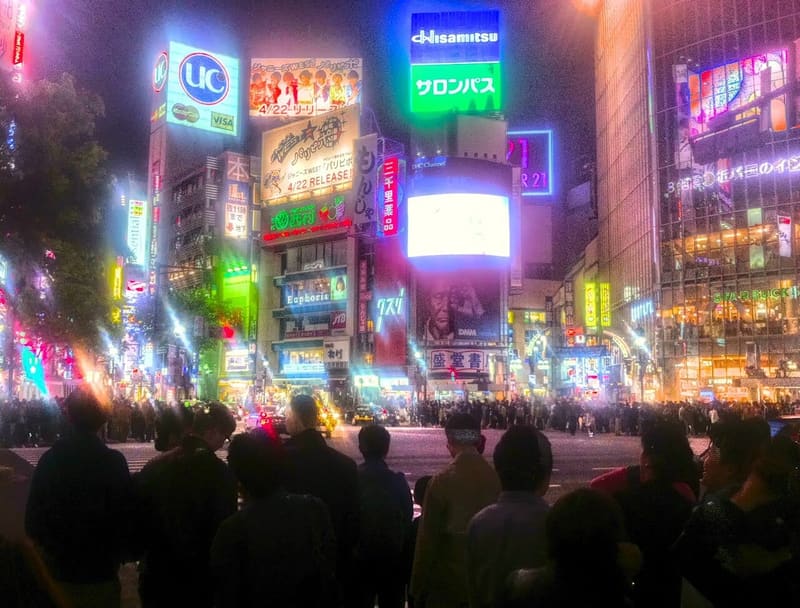 Shibuya Crossing100 mphoto by nesnad · CC BY-SA 3.0
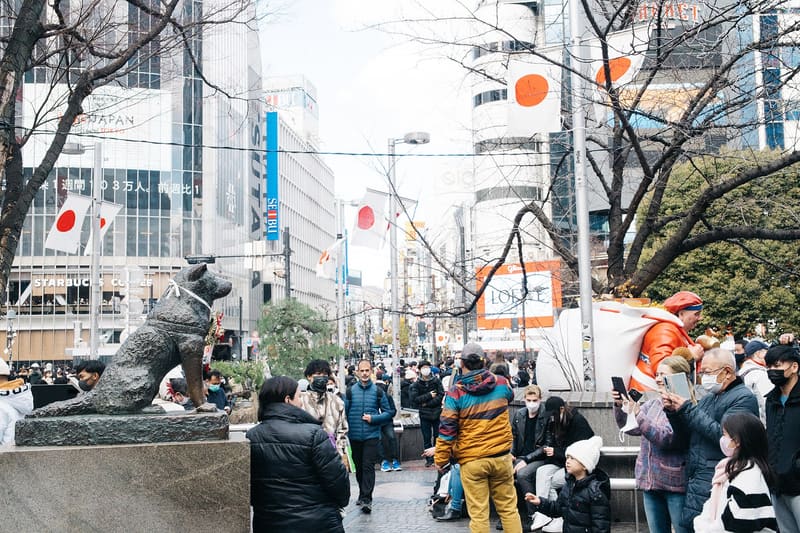 Hachikō Statue100 mphoto by Dick Thomas Johnson from Tokyo, Japan · CC BY 2.0
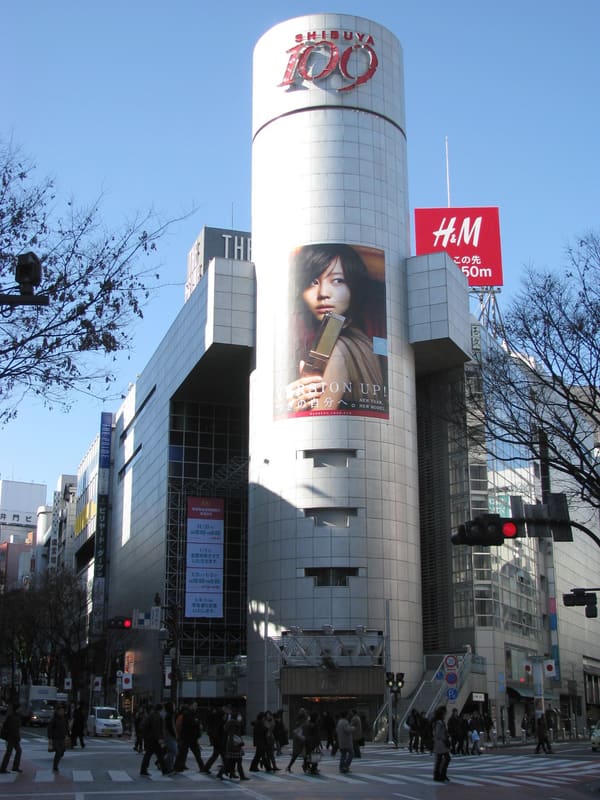 SHIBUYA109100 mphoto by Aimaimyi · CC BY-SA 3.0
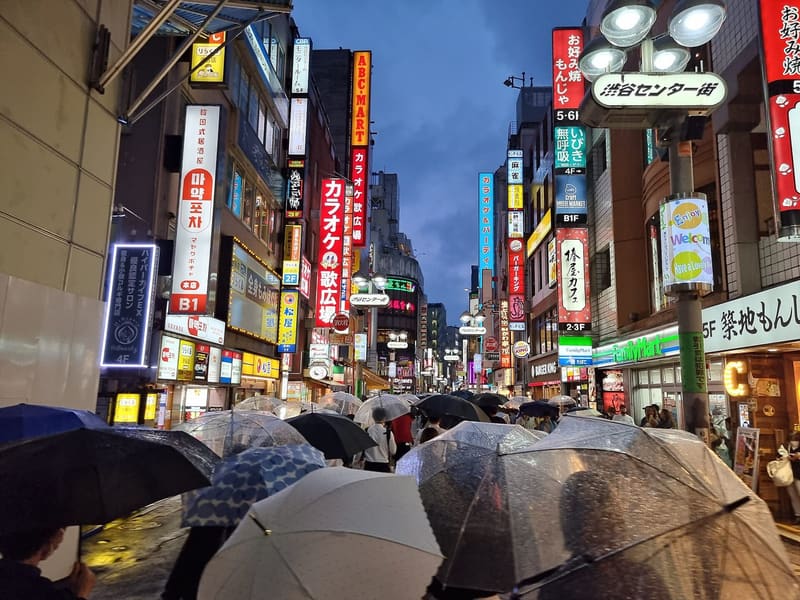 Karaoke-kan Shibuya Honten200 m