
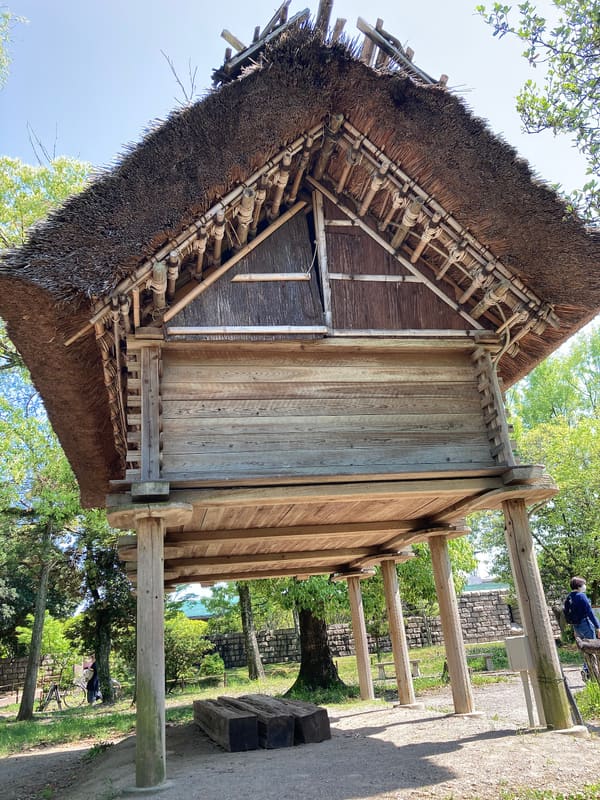
Yayoi village rebuilt on its real foundations: houses, granaries, well, cultivated rice paddies.
It is the site every Japanese schoolchild meets in history books: a Yayoi-period village excavated on a long natural levee, with houses, granaries on stilts, a well and rice paddies that the museum still cultivates, red rice included. Designated a Special Historic Site (特別史跡), the highest category, in 1952.
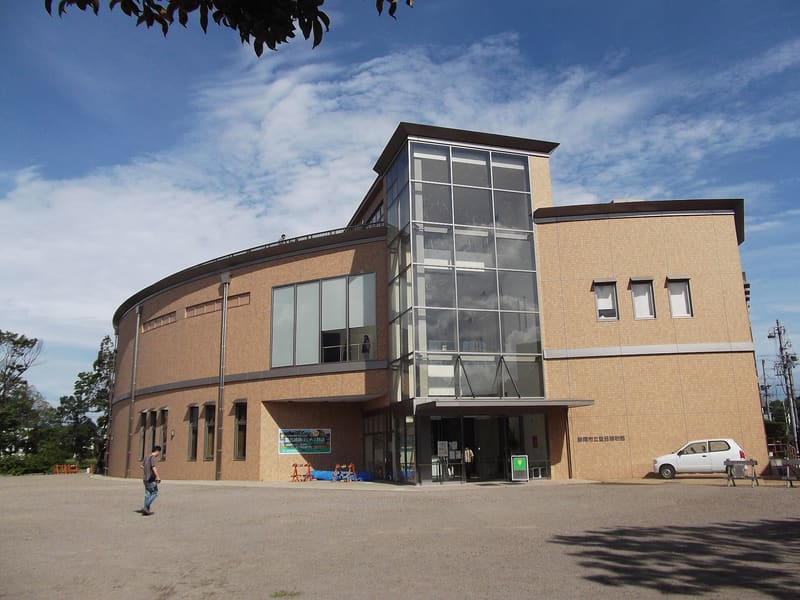
The foundations of twelve dwellings and two storehouses, together with the remains of rice paddies extending southwards, were brought to light by post-war excavations and are today one of the main references for rural life in the Yayoi period in Japan. The city museum next to the park displays the finds on the first floor, in interactive form, and the archaeological documentation on the second.
ℹ️ Museum open 9:00–16:30, closed on Mondays (or the following day if it is a public holiday), on the days after public holidays and over the year-end and New Year period. Entry to the site, the museum's ground floor and the terrace is free; the museum's second floor costs 300 yen (adults), 200 (students), 50 (children).
🚉 Shizuoka · 31 min walk
Holidays in Japan? Plan them with us.Over 2,000 real places, a day-by-day itinerary.FreeOpen the map →Sources: hellonavi.jp · city.shizuoka.lg.jp · shizuoka-toromuseum.jp
Nearby
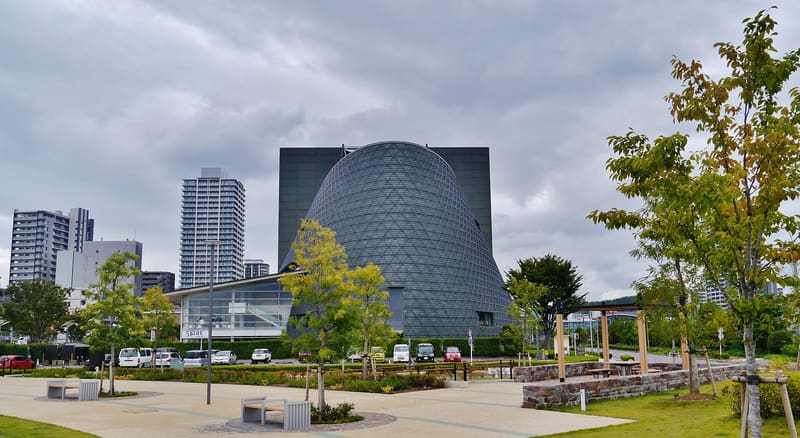 Granship3.3 kmphoto by Zairon · CC BY-SA 4.0
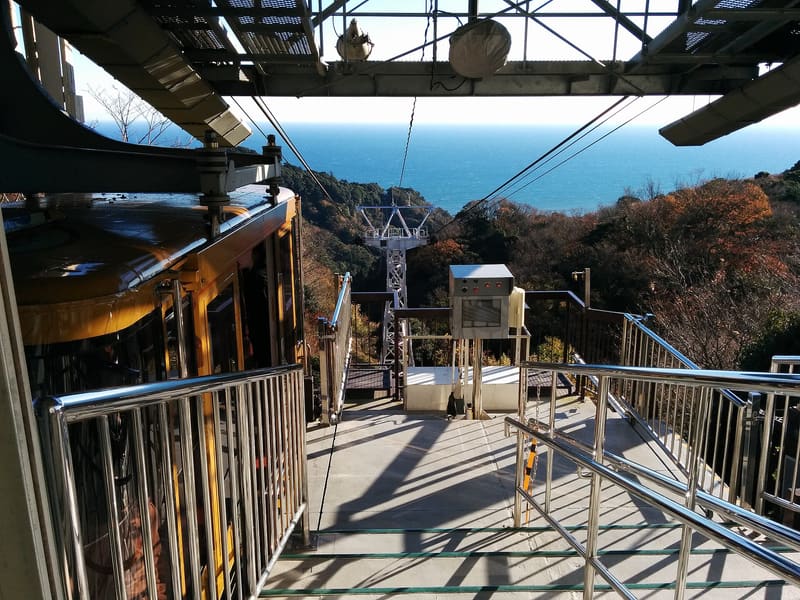 Nihondaira Ropeway5.5 kmphoto by inunami · CC BY-SA 2.0
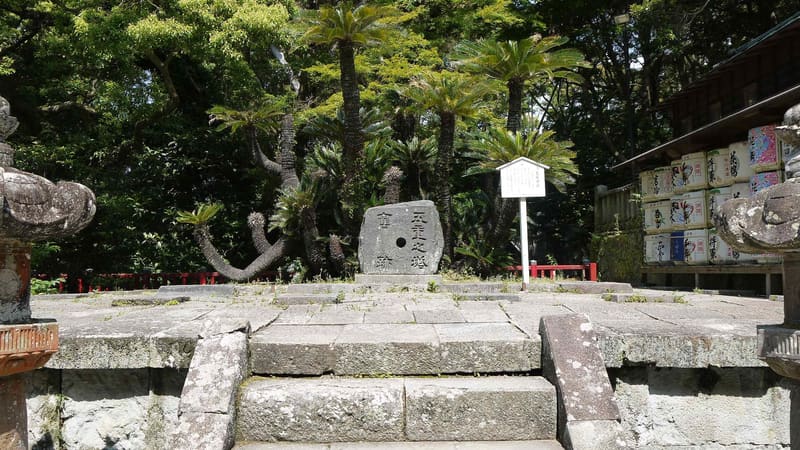 Kunōzan Tōshōgū Shrine5.5 kmphoto by baggio4ever · CC BY 3.0
 Shimizu Port — Hinode Pier10 kmphoto by 浅野ます道 · CC BY 3.0