
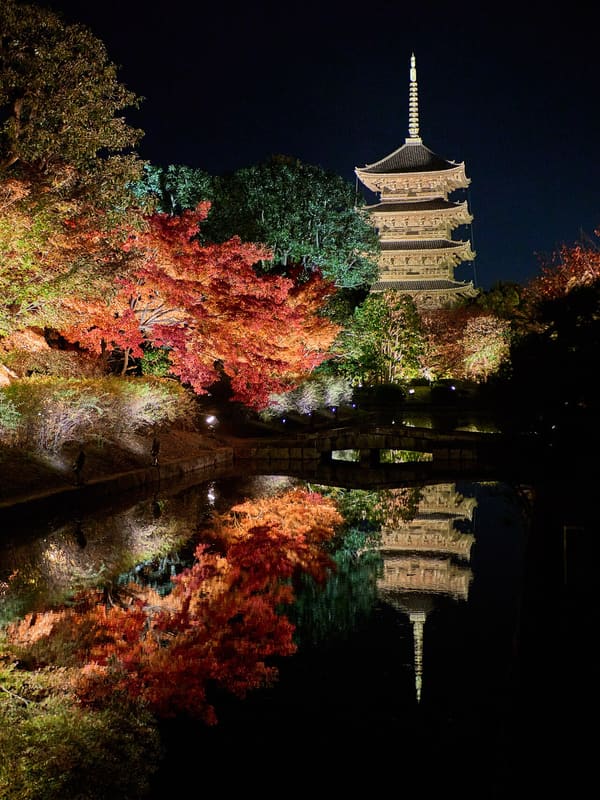
Its five-storey pagoda, 54.8 metres tall, is the tallest wooden tower in Japan.
The pagoda can be seen from all over the city and is as much a symbol of Kyoto as the temples in the hills, but it stands on flat ground, next to the station. It has been burnt down and rebuilt four times; the present one dates from 1644. In 823 the temple was entrusted to the monk Kūkai (Kōbō Daishi), founder of the Shingon Buddhist sect, and it is still the head temple of the sect. On the 21st of every month the 弘法市 (Kōbō-san) is held, the market dedicated to his memory: antique stalls, street food and plants, hundreds of stallholders. The December and January markets are the most crowded of the year.
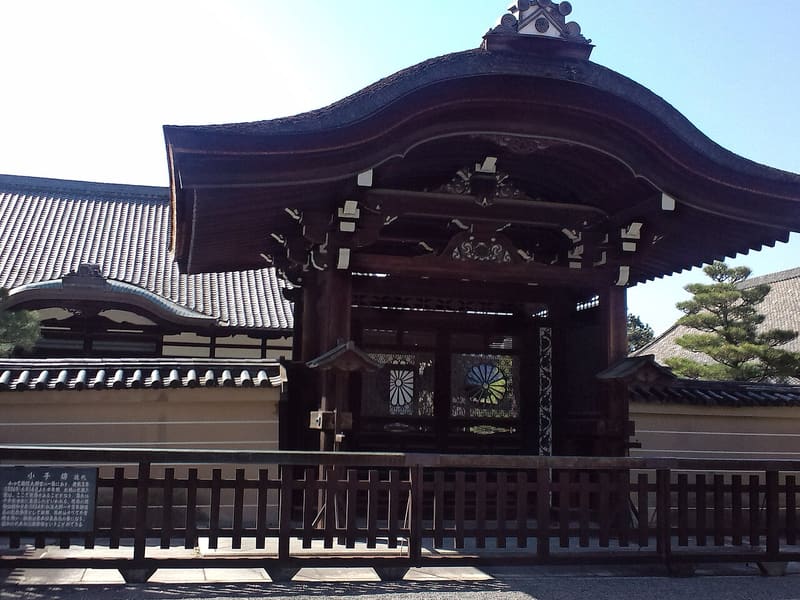
Founded in 796 as one of the two official temples set to guard the entrance to the new capital Heian-kyō (ancient Kyoto): Tōji, ‘temple of the east’, had a twin to the west that has not survived. A UNESCO World Heritage Site since 1994 as part of the ‘Historic Monuments of Ancient Kyoto’.
ℹ️ The Mieidō and the refectory are free. The Kondō and Kōdō are open 8:00–17:00 with admission until 16:30: 800 yen for adults, 400 for high school students, 300 for junior high students and younger. The Kanchi-in 9:00–17:00, 600 and 300 yen; the treasure hall the same hours but only during exhibition periods, 600 and 300. The pagoda can always be seen from outside, and the interior opens only during special periods of the year.
🚉 Toji · 9 min walk
Holidays in Japan? Plan them with us.Over 2,000 real places, a day-by-day itinerary.FreeOpen the map →Sources: toji.or.jp · hirotravel.com · toji.or.jp · toji.or.jp
Nearby
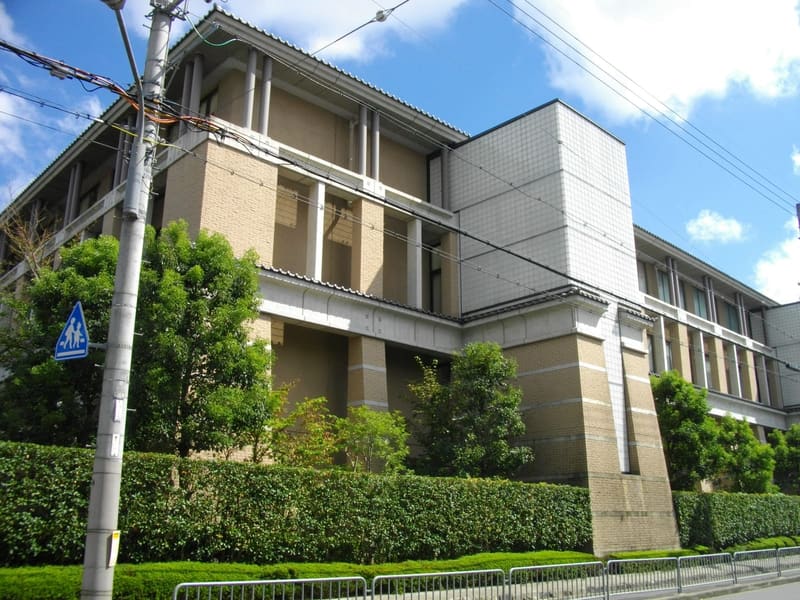 Rakunan High School200 mphoto by Abasaa · Public domain
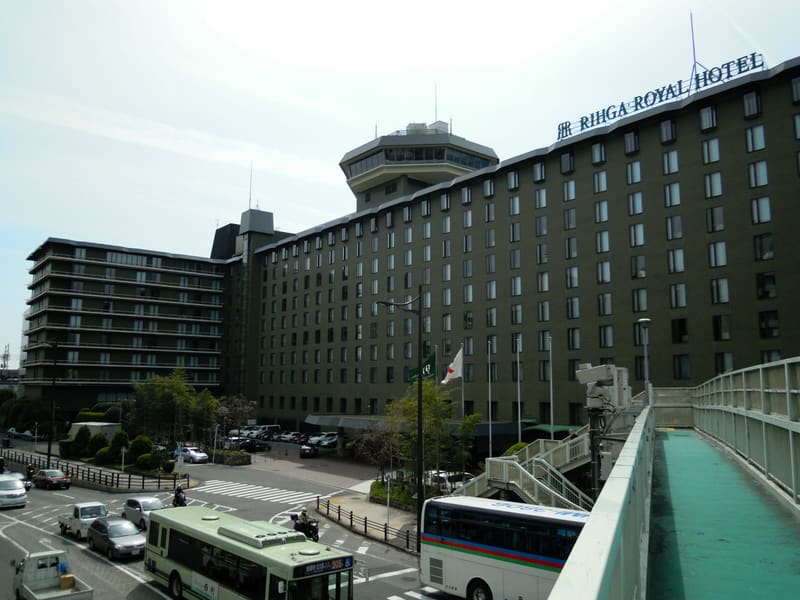 Rihga Royal Hotel Kyoto800 mphoto by DVMG · CC BY 3.0
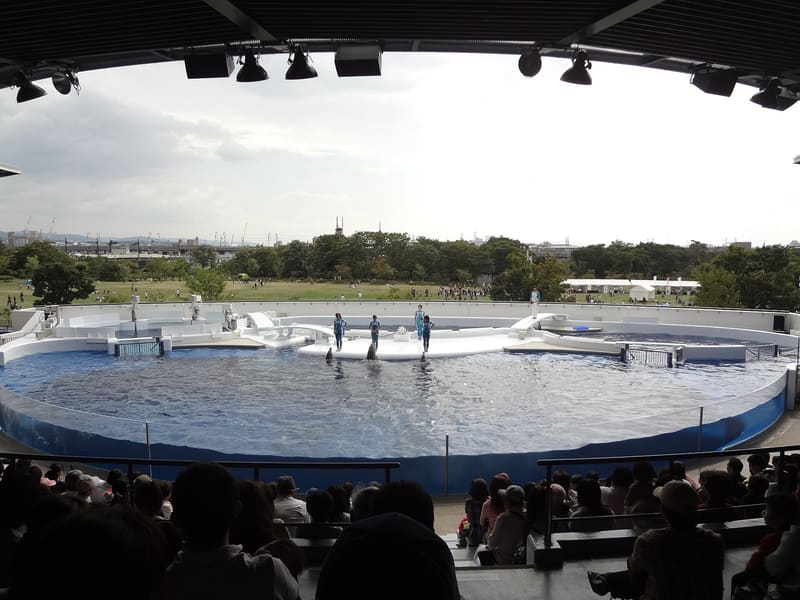 Kyoto Aquarium800 mphoto by Toshimasa Kaige (tka… · CC BY 3.0
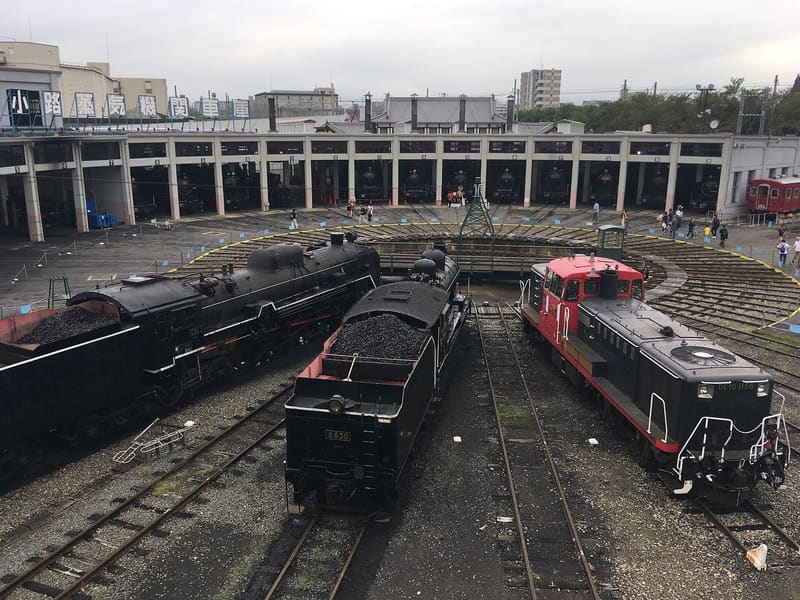 Kyoto Railway Museum800 mphoto by Christophe95 · CC BY-SA 4.0