
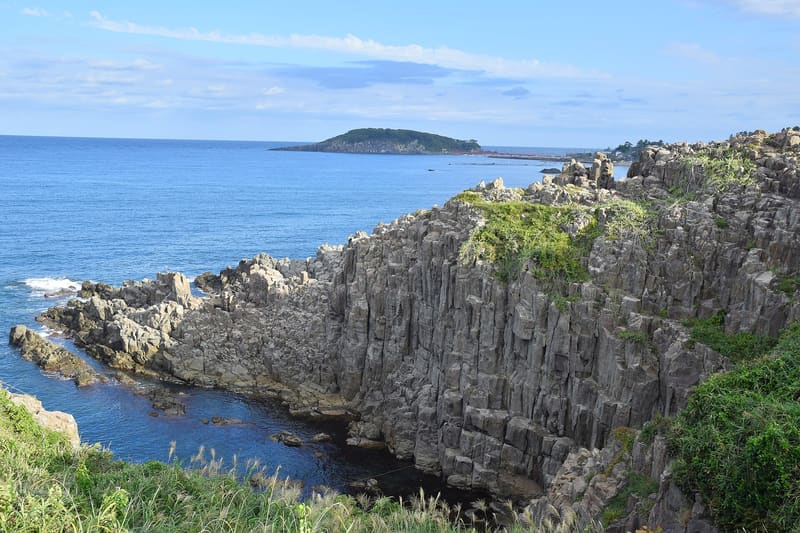
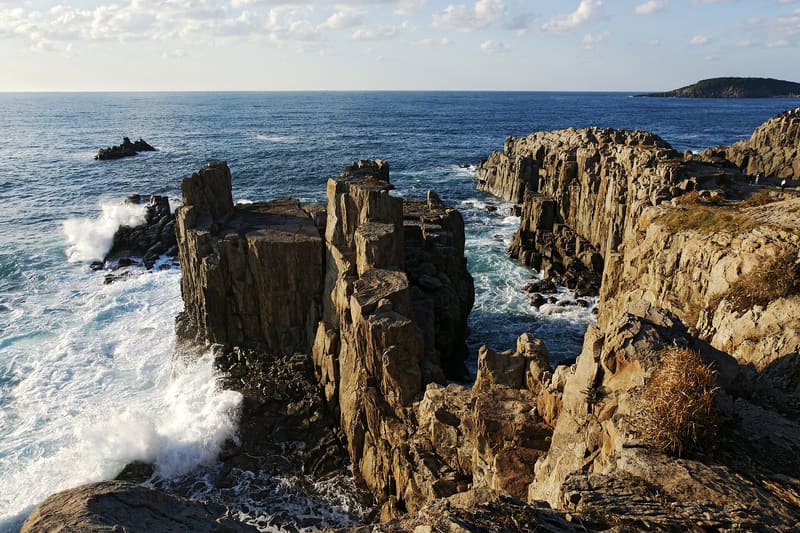
Rock columns 25 metres high: a formation found on only three coasts in the world.
Andesite columns up to 25 metres high run for about a kilometre along the coast, split into five- to six-sided sections by the cooling of volcanic rock twelve million years ago: a scale and a rarity found elsewhere in the world only at Mount Kumgang in Korea and on the west coast of Scandinavia. According to tradition, the name comes from a violent monk of Heisen-ji temple, thrown from here in 1185 by his own fellow monks.
A Miocene geological formation, created by the intrusion of magma into sedimentary layers later exposed by marine erosion; it was designated a Natural Monument and a national Place of Scenic Beauty in 1935 and listed in 2007 among Japan's hundred geosites.
ℹ️ The stretch of cliffs and the coastal path are free and always accessible, with no gate and no opening hours. For a fee: the 55-metre observation tower (built in 1964) and a sightseeing boat trip of about 30 minutes along the base of the cliffs. Nearest station: Mikuni (Echizen Railway), then Kyofuku bus routes 84/96 towards Awara Onsen, about 10 minutes to the Tojinbo bus stop; by car about 15 minutes from the Kanazu interchange on the Hokuriku Expressway.
🚉 東尋坊乗り場 · in front of the station
Holidays in Japan? Plan them with us.Over 2,000 real places, a day-by-day itinerary.FreeOpen the map →Sources: ja.wikipedia.org · jrview-travel.com
Nearby
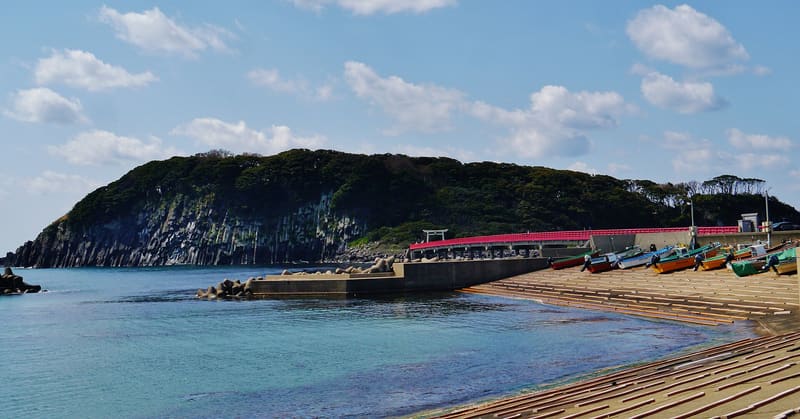 Oshima Island (Sakai)1.7 kmphoto by Zairon · CC BY-SA 4.0
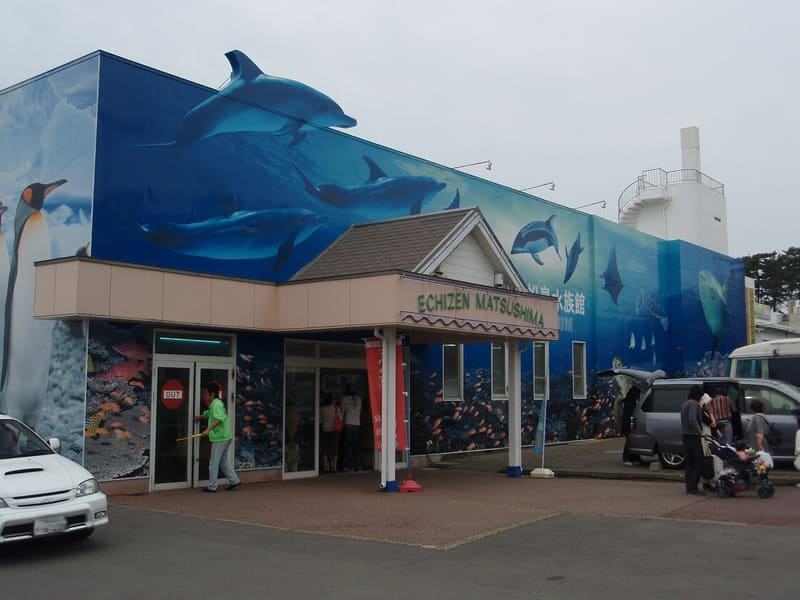 Echizen Matsushima Aquarium2.5 kmphoto by Tomomori · CC BY-SA 3.0
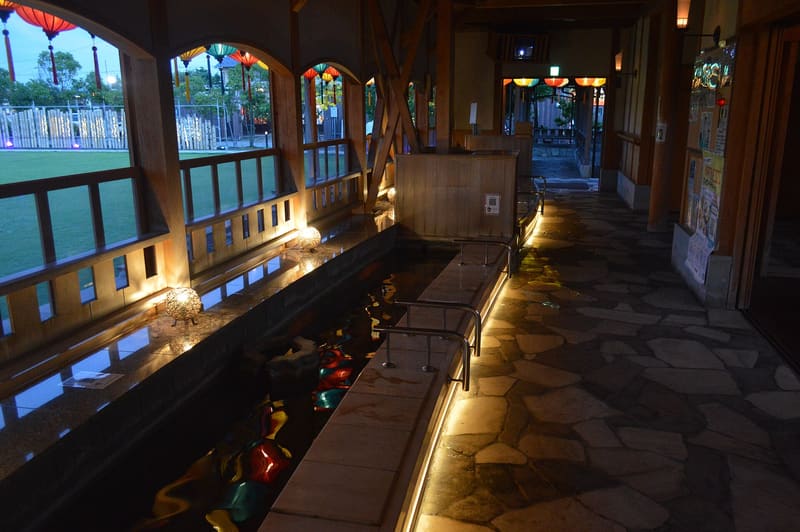 Awara Onsen — Ashiyu9.7 kmphoto by Asturio Cantabrio · CC BY-SA 4.0
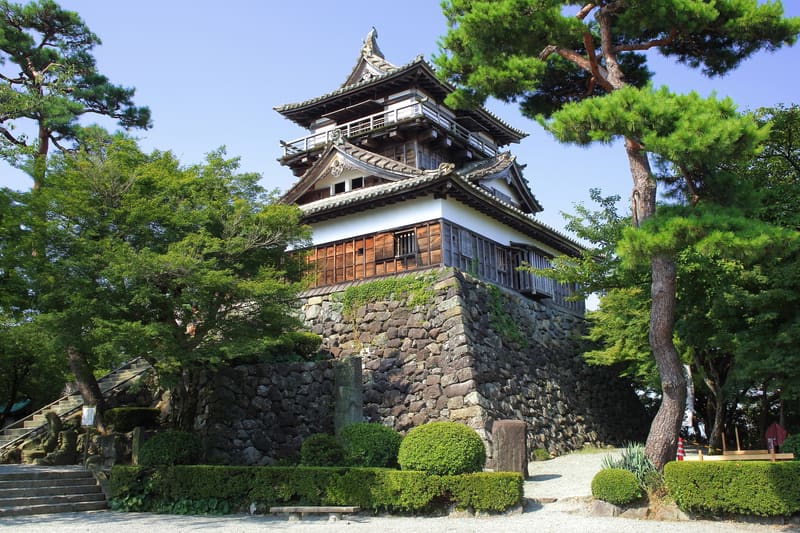 Maruoka Castle16.2 kmphoto by Tomio344456 · CC BY-SA 4.0