
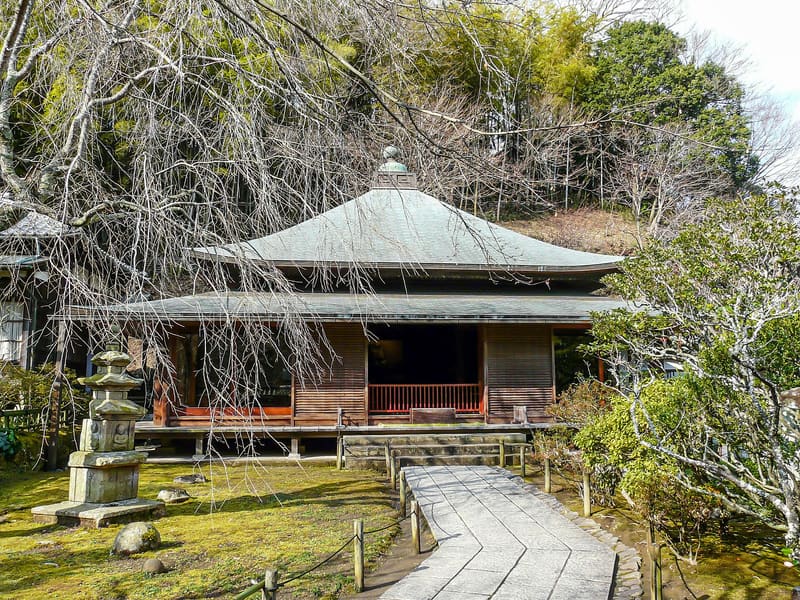
The temple where a wife could obtain a divorce: the oldest petition dates from 1738.
It is small and uphill, and the part that matters is at the back: a Zen cemetery in the woods, with moss-covered gravestones and the grave of D.T. Suzuki, the monk who brought Zen to the West. There is no ticket office at the entrance: you are asked to venerate the main statue and leave an offering. ⚠️ And no photography: the ban has applied to the entire grounds since 7 June 2022.
Founded in 1285 as a nunnery, for centuries it was the place where a married woman could obtain the dissolution of her marriage by taking refuge within its walls for a set period. The oldest documented petition that survives dates from 1738. Today it is a temple for monks, under Engaku-ji.
ℹ️ Open 9:00–16:00. There is no ticket to pay: an offering is requested. ⚠️ Photography, filming and drawing have been banned throughout the grounds since 7 June 2022. Closed on the first and third Tuesday of the month, when the treasures are put on display. Five to ten minutes' walk from Kita-Kamakura. A craft and food fair is held at the entrance on the last weekend of April and of October.
🚉 Kita-Kamakura · 4 min walk
Holidays in Japan? Plan them with us.Over 2,000 real places, a day-by-day itinerary.FreeOpen the map →Sources: tokeiji.com · kamakuraguide.com · 4travel.jp
Nearby
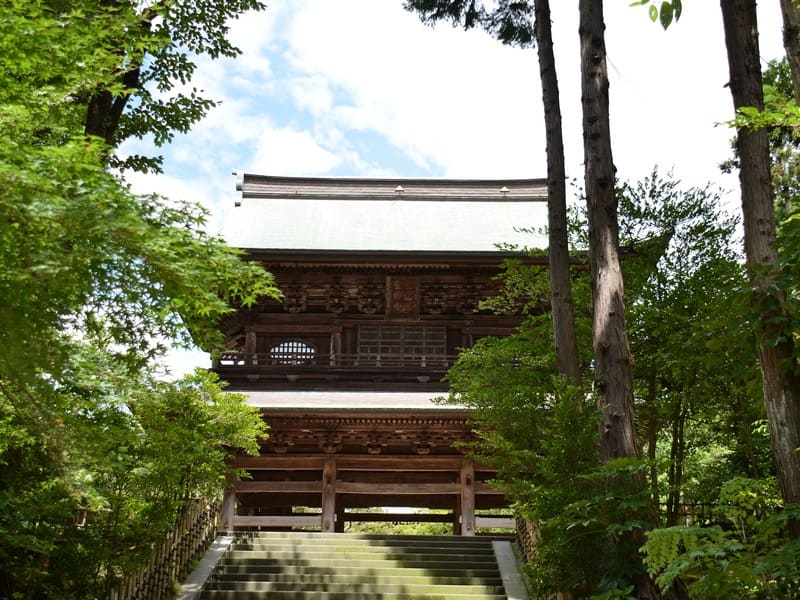 Engaku-ji400 mphoto by Kentagon · CC BY-SA 4.0
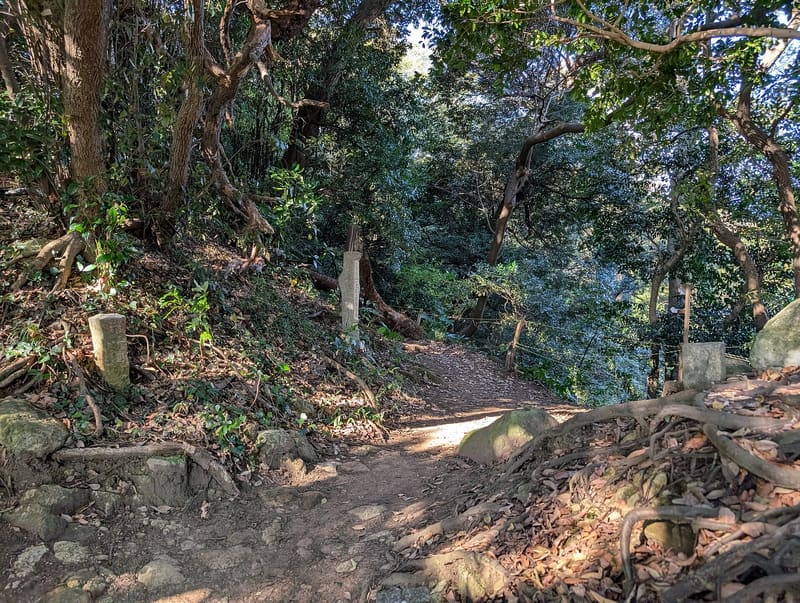 Daibutsu Trail400 mphoto by Syced · CC0
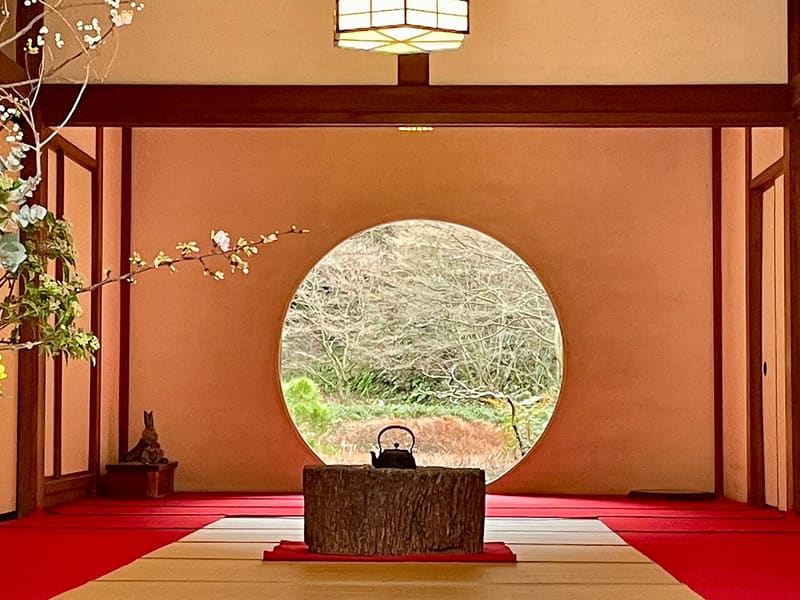 Meigetsu-in, the hydrangea temple500 mphoto by おにく · CC0
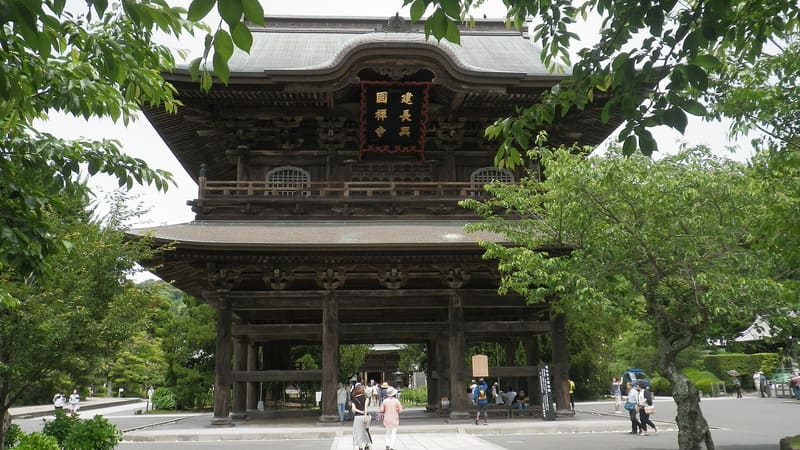 Kenchō-ji800 mphoto by KENPEI · CC BY-SA 4.0