
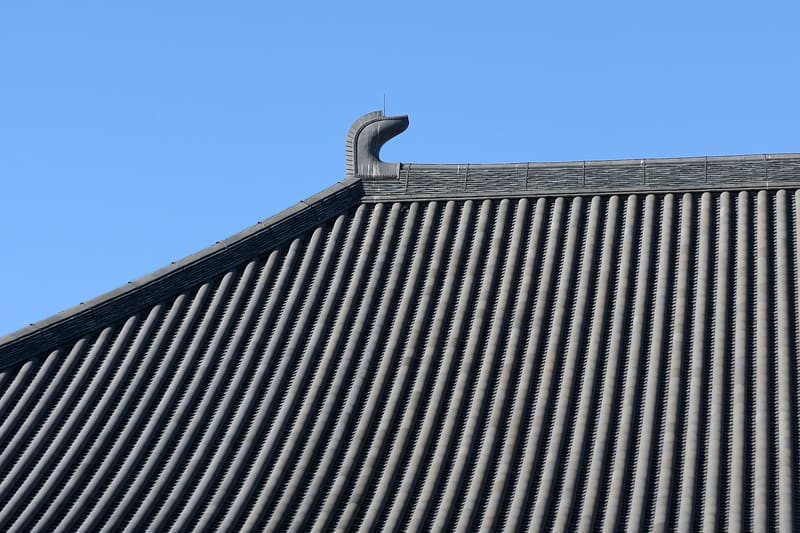
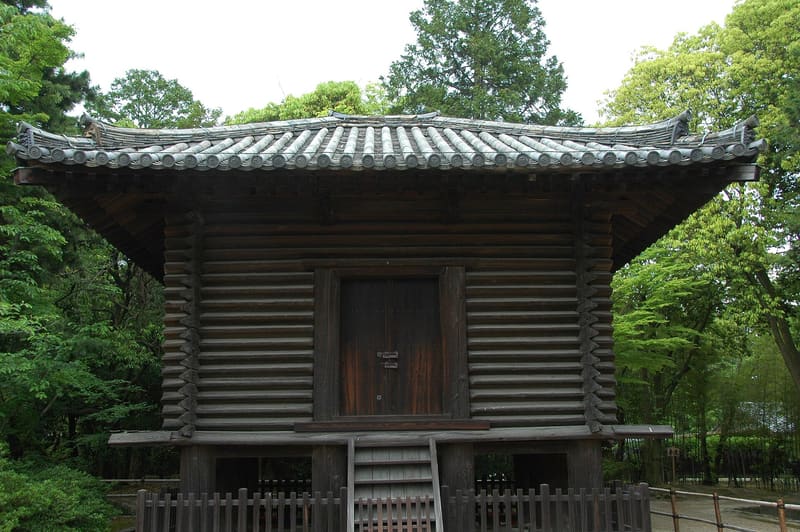
Founded in 759 by Ganjin: his statue from 763 can be seen only on 5–7 June.
The Chinese monk Ganjin founded the temple in 759, after being invited to Japan to transmit the Buddhist precepts to the Ritsu school. The Golden Hall (Kondō), built after 781, is the largest surviving temple building of the Nara period, seven bays by four, in cypress wood. Inside, the Hall of Relics (Miedō) keeps the dry-lacquer statue of Ganjin, 80.1 cm tall (the oldest portrait sculpture in Japan, dated to 763), on public view only from 5 to 7 June, for the Kaizanki.
Tōshōdai-ji is the head temple of the Ritsu school of Buddhism, one of the six Nara schools. It was founded in 759 by the Chinese monk Ganjin (688–763), who, after five failed attempts (and the loss of his sight), managed to reach Japan at imperial invitation to transmit the orthodox monastic precepts. The complex, with its late eighth-century buildings, was inscribed on the UNESCO World Heritage List in 1998 as part of the ‘Historic Monuments of Ancient Nara’.
ℹ️ Open all year, 8:30–17:00 (last entry 16:30). Tickets: adults/university students 1,000 yen, high school 400 yen, junior high/elementary school 400/200 yen (group discounts from 30 people). Special exhibitions at an additional charge. Events with different fees on 19 May (Chūkōki) and 5–7 June (Kaizanki, when the statue of Ganjin is on view). ⚠️ The full price (1,000 yen) read on the official website is higher than the one given by some third-party travel guides (600 yen): the official website's figure, which is more recent, has been used.
🚉 Nishinokyō · 9 min walk
Holidays in Japan? Plan them with us.Over 2,000 real places, a day-by-day itinerary.FreeOpen the map →Sources: toshodaiji.jp · ja.wikipedia.org · narashikanko.or.jp
Nearby
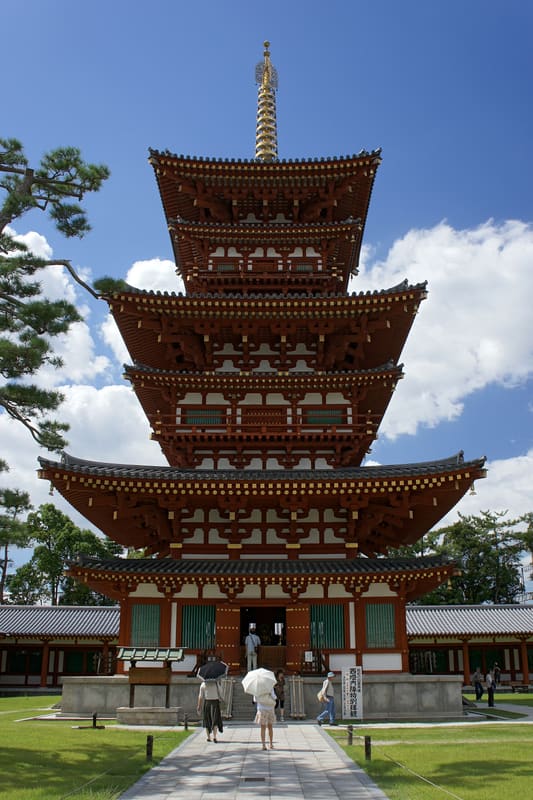 Yakushi-ji700 mphoto by 663highland · CC BY 2.5
 Mi・Nara2 kmphoto by Rebirth10 · CC BY 3.0
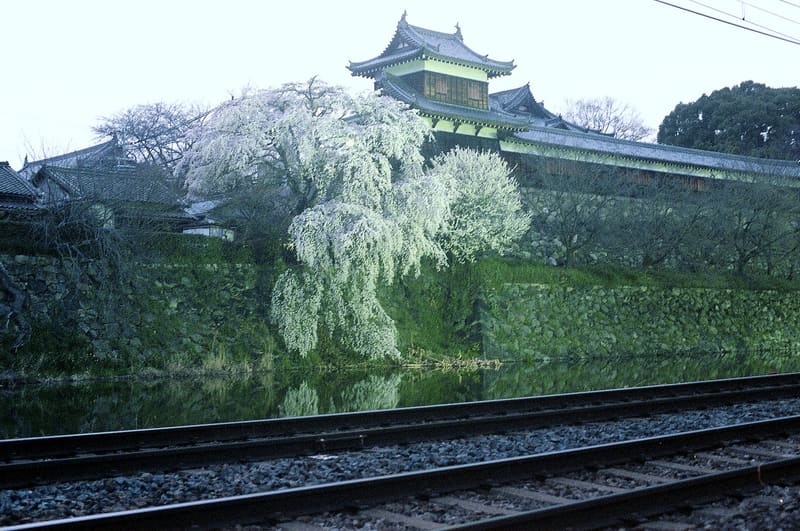 Kōriyama Castle2.6 kmphoto by shikabane taro · CC BY 3.0
 Nara-zarashi linen workshop3.7 km