
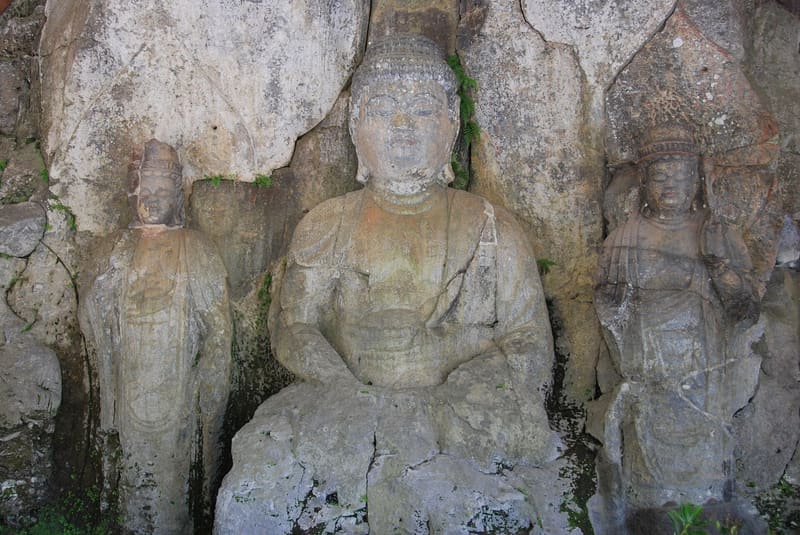
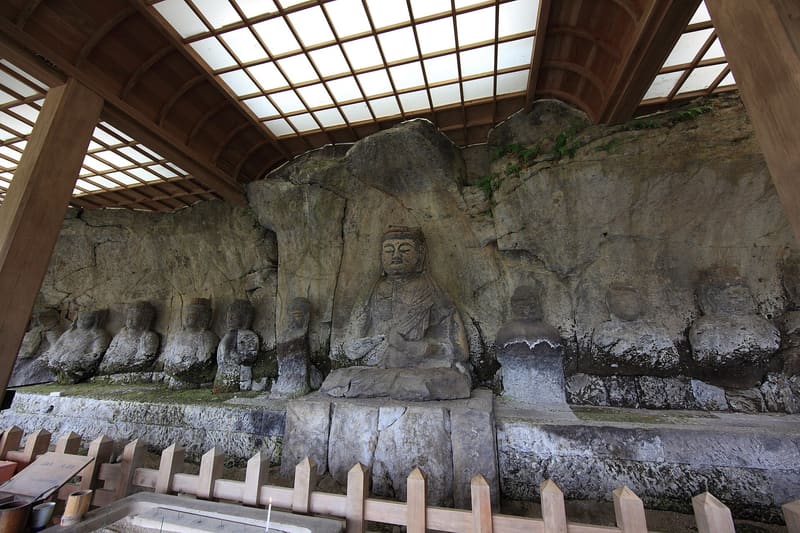
The head of the Dainichi Nyorai, detached by centuries of erosion, was put back in place in 1993.
61 Buddha statues carved directly into the tuff rock, divided into four groups (Furuzone, Sannozan, Hoki I and Hoki II), dating from between the late Heian and the Kamakura period. Designated a National Treasure in 1995 (59 statues) and again in 2017 (2 additional statues). Between June and July the lotuses in the surrounding garden are in flower.
The Usuki Sekibutsu are a group of Buddhas in high relief carved into walls of welded volcanic tuff, in the city of Usuki. The most widely accepted dating places them between the late Heian period and the early Kamakura period. The statues are grouped into four clusters, Furuzone (13 statues), Sannozan (3), Hoki I (about 23) and Hoki II (about 22), for a total of 61 sculptures. In 1995 the complex was designated a National Treasure (59 statues), a designation extended in 2017 to two additional statues. The most famous statue, the great Dainichi Nyorai of the Hoki I group, had lost its head to erosion: it was found and placed back on the body in 1993, after about a thousand years.
ℹ️ Opening hours: 9:00–17:00 (last entry 16:30). Tickets: adults 550¥, children (elementary school/junior high) 270¥; Usuki residents free with ID. Car park with 100 spaces. Access: JR bus from Usuki towards Nozu, about 20 minutes, Usuki Sekibutsu bus stop; or 5 minutes from the Usuki interchange of the Higashi-Kyūshū Expressway.
🚉 臼杵石仏 (Usuki Sekibutsu) · 1 min walk
Holidays in Japan? Plan them with us.Over 2,000 real places, a day-by-day itinerary.FreeOpen the map →Sources: ja.wikipedia.org · visit-oita.jp
Nearby
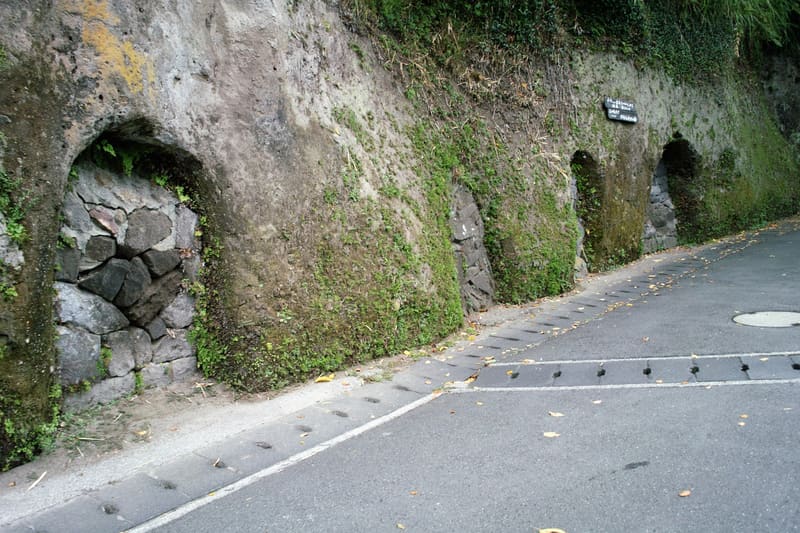 Nioza Rekishi no Michi — the Nioza historic street4.6 kmphoto by shikabane taro · CC BY 3.0
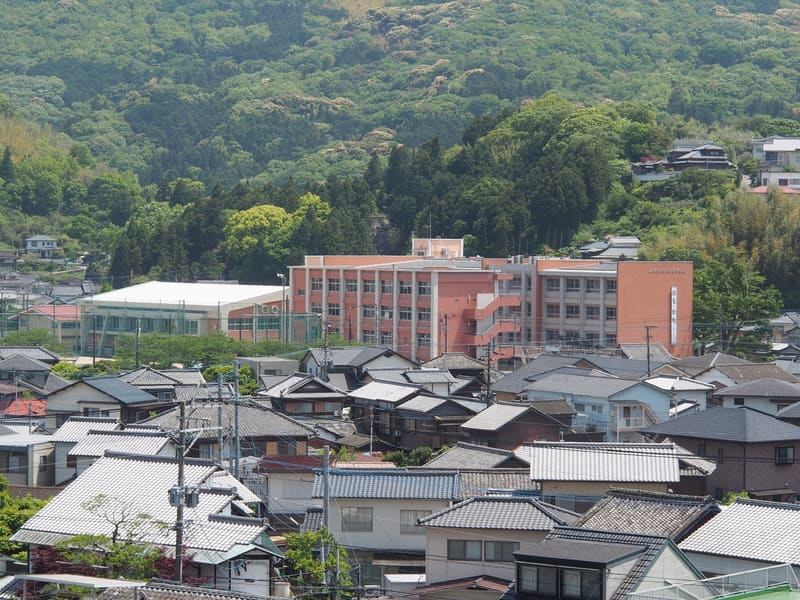 Usuki Prefectural High School5 kmphoto by 大分帰省中 · CC BY-SA 4.0