
Discovered, so the legend goes, by watching a heron heal its leg in the hot water.
The hot spring (onsen) rises at 40–43°C, with weakly alkaline sodium-calcium chloride water; at the Sagi Onsen-kan public bath two baths (one dynamic and one static) are swapped between men and women every Sunday, with a sauna at 90°C and a cold bath at 16°C.
According to tradition, about 1,200 years ago the monk Ennin of the Enryaku-ji temple saw a heron (鷺, sagi) healing a wounded leg in the hot water while on a pilgrimage in the region, hence the alternative name ‘Sagi no Yu’, the heron's water. It is one of the three historic hot springs of the Mimasaka region (美作三湯), indicated for digestive disorders, neuralgia, rheumatism and skin problems.
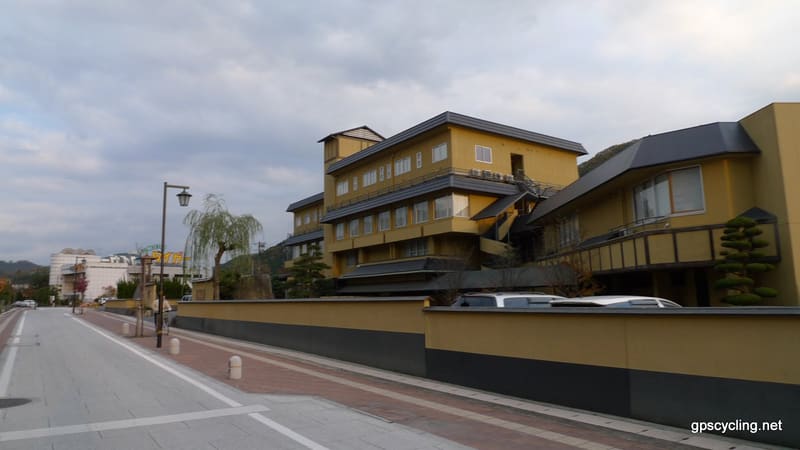
ℹ️ The Yunogo Sagi Onsen-kan public bath is open 8:00–21:00, closed on the second Wednesday of the month (the first in August). Admission 800 yen. Many ryokan (traditional inns with their own hot-spring bath) face onto the same street.
Holidays in Japan? Plan them with us.Over 2,000 real places, a day-by-day itinerary.FreeOpen the map →Sources: city.mimasaka.lg.jp · city.mimasaka.lg.jp
Nearby
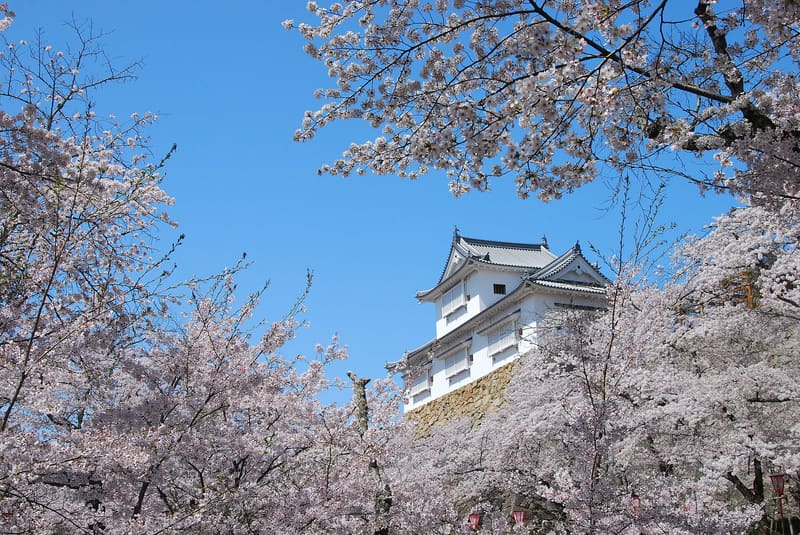 Tsuyama Castle (Kakuzan Park)14.2 kmphoto by denteru · CC BY 3.0