
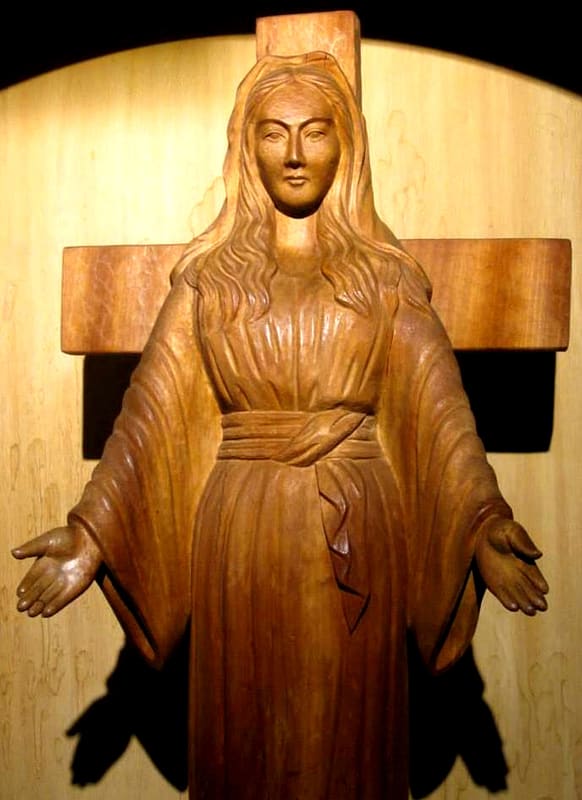
She wept 101 times between 1975 and 1981: the tears, once analysed, were human fluid.
In the chapel of the convent of the Handmaids of the Eucharist, the wooden statue of the Virgin carved in 1963 by Wakasa Saburō wept 101 times between 4 January 1975 and 15 September 1981: the forensic laboratories of the universities of Akita and Gifu examined the liquid collected on cotton wool and classified it as human bodily fluid. In the same years Sister Agnes Sasagawa, of the convent, bore bleeding cross-shaped wounds on her palms. It is one of the few cases of a Marian apparition recognised by a diocesan bishop, and it is better known outside Japan than at home.
Catholic convent of the Handmaids of the Eucharist (聖体奉仕会) in Yuzawadai, in the municipality of Akita, a destination for international pilgrimage since the 1980s because of the phenomena linked to the statue of the Virgin kept in the chapel.
ℹ️ Open 9:30–12:00 and 13:00–15:30; closed on Wednesdays and in August. Groups of 13 or more people must book online; individual visitors do not need to book. From JR Akita, bus towards Yuzawa (about 20 minutes), then 10 minutes on foot uphill.
🚉 湯沢 · 9 min walk
Holidays in Japan? Plan them with us.Over 2,000 real places, a day-by-day itinerary.FreeOpen the map →Sources: seitaihoshikai.com · ja.wikipedia.org · ana.co.jp
Nearby
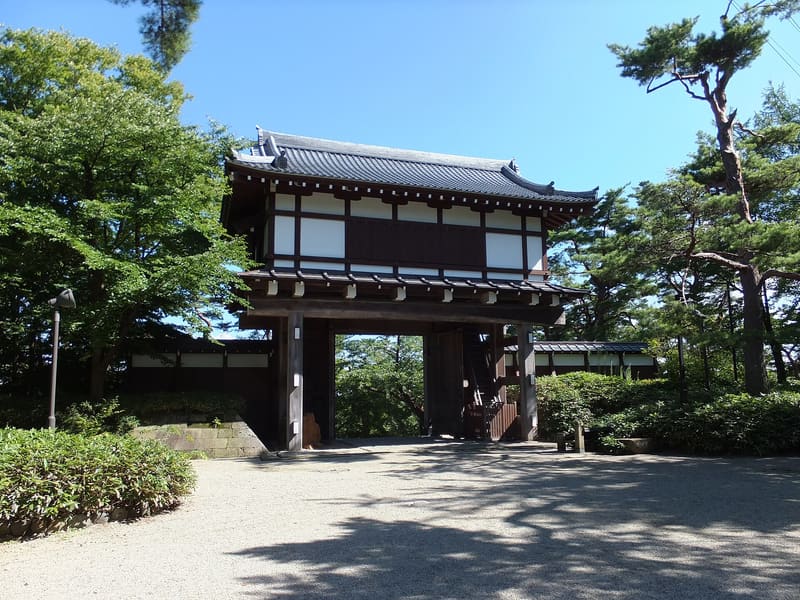 Kubota Castle4.8 kmphoto by 掬茶 · CC BY-SA 3.0
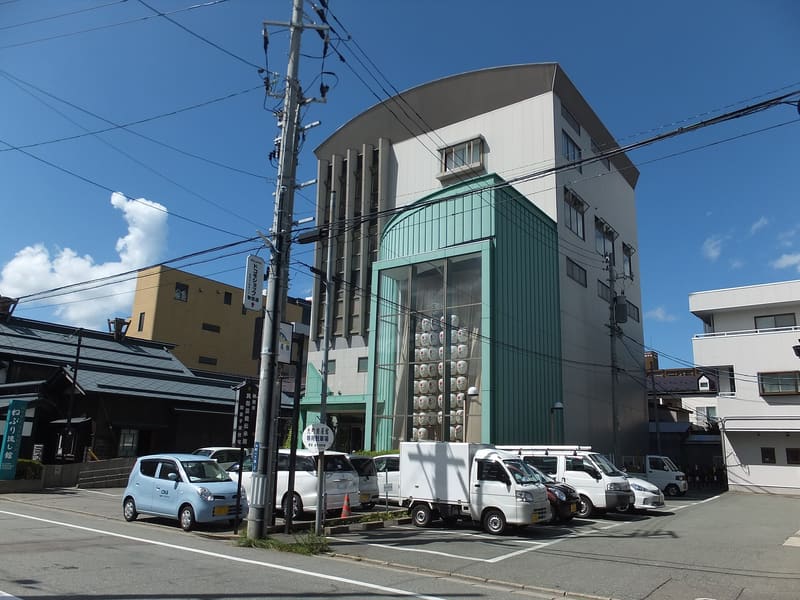 Akita Folk Arts Museum (Neburi Nagashi-kan)5.2 kmphoto by 掬茶 · CC BY-SA 3.0
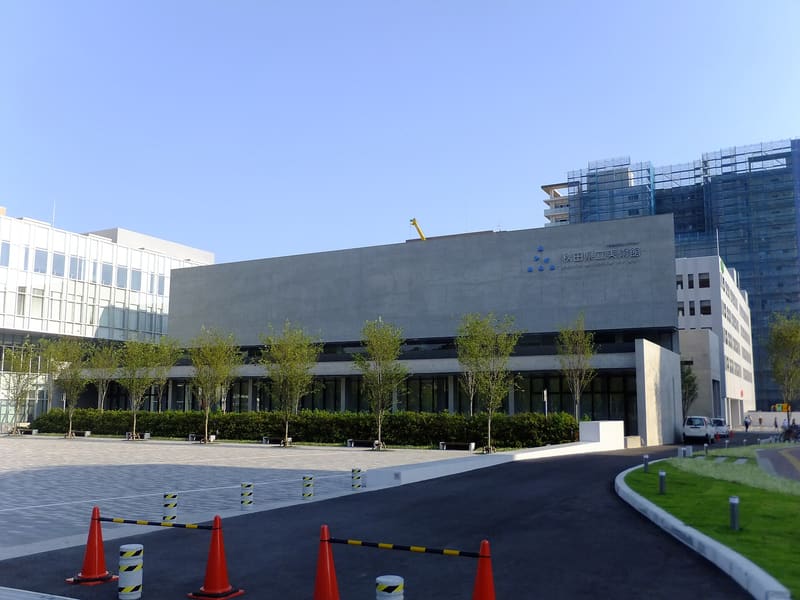 Akita Prefectural Museum of Art5.3 kmphoto by 掬茶 · CC BY-SA 3.0
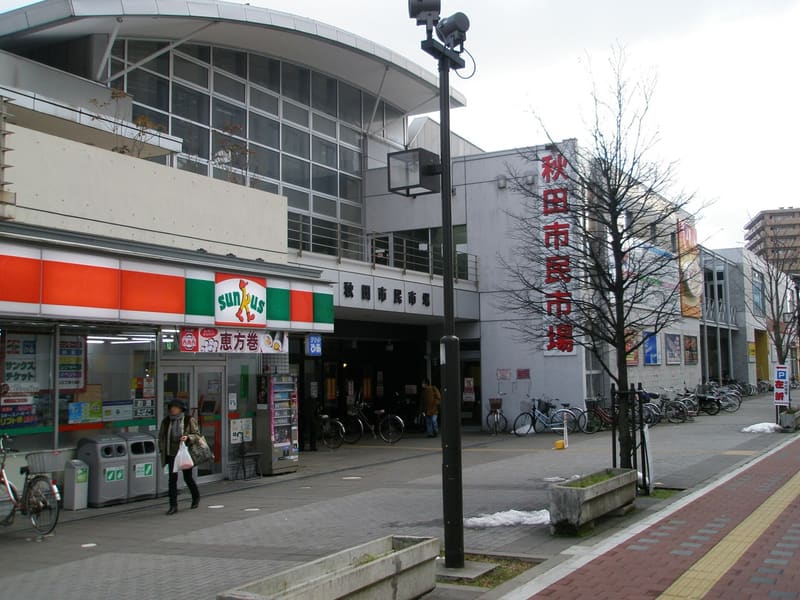 Akita City Market5.4 kmphoto by 掬茶 · CC BY-SA 3.0