
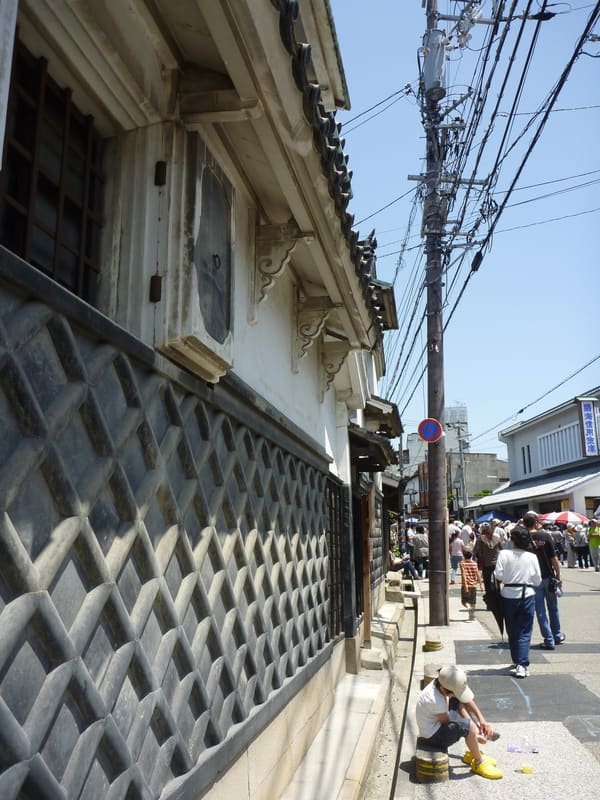
Eight hundred metres of dyers' houses, and not a single utility pole above the street.
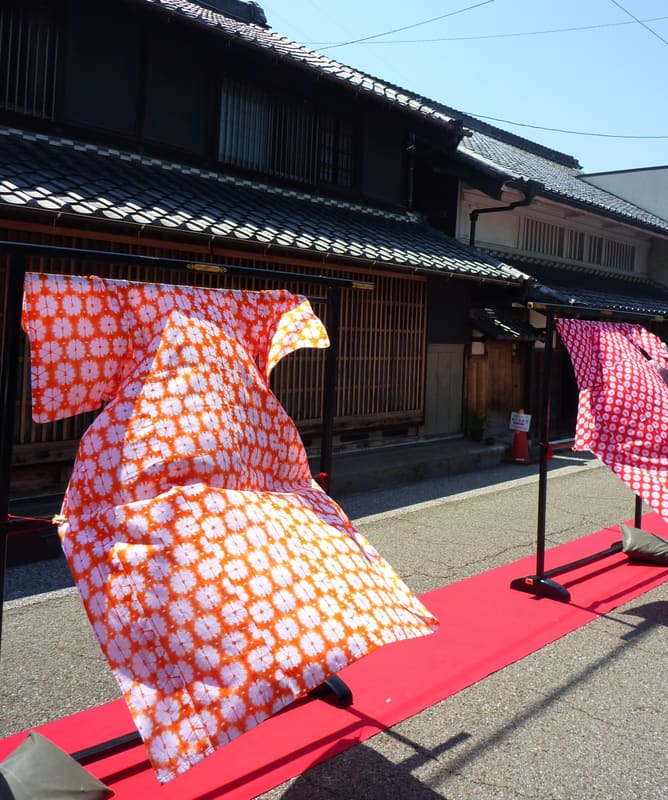
Under the wooden lattices of the old Tōkaidō (the road that linked Edo, that is Tokyo, to Kyoto), an artisan ties thread around the cotton, one knot after another. Where the thread binds, the indigo does not get in, and when the knots are undone white circles remain. On Saturdays and Sundays you can go into the Oka house, free of charge: it is the only merchant house whose door you can walk through.
Arimatsu was founded in 1608, when the Owari clan persuaded settlers to establish themselves along the Tōkaidō (the great road between Edo, today's Tokyo, and Kyoto), on an empty stretch between the post stations of Narumi and Chiryū. There were no good fields, so the town came up with a product to sell to travellers: shibori, resist dyeing, where the cloth is tied before being dipped in indigo and white patterns remain in place of the knots. In 1784 a fire burned almost the whole village and the rebuilding took about twenty years: that is what you see today, low houses with wooden lattices, fireproof plastered walls, storehouses with black roofs. On 25 July 2016 the state listed the town's 7.3 hectares among the conservation districts of national importance, classifying it as a dyeing and weaving town: it is the first historic streetscape inside a big city to obtain that title. Since 2019 it has also been Japan Heritage, the label with which the ministry of culture recognises the story of an area, here as the centre with the widest variety of shibori techniques in the world.
ℹ️ Meitetsu from Nagoya Station, 22 minutes to Arimatsu; the town begins two minutes from the exit and the street, about 800 metres, is flat all the way. Almost all the designated houses are still lived in or are working shops, and you cannot go inside: the only one open to visitors is the Oka house, Saturday and Sunday from 10:30 to 15:30, free, closed at New Year. The shibori house opens every day from 9:30 to 17:00 and the masters' demonstrations end at 16:30; the ticket price is not published on its website. The dyeing workshop, 2,500 yen including admission, runs only on Saturday and Sunday at 10:30 and 14:00, and you take the dyed piece away the same day. The float museum also opens only at weekends. On the first weekend of June there is the shibori festival, which at its fortieth edition brought 80,000 people in two days; the first Sunday of October is the day of the Tenmansha shrine festival: the districts' three floats travel along the old street from 9:30 to 15:00, stop, and from 18:30 to 21:30 go round again with their candles lit. You stay in the street and pay nothing; it is the day the town is at its most crowded, and at the crossroads where the floats turn the crowd comes to a standstill.
🚉 Arimatsu · 3 min walk
Holidays in Japan? Plan them with us.Over 2,000 real places, a day-by-day itinerary.FreeOpen the map →Sources: city.nagoya.jp · online.bunka.go.jp · nagoya-info.jp · nagoya-info.jp · arimatsunomachi.com · nagoya-info.jp · shibori-kaikan.com · shibori-kaikan.com · nagoya-info.jp · arimatsu-tenmansha.com · nagoya-info.jp
Nearby
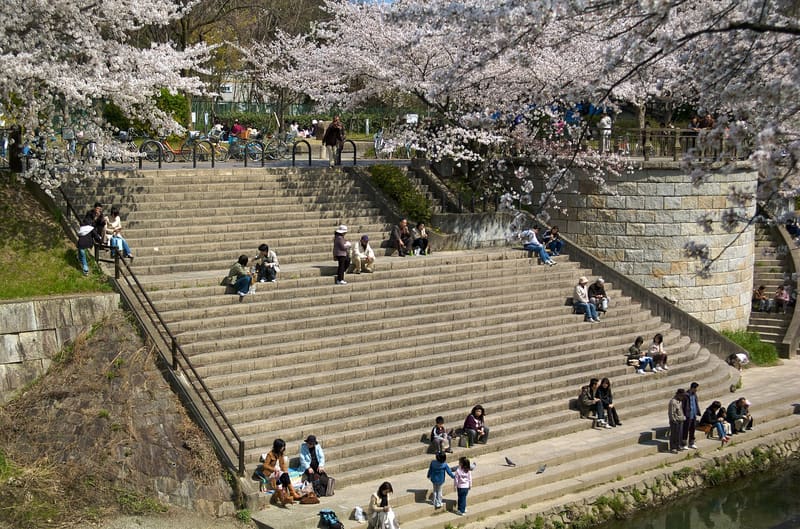 Yamazaki River Four Seasons Path7.2 kmphoto by Paul Davidson · CC BY 2.0
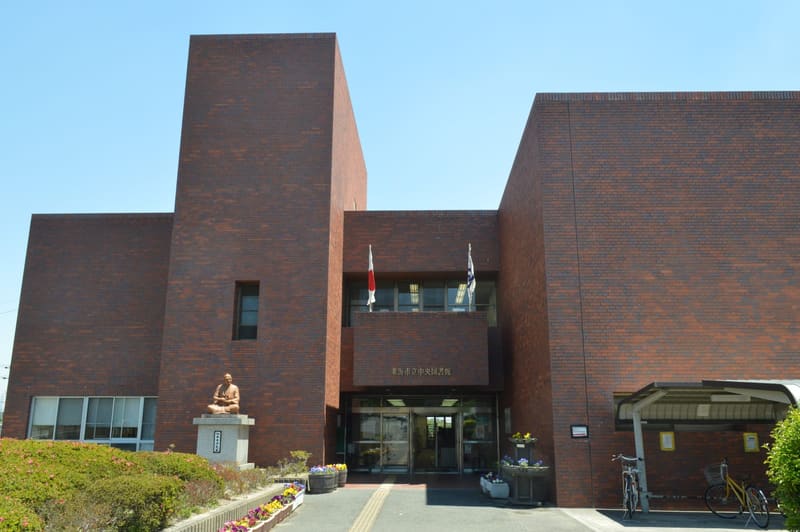 Tōkai Central Library7.3 kmphoto by Asturio Cantabrio · CC BY-SA 4.0
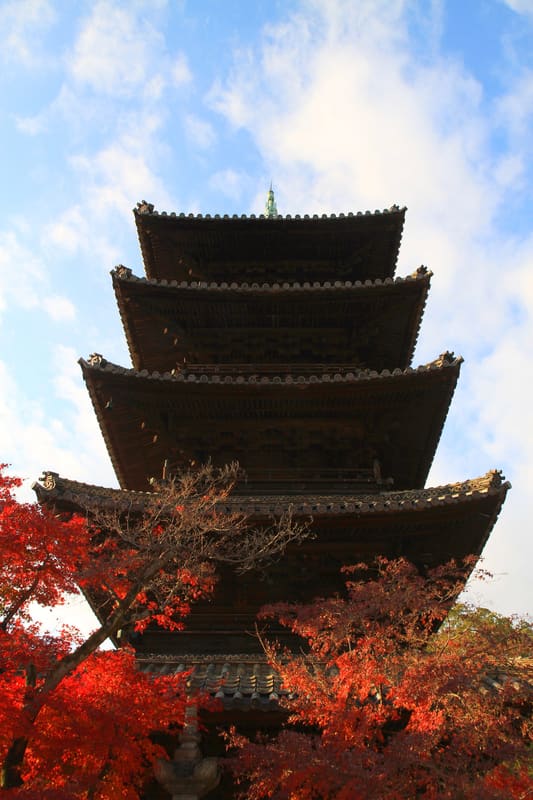 Kōshō-ji, Yagoto8.1 kmphoto by gundam2345 · CC BY 3.0
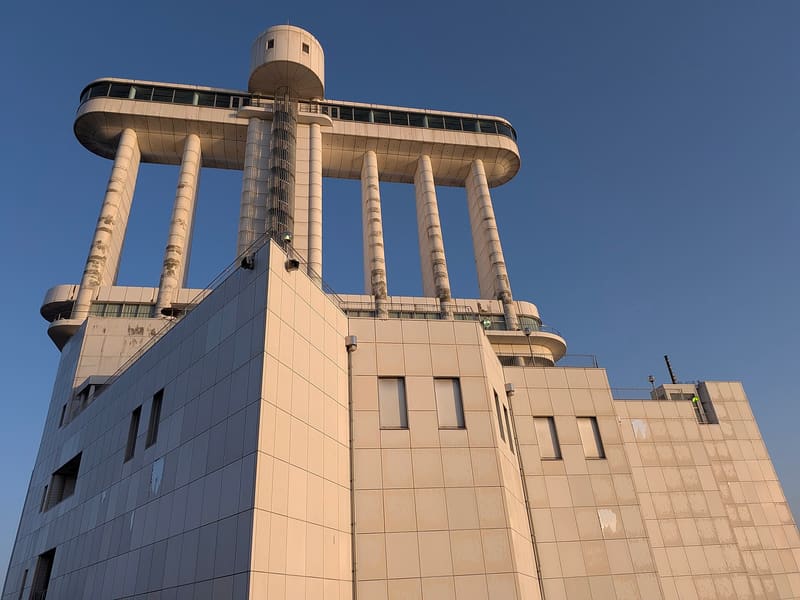 Port Building and Nagoya Maritime Museum8.5 kmphoto by Syced · CC0