
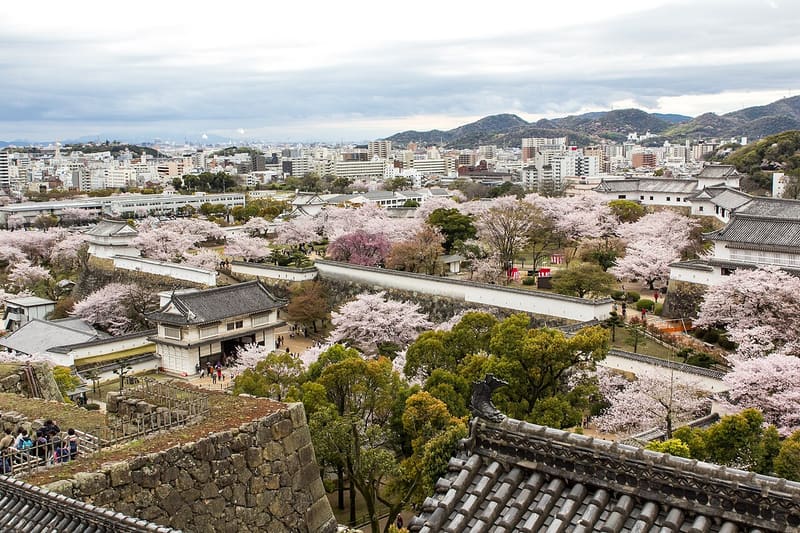
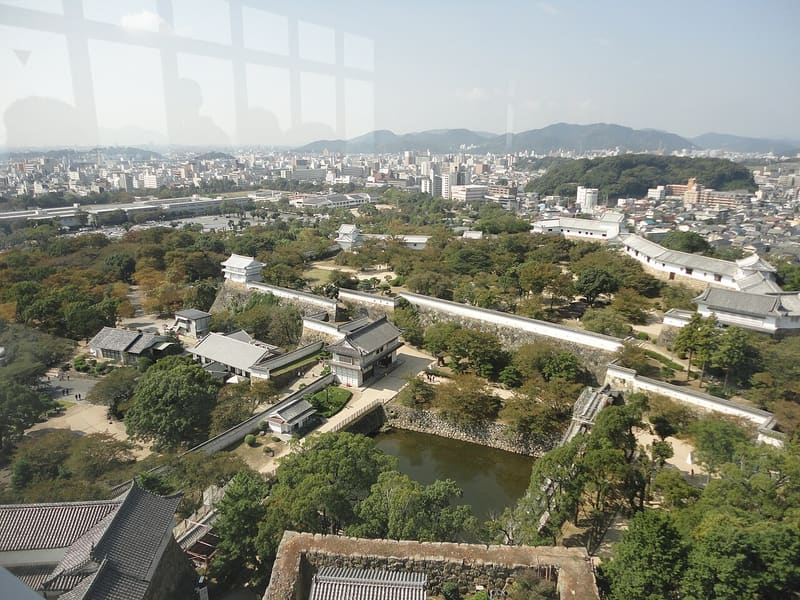
In 1945 a black camouflage net, hand-woven by the city's residents, hid it from the bombers.
The city around it burned in the air raids of June and July 1945, but the castle survived almost intact: residents had woven huge black camouflage nets by hand to hide it from above, and when they took them down after the war, people wept to see the white reappear. Eight buildings (the four tenshu, the towers that form the defensive core, plus the four covered corridors that link them) are National Treasures; another 74 are Important Cultural Properties. At most 1,000 people an hour can go up through the entrance to the main keep, and on peak days the wait is over two hours.
Built in its present form between 1601 and 1609 by Ikeda Terumasa, son-in-law of Tokugawa Ieyasu, on older fortifications dating back to the 14th century. A UNESCO World Heritage Site since 1993, among the first Japanese sites to be inscribed, together with the Hōryū-ji temple in Nara.
ℹ️ Open 9:00–17:00 (last entry 16:00), closed on 29 and 30 December. Tickets 2,500 yen for adults, 1,000 yen for Himeji residents, free for under-18s; combined ticket with Kōko-en Garden 2,600 yen. From the entrance to the keep it is about 15 minutes on foot; a full visit takes 1.5–2 hours, three times as long during the cherry blossom season and Golden Week.
🚉 Sanyo Himeji · 21 min walk
Holidays in Japan? Plan them with us.Over 2,000 real places, a day-by-day itinerary.FreeOpen the map →Sources: city.himeji.lg.jp · himejicastle.jp · kobe-np.co.jp
Nearby
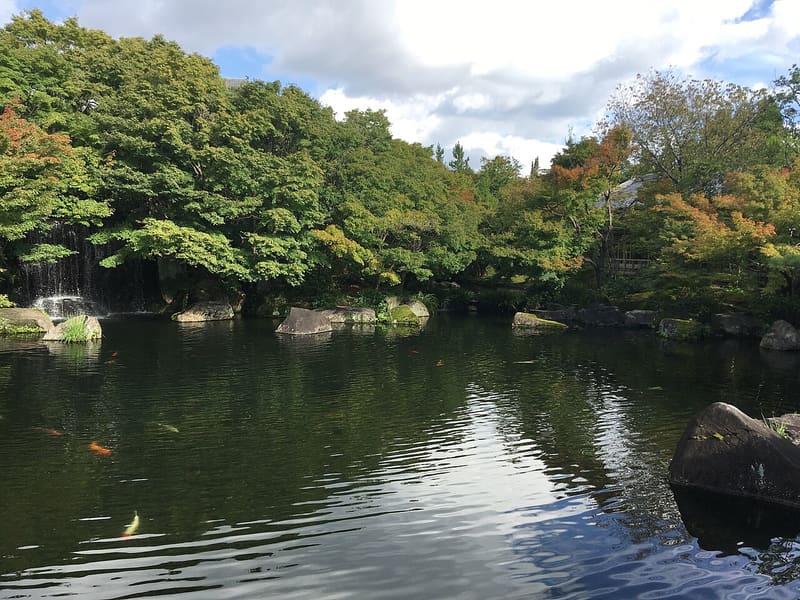 Kokoen400 mphoto by Christophe95 · CC BY-SA 4.0
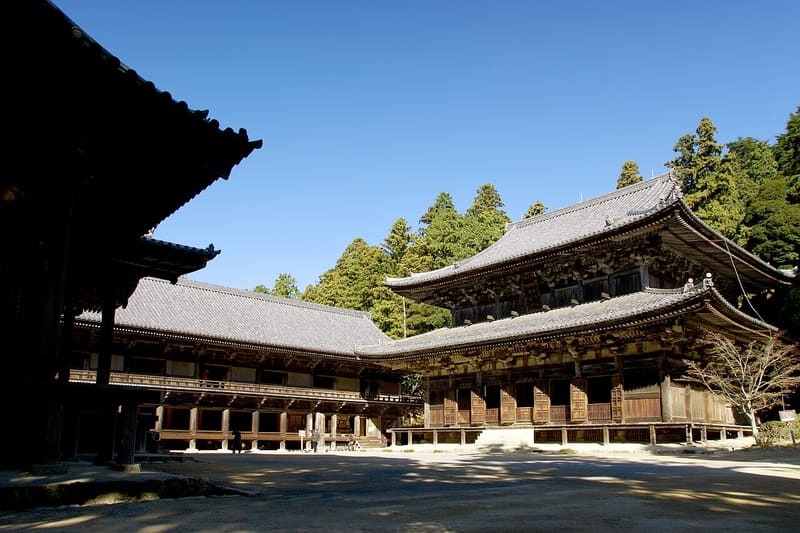 Engyoji6.4 kmphoto by 663highland · CC BY 2.5