
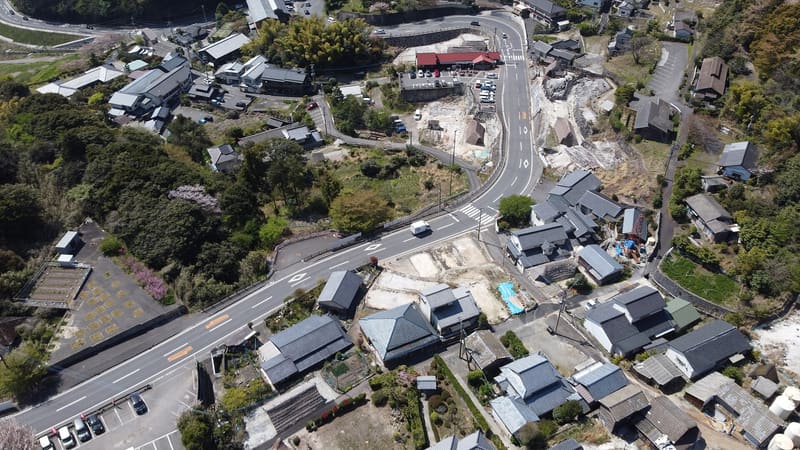
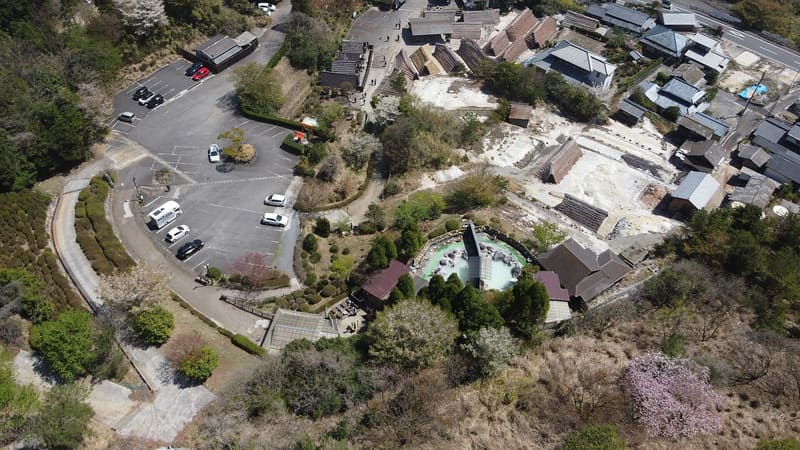
Harvesting yu-no-hana in the straw huts has been intangible heritage since 2006.
On the slopes of Mount Garan, at 400 metres above sea level, Myōban takes its name from the production of alum (yu-no-hana) carried out here since the Edo period. The distinctive ‘yu-no-hana huts’, made of straw on low stone walls, are a recognised industrial landscape: the harvesting technique has been an Intangible Folk Cultural Property since 2006, and the landscape of Myōban together with Kannawa has been an Important Cultural Landscape since 2012.
Myōban is a hot-spring village separate from central Beppu, perched at 400 metres on Mount Garan. The name (‘alum’) comes from the processing of yu-no-hana, a mineral extracted from geothermal steam, practised since the Edo period: ‘since the Edo period alum (yu-no-hana) and mineral mud have been gathered here’, local sources report. During the Second World War the army requisitioned about 2,000 tsubo (6,600 m²) of land to produce mud for treating wounded soldiers. The distinctive landscape (small straw huts along steep slopes, among low stone walls and rising steam) was designated an Important Intangible Folk Cultural Property in 2006 for the harvesting technique, and in 2012, together with neighbouring Kannawa, an Important Cultural Landscape. You can see the production facilities; the Beppu Onsen Hōyōen centre offers therapeutic mud baths.
ℹ️ Area free to explore on foot; the individual hot-spring facilities (e.g. Hōyōen) have their own hours and tickets, not checked individually. Access: bus from Beppu Station towards Myōban, about 25 minutes.
🚉 Myoban · 1 min walk
Holidays in Japan? Plan them with us.Over 2,000 real places, a day-by-day itinerary.FreeOpen the map →Sources: ja.wikipedia.org
Nearby
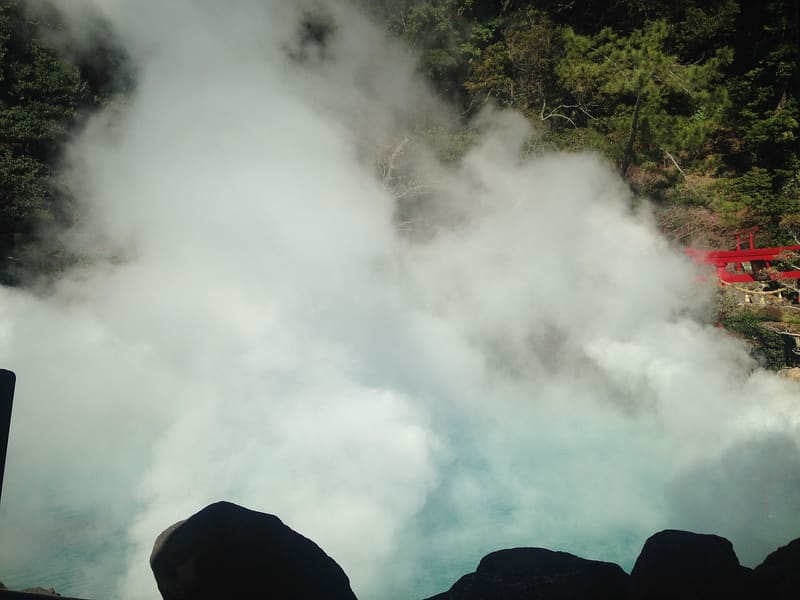 Umi Jigoku — the Sea Hell1.4 kmphoto by そらみみ (Soramimi) · CC BY-SA 4.0
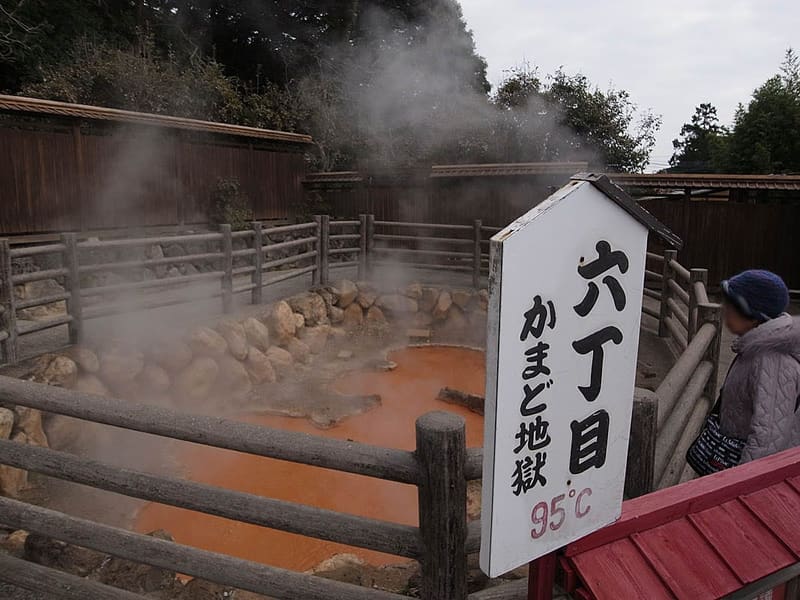 Kamado Jigoku — Beppu1.8 kmphoto by z tanuki · CC BY 3.0
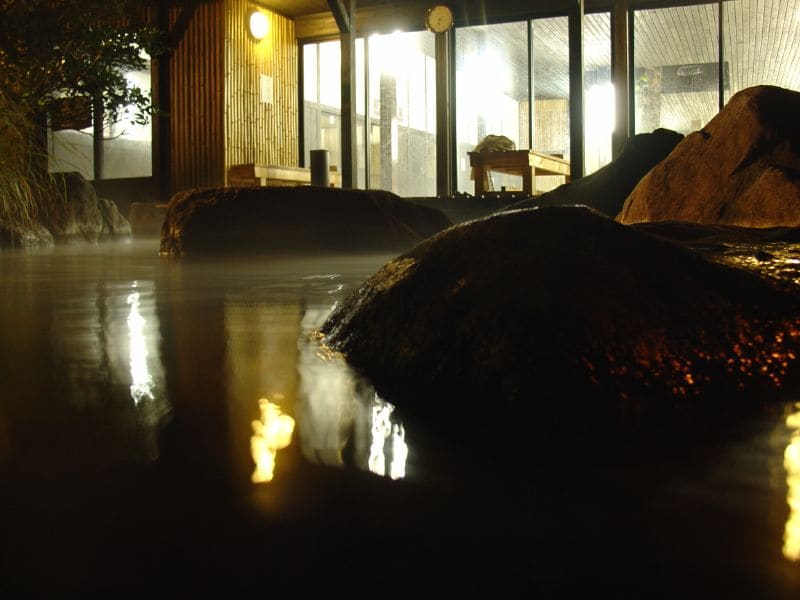 Hyotan Onsen2.1 kmphoto by Everjean · CC BY 2.0
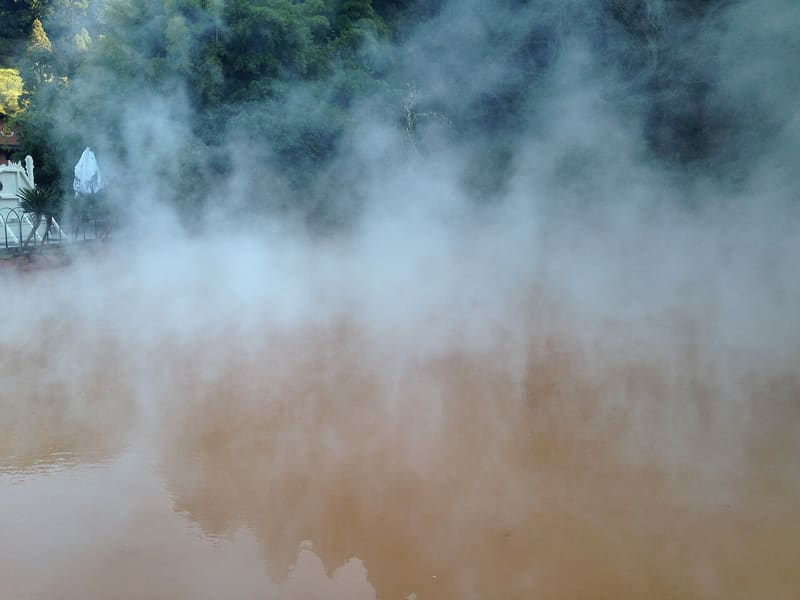 Chinoike Jigoku — the Blood Pond Hell2.6 kmphoto by そらみみ (Soramimi) · CC BY-SA 4.0