
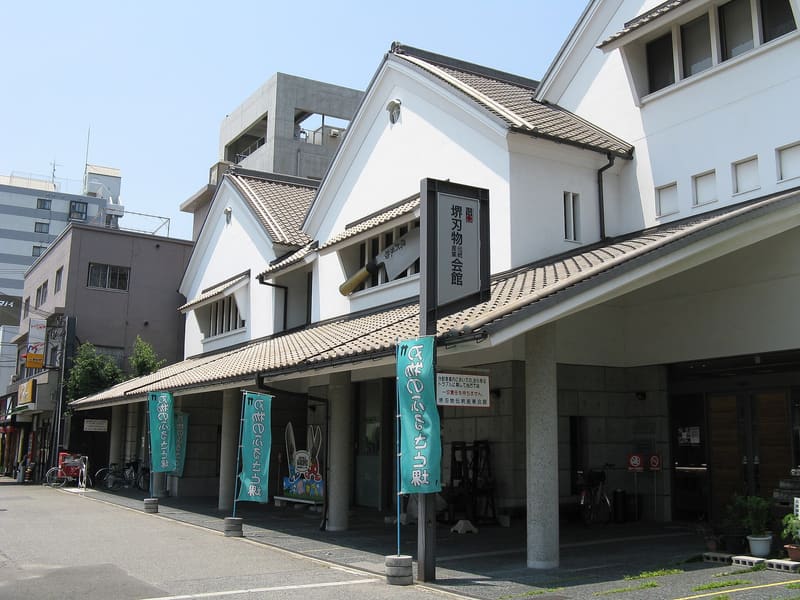
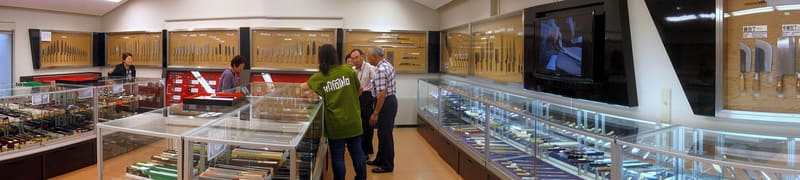
A knife passes through three workshops: the one that forges it, the one that sharpens it, the one that fits its handle.
On the first floor you buy the knives, on the second you watch how they are made: the forging, where soft iron and steel are hammered together and it takes ten or fifteen years to learn; the sharpening, which goes through more than ten different stones; and the handle, which yet another craftsman fits perpendicular to the blade, weighing up its balance. In the knife museum there is a chandelier made from the offcuts of the work.
The house of Sakai's traditional industries: knives, resist-dyed textiles and bleached cloth, incense sticks, kombu seaweed products. Sakai's forged knives began in the sixteenth century with the blades for cutting the leaves of the tobacco brought by the Portuguese, and the Tokugawa shogunate granted them the Sakai-kiwame mark. On 5 March 1982 the ministry designated them a traditional craft.
ℹ️ Open 10:00–17:00, free admission and demonstrations. Closed on the third Tuesday of the month (the following day if that is a public holiday) and at the end of the year. Myōkokuji-mae tram stop on the Hankai line, or Sakai Station on the Nankai line.
🚉 Sakai · 13 min walk
Holidays in Japan? Plan them with us.Over 2,000 real places, a day-by-day itinerary.FreeOpen the map →Sources: city.sakai.lg.jp · city.sakai.lg.jp · sakaidensan.jp
Nearby
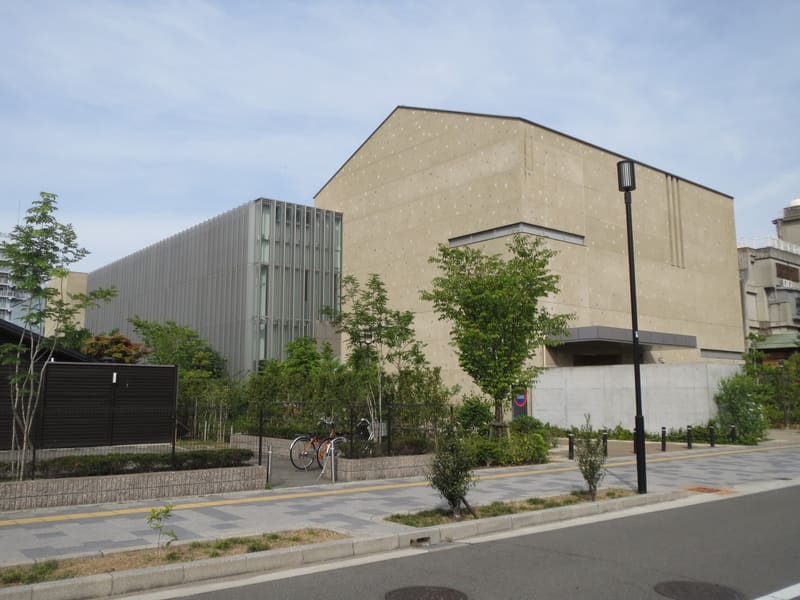 Sakai Rishō no Mori1 kmphoto by Ty19080914 · CC BY-SA 4.0
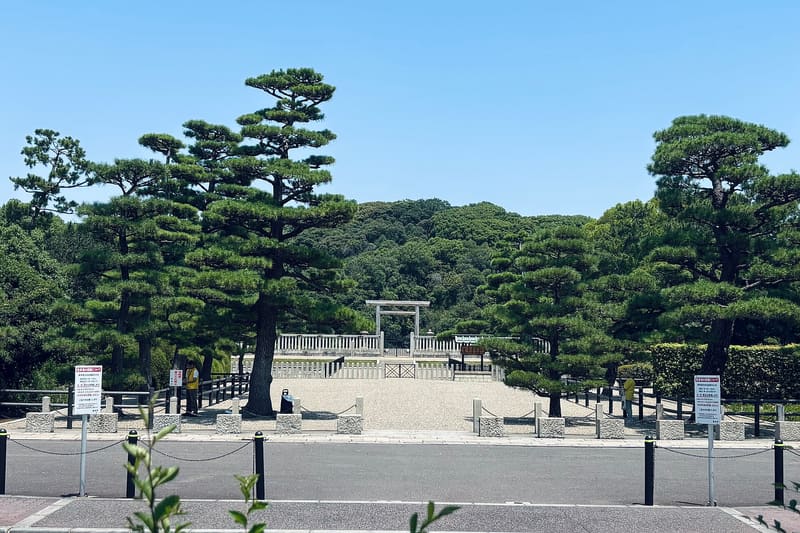 Mausoleum of Emperor Nintoku2.3 kmphoto by Sakai Yayoi · CC0
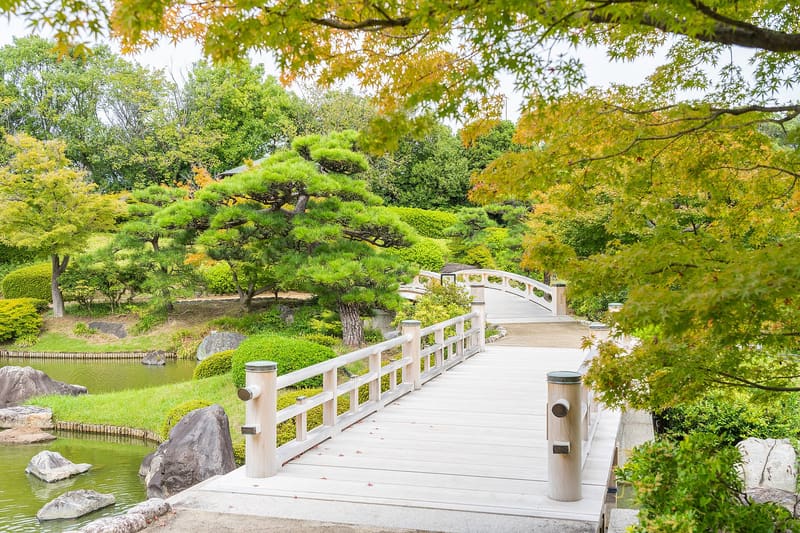 Daisen Park Japanese Garden2.6 kmphoto by Wei-Te Wong · CC BY-SA 2.0
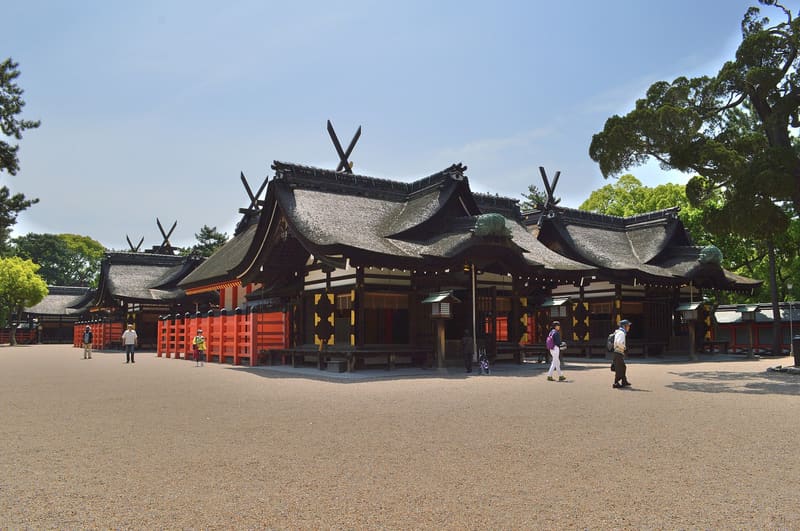 Sumiyoshi Taisha3.6 kmphoto by Saigen Jiro · CC0