
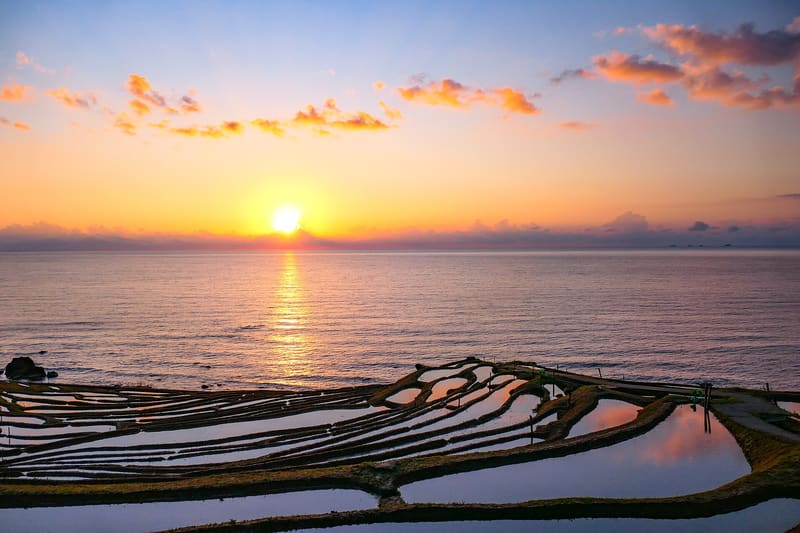
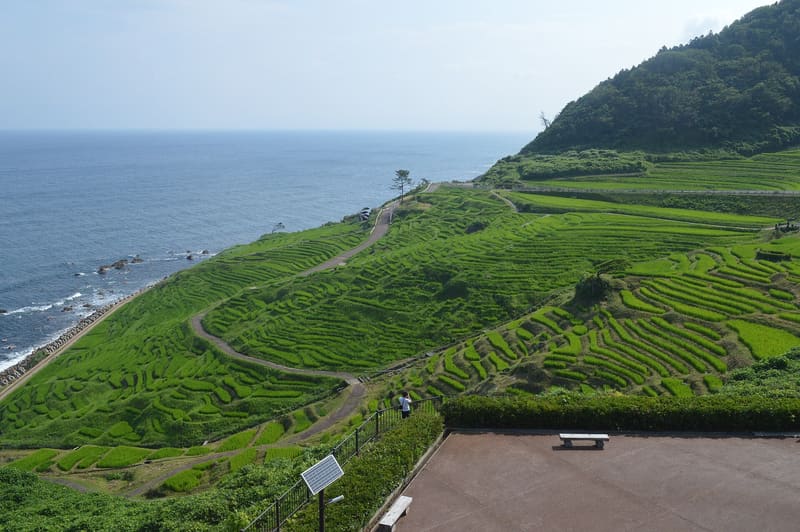
Of the 1,004 paddies, 480 replanted in 2026: the number has doubled every year since 2024.
One thousand and four tiny terraced rice paddies drop about 50 metres down to the Sea of Japan, too small and irregular for any farm machinery: they are still worked by hand. The Noto Peninsula earthquake of 1 January 2024 and the torrential rains that followed cracked or brought down about 80% of the terraces and damaged the irrigation channels. The replanting led by the residents’ association (千枚田愛耕会) reached 480 terraces at the 2026 planting, doubling every year after 120 in 2024 and 240 in 2025, with owner-members from all over Japan and students from Wajima High School.
Rice terraces farmed for centuries on the north coast of the Noto Peninsula, recognised as a representative cultural landscape of the region's traditional ‘Satoyama Satoumi’ farming system. The Noto Peninsula earthquake of 1 January 2024 cracked or brought down most of the terraces and damaged the irrigation channels; since then a replanting project led by the residents’ association (千枚田愛耕会) has been restoring the terraces one planting at a time.
ℹ️ Open access, free of charge, at all times, with a car park at the Michi-no-eki Senmaida Pocket Park. ⚠️ The winter night illumination ‘Aze no Kirameki’ (more than 20,000 solar-powered lights, usually from mid-October to mid-March) remains suspended because of the impact of the earthquake: the event's official page states this explicitly, and no date for its return has been announced.
Holidays in Japan? Plan them with us.Over 2,000 real places, a day-by-day itinerary.FreeOpen the map →Sources: wajima-senmaida.jp · wajima-senmaida.jp · hokkoku.co.jp
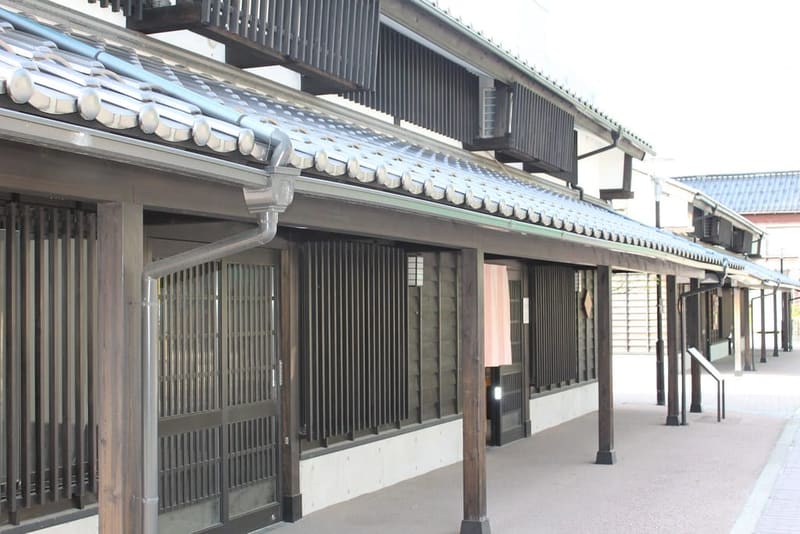 Wajima Kōbō Nagaya (lacquer workshops)