
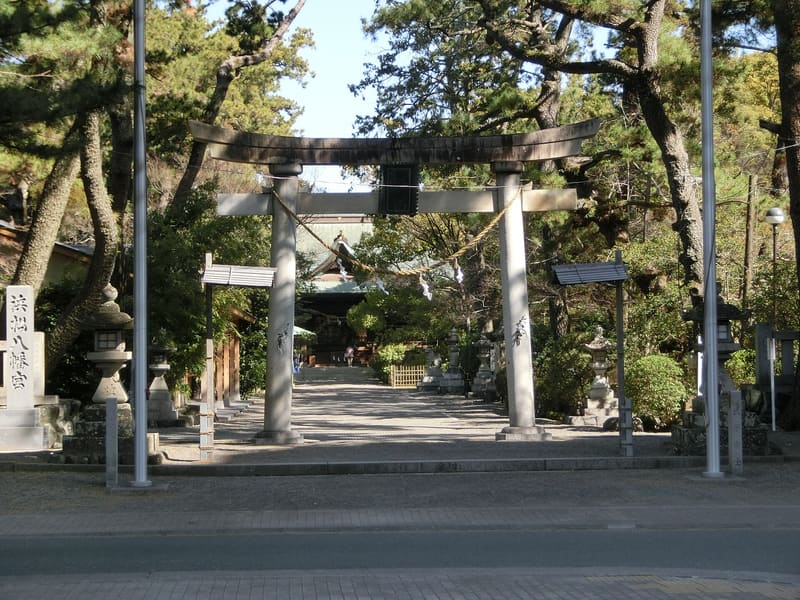
The name ‘Hamamatsu’ comes from the shrine: the legend of the white fox and the pine, in the year 938.
Visitors stop in front of the great camphor tree in the grounds, which tradition links to Tokugawa Ieyasu: fleeing during a battle, he is said to have hidden in its hollow trunk.
The shrine's official website says that in 938 a white fox, appearing in the form of an old man, brought a small pine tree here: the name of the city of Hamamatsu is said to have come from that ‘pine on the beach’ (hama no matsu, 浜の松). The story is the source that the shrine itself gives for the origin of the city's name.
ℹ️ An open-air shrine, with no ticket and no closing time for the grounds stated on the official website; the paid services (祈祷, prayer rites) are held 9:00–16:00 according to a third-party source (hotokami.jp), not confirmed on the shrine's website. By train, one minute on foot from Hachiman Station on the Enshū Railway Nishikijima line; ten minutes on foot from JR Hamamatsu; or an Enshū bus towards Hayade, Hachimangū bus stop, one minute on foot.
🚉 Hachiman · 3 min walk
Holidays in Japan? Plan them with us.Over 2,000 real places, a day-by-day itinerary.FreeOpen the map →Sources: hamamatsuhachimangu.org · hotokami.jp
Nearby
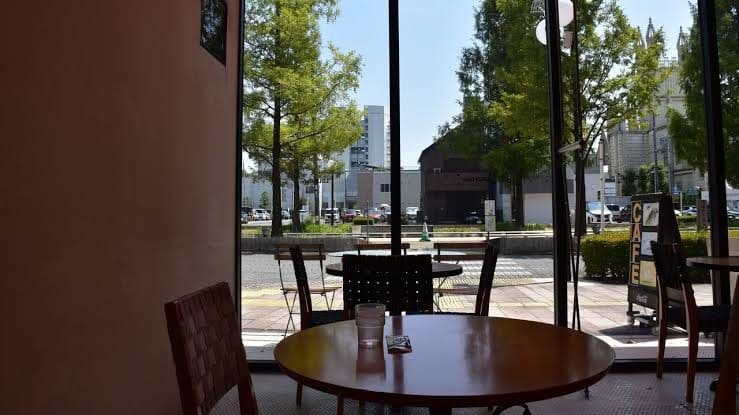 LOLO Cafe (Hamamatsu)300 m
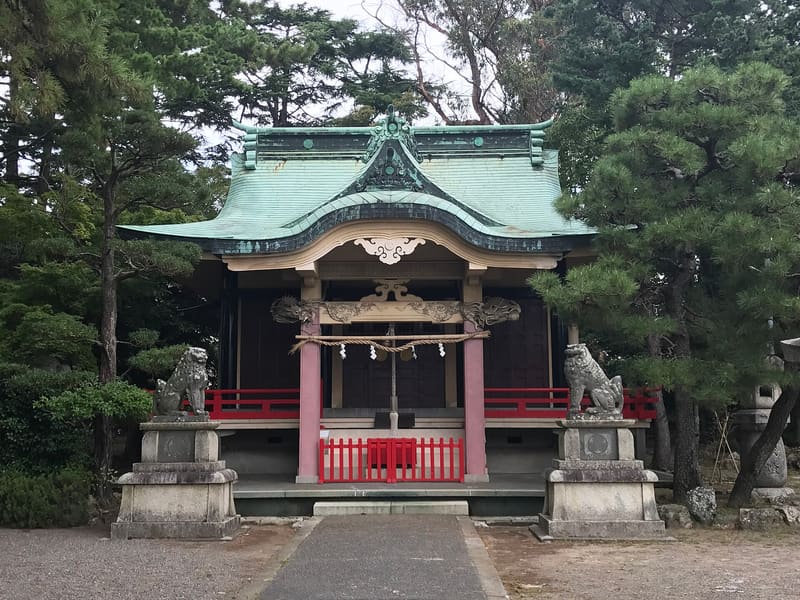 Motoshiro-chō Tōshō-gū800 mphoto by ヒラタイプ · CC BY-SA 4.0
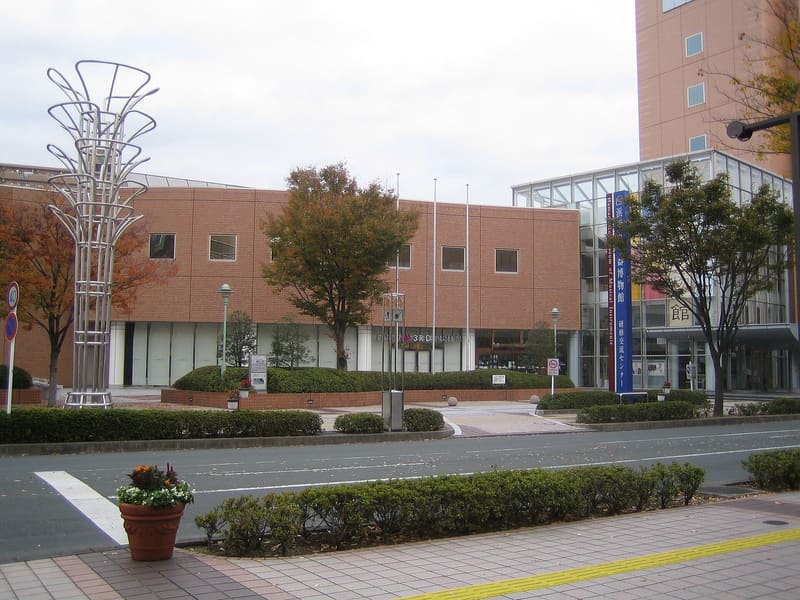 Hamamatsu Museum of Musical Instruments1 kmphoto by Lombroso · Pubblico dominio
 Act Tower Viewpoint1.1 kmphoto by Brücke-Osteuropa · CC0