
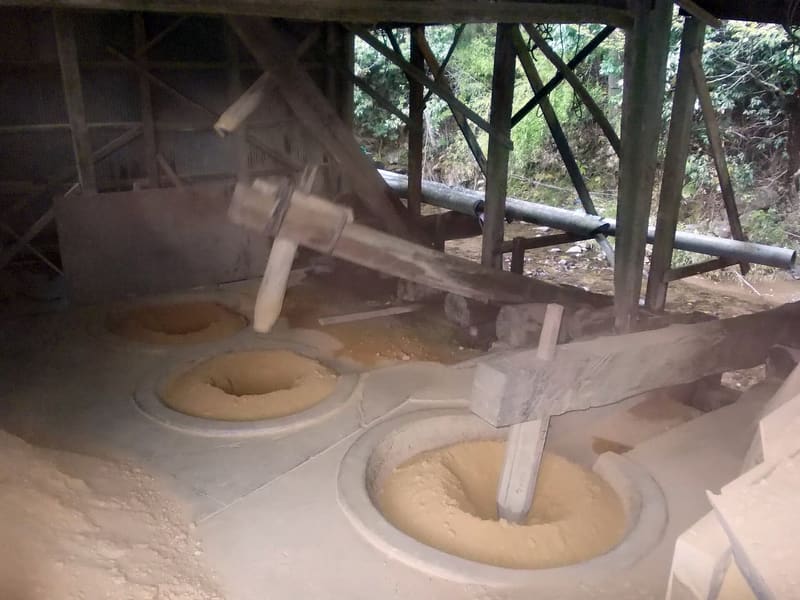
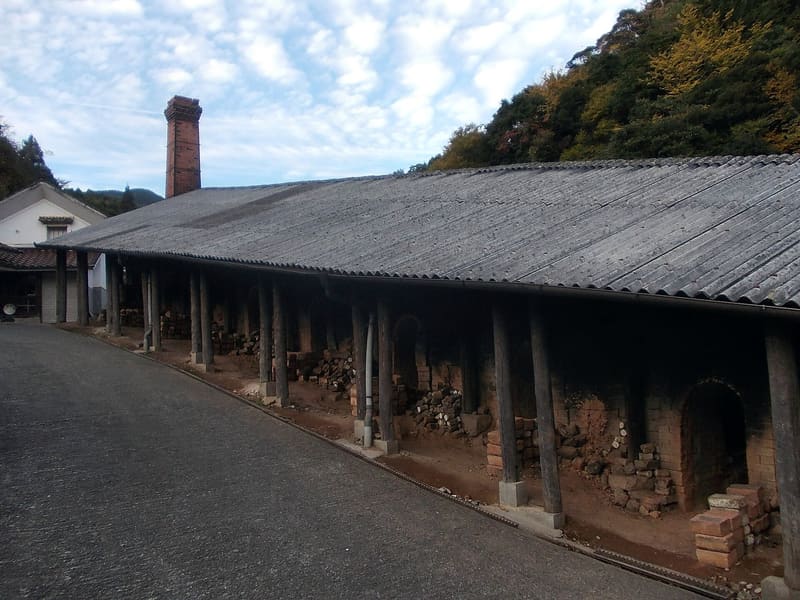
Zero motors: the current crushes the clay, the foot turns the wheel, the kiln is wood-fired.
You climb the valley and the first sign is the sound: the 唐臼 (karausu), wooden mortars driven only by the current of the stream, pound in a row in front of the houses to grind the clay. The district is Sarayama, about ten families who since 1705 have handed down the craft by inheritance, each with its own wood-fired climbing kiln (登り窯, noborigama) on the slope behind the house; the clay itself comes from the mountain behind the village. In 1954 the English potter Bernard Leach came here, and his visit made the village famous throughout Japan.
The village dates from 1705, when a local craftsman brought here the pottery technique of Koishiwara, in present-day Fukuoka Prefecture. Since then the process – water-powered mortars, a wheel turned by foot (蹴轆轤, kerokuro), a wood-fired kiln – has remained without electricity or machines, and the craft is passed down only from father to son, within the same families. On 31 May 1995 the 小鹿田焼 technique was designated by the Japanese government as 重要無形文化財 (Important Intangible Cultural Property); on 28 March 2008 the whole landscape of the village (houses, kilns and the terraced fields of nearby Ikenotsuru) was designated 重要文化的景観 (Important Cultural Landscape), the designation that protects the place as a whole rather than a single building. The rhythmic sound of the mortars was chosen in 1996 as one of the hundred ‘soundscapes of Japan to be preserved’ (日本の音風景100選).
ℹ️ It is a lived-in, working village: do not get in the way of people working at the wheels or the kilns, and do not enter private courtyards without being invited. Walking among the kilns is unrestricted and free; the workshops close on irregular days. The municipal pottery museum is open 9:00–17:00, is free, and is closed on Wednesdays, the following day if that is a public holiday, and from 29 December to 3 January. The 2026 festival is scheduled for 10 and 11 October, 9:00–17:00, with a free shuttle from Hita Station. Free car park; about 30 minutes by car or 50 minutes by bus from the centre of Hita.
🚉 皿山 (Sarayama) · 2 min walk
Holidays in Japan? Plan them with us.Over 2,000 real places, a day-by-day itinerary.FreeOpen the map →Sources: online.bunka.go.jp · online.bunka.go.jp · city.hita.oita.jp · city.hita.oita.jp · city.hita.oita.jp · visit-oita.jp · oidehita.com · pref.oita.jp · story.nakagawa-masashichi.jp · hitask.jp
Nearby
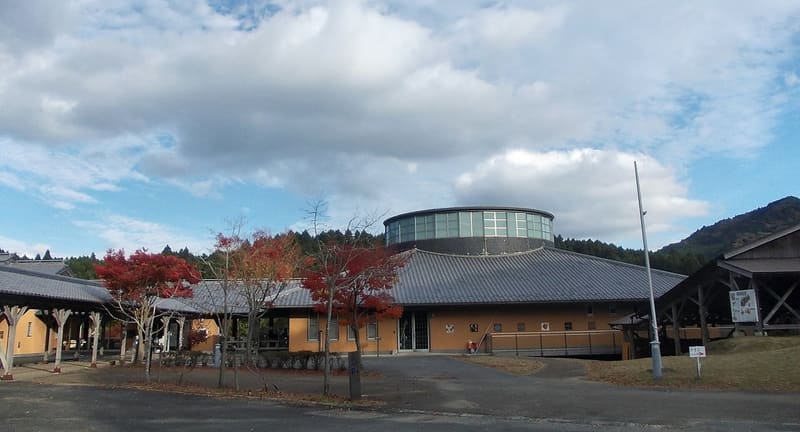 Koishiwara-yaki — Traditional Industry Hall (Tōhō-mura)10.3 kmphoto by STA3816 · CC BY-SA 3.0
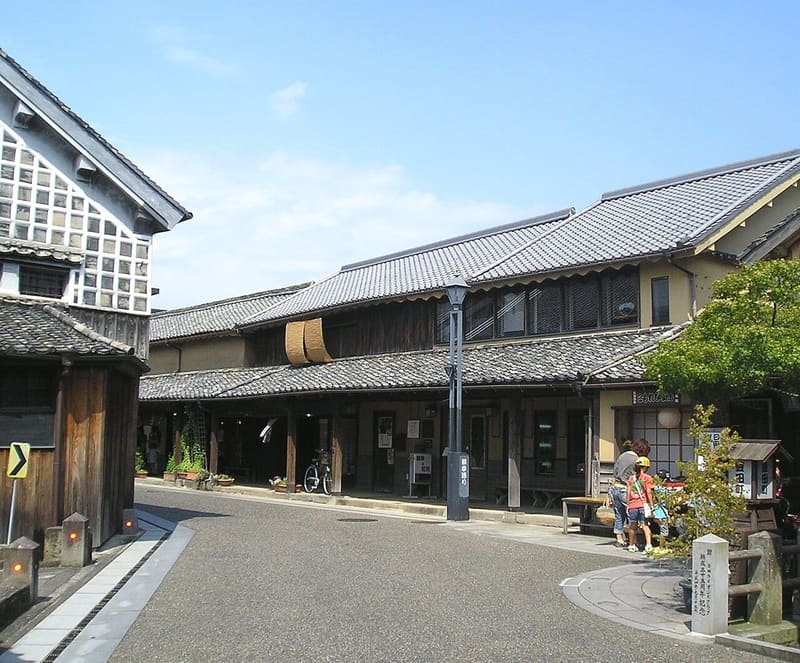 Mameda-machi historic district11.6 kmphoto by STA3816 · CC BY-SA 3.0
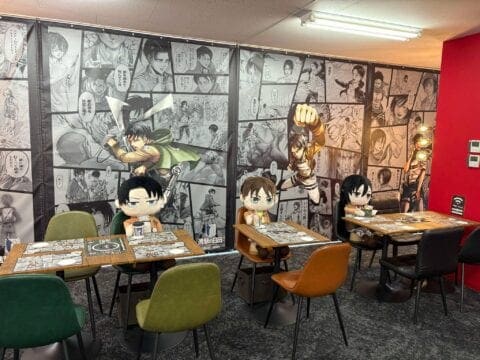 Shingeki no Hita Café12.4 km
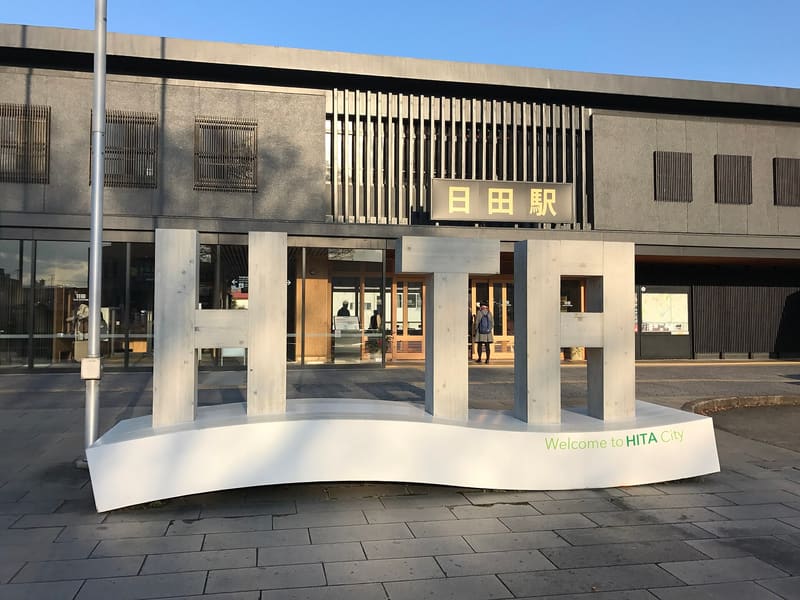 Hita Station South Plaza12.6 kmphoto by そらみみ (Soramimi) · CC BY-SA 4.0