
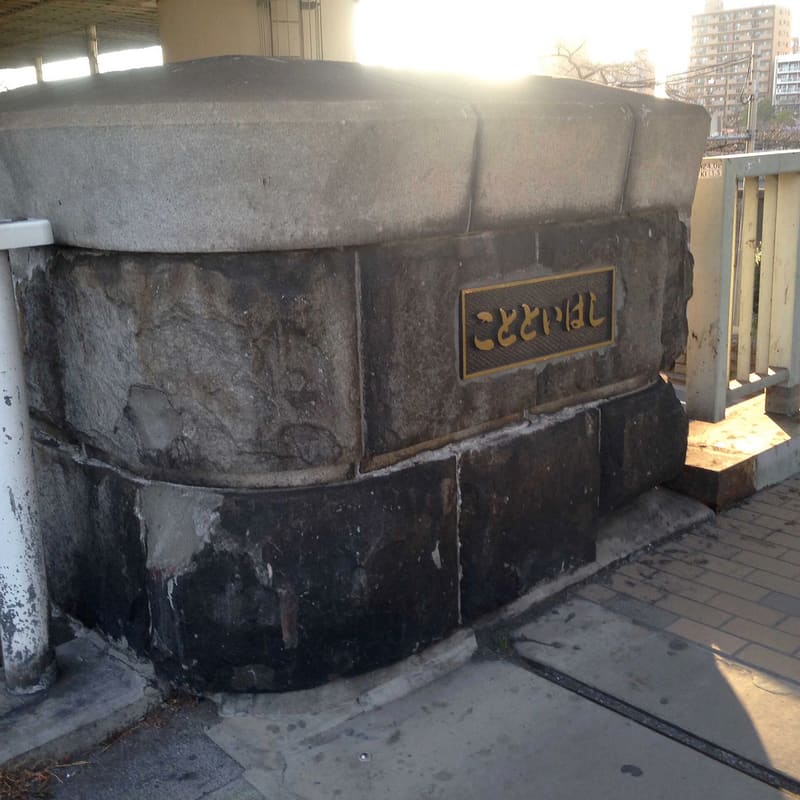
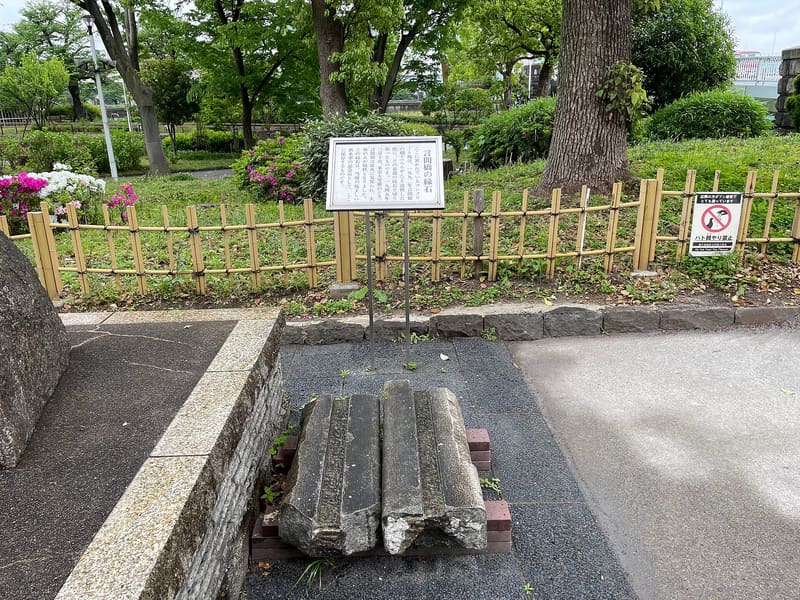
The stones of the parapet have been black since 10 March 1945 and have never been replaced
You reach it from Asakusa, and for the first few steps it looks like just a wide bridge with heavy traffic. Then you look at the corner pillars: the stone is dark, and the darkening rises from the bottom and stops at the height of the parapet. They date from 1928 and have never been replaced. On the bank, inside Sumida Park, a section of that parapet has been removed and put on display with a plaque explaining why it is black.
The bridge was built in 1928 by the reconstruction office, one of many rebuilt in concrete and steel after the Kantō earthquake. On the night of 10 March 1945 incendiary bombs fell on the wooden neighbourhoods on both banks: in one night about a hundred thousand people died. Those fleeing from Asakusa and those fleeing from Mukōjima had the same thought at the same moment, ‘the other side is safe’, and the two crowds ran into each other halfway across the span, where no one could go forward or back. Many threw themselves into the river, which is cold in March. The other thing to know is not on the bridge but in the courts. Those who served in the military, and their families, received pensions and allowances after the war: the figures cited run to tens of trillions of yen. The civilians burned in the air raids received nothing, and the State justifies this with the doctrine of endurance: in war the damage falls on everyone, and so no one is owed compensation. In 2007 seventy-seven survivors and relatives sued the State, asking for an apology and eleven million yen each; they lost at first instance and on appeal, and on 8 May 2013 the Supreme Court dismissed the appeal without even examining the merits. The day before, on 7 May 2013, the government had approved a statement saying that the air raids, although not established as a violation of international law, were ‘incompatible with the humanitarian principles underlying it’. A compensation law for civilians still does not exist in Japan.
ℹ️ Public road: you can cross it at any hour and you pay nothing. Ten minutes on foot from Asakusa Station. The bridge is busy and the pavement narrow: you look at the blackened stones from the pillars at the two ends of the bridge, stepping to one side. The preserved section of parapet and the memorial to the victims are in Sumida Park, on the bank, and not on the bridge: anyone who looks only on the bridge will not find them.
🚉 Asakusa · 8 min walk
Holidays in Japan? Plan them with us.Over 2,000 real places, a day-by-day itinerary.FreeOpen the map →Sources: tokyodeep.info · kur0s1ba-wank0.com · asiapress.org · toyokeizai.net
Nearby
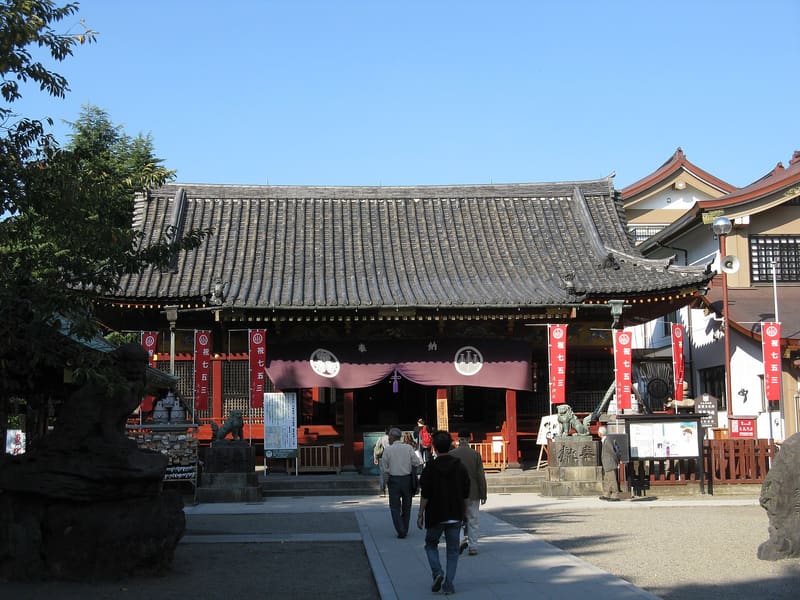 Asakusa Shrine600 mphoto by KENPEI · CC BY 3.0
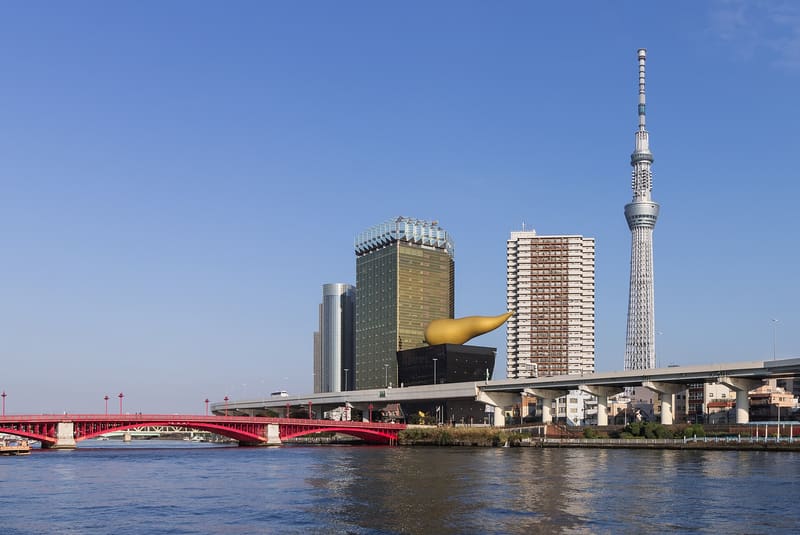 Azuma Bridge (Azuma-bashi) — Asakusa600 mphoto by Kakidai · CC BY-SA 4.0
 Sumida Aquarium700 mphoto by Evelyn-rose · CC0
 Kaminarimon — Asakusa700 mphoto by Arashiyama · CC BY-SA 3.0