
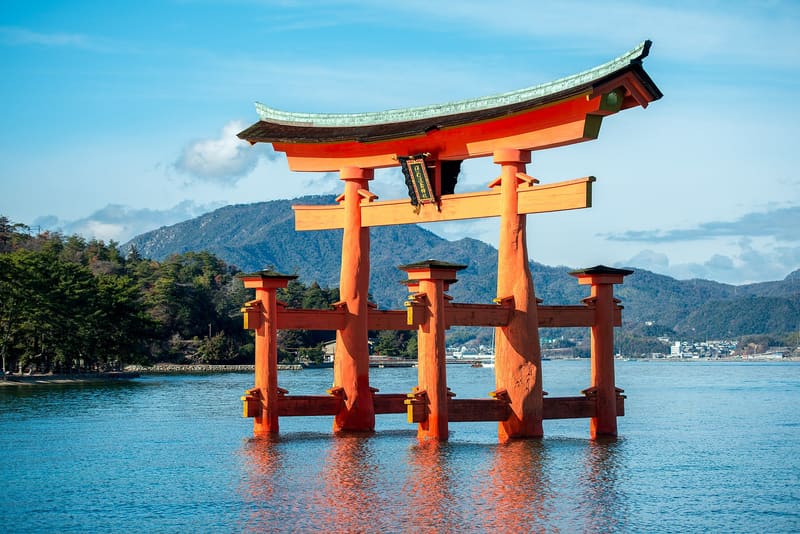
The great torii, 16.6 metres tall and 60 tonnes, is not anchored: it stands by its own weight.
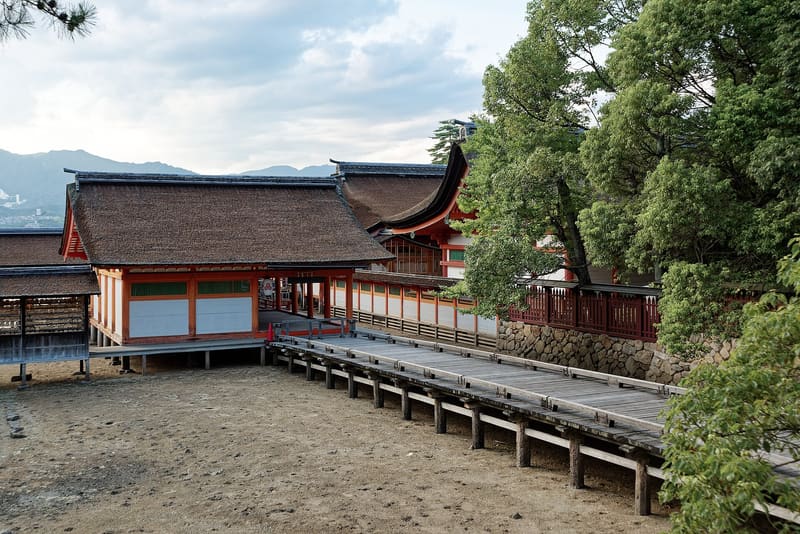
The shrine's covered corridors stand on stilts on the beach, with small gaps in the floor that let the water pressure through at high tide instead of letting it lift the floor. About 160 metres offshore, the great vermilion torii is 16.6 metres tall and weighs about 60 tonnes: the four central pillars are camphor, the side ones cedar, and the structure stands by its own weight alone, without foundations driven into the ground, thanks to hundreds of piles hidden under the sand. At high tide the shrine and the torii seem to float; at low tide you can walk to the foot of the torii.
Founded, according to tradition, in 593, the shrine took on its current appearance (pavilions linked by corridors over the water) in 1168 at the wish of Taira no Kiyomori. It has been a UNESCO World Heritage Site since 1996. The great torii seen offshore is the ninth, in its current form since 1875, and has been restored several times since then.
ℹ️ Opening hours vary by season: 6:30–18:00 (1 March–14 October), 6:30–17:30 (15 October–30 November and 4 January–28 February), 6:30–17:00 (December). Ticket: shrine 300 yen, treasure museum 300 yen, combined 500 yen (adults). Comfortable shoes: heels risk getting caught in the gaps in the floor.
🚉 Miyajimaguchi · 27 min walk
Holidays in Japan? Plan them with us.Over 2,000 real places, a day-by-day itinerary.FreeOpen the map →Sources: itsukushimajinja.jp · miyajima.or.jp · miyajima.or.jp
Nearby
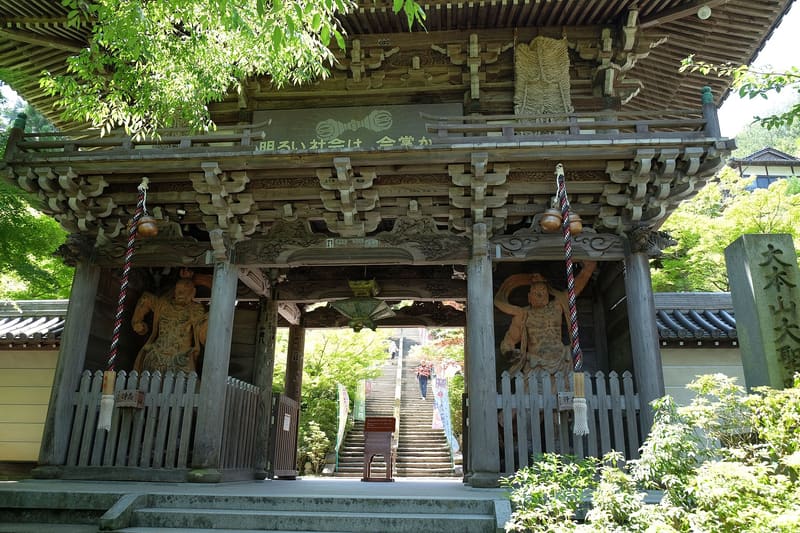 Daishō-in1000 mphoto by sk01 · CC BY-SA 3.0
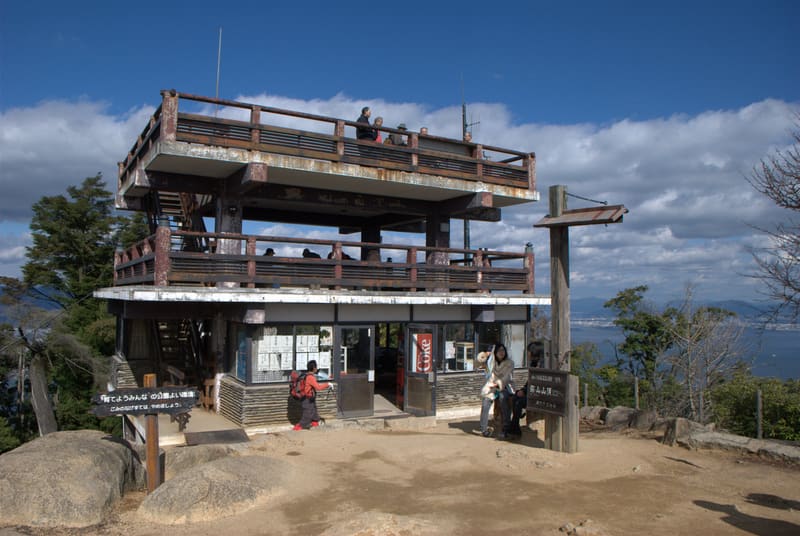 Mount Misen1.8 kmphoto by OS6 · CC BY-SA 3.0
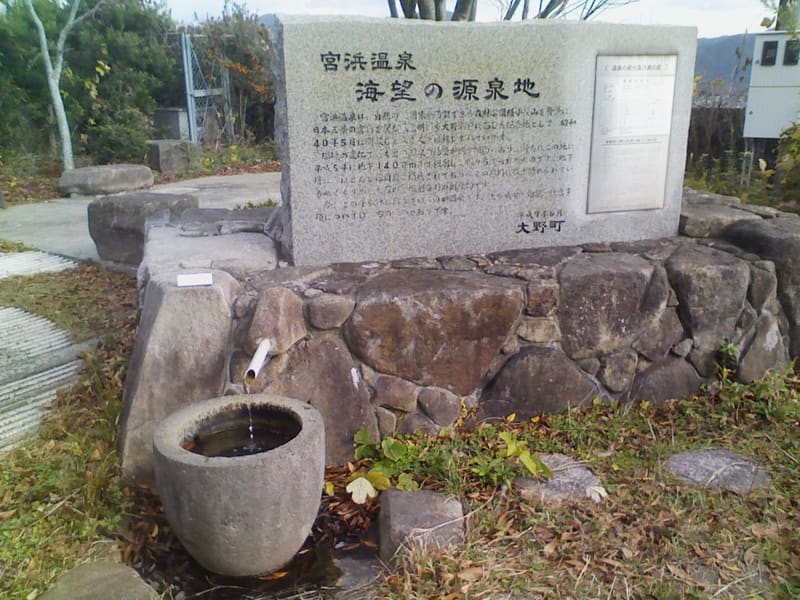 Miyahama Onsen6.6 kmphoto by noppo3 · CC BY-SA 3.0
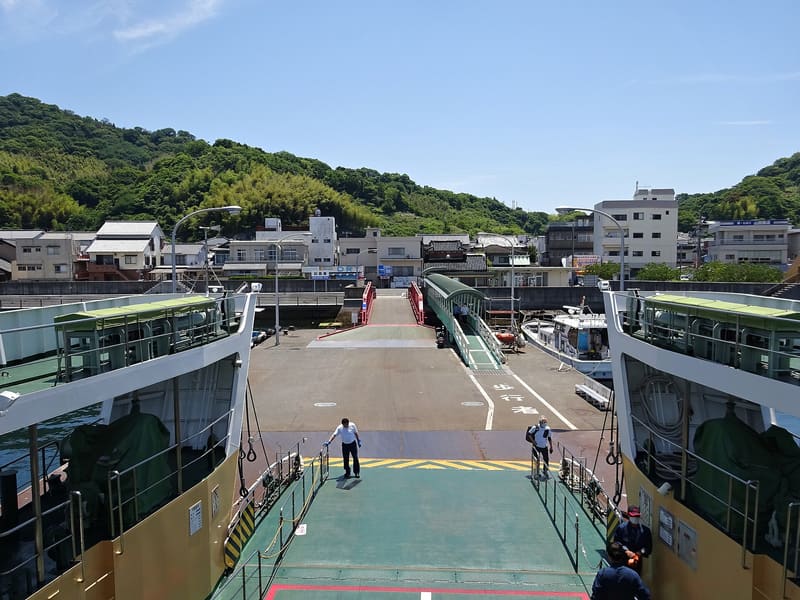 Ninoshima10.5 kmphoto by ブルーノ・プラス (Bruno Plus) · CC BY 4.0