
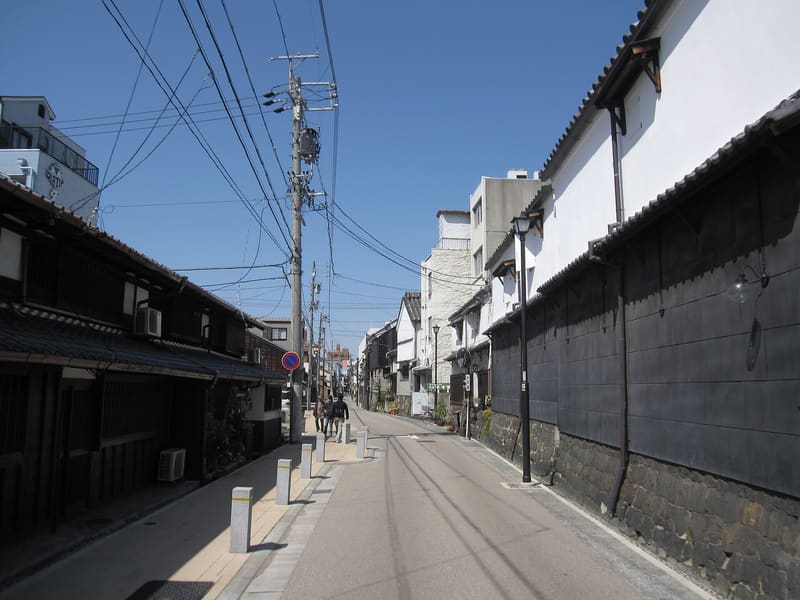
After the fire of 1700 the street was widened to seven metres: that way the fire could not jump across.
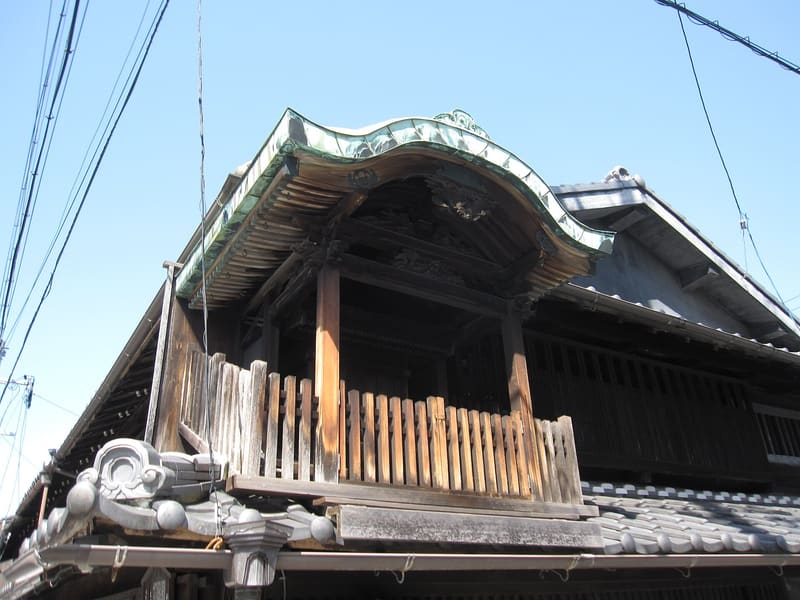
Along the east side runs a stone wall one metre high, and on top of the wall a row of storehouses with white plaster and black roofs. This is not decoration: the clan that ruled Nagoya wanted them there as a barrier against fire, to protect the houses opposite. To the west, alleys two metres wide open off the street, where someone has put a shrine on the roof and someone else has opened a café in a hundred-year-old house.
Shikemichi came into being with Nagoya Castle, completed in 1610, and lived off the Horikawa canal, which flows one block away: the canal was dug to carry materials to the castle building site and then remained the waterway between the port and the city, so the merchants built their storehouses here. The name came later: after the great fire of 1700 the street was widened to four ken (the ken is the unit used to measure Japanese houses, about 1.8 metres), that is, to a good seven metres, to stop the flames jumping from one side to the other. Shikemichi means just that: ‘the street of four ken’. The district was not bombed in the war and came out of it with its storehouses still standing. In 1986 the Municipality of Nagoya protected 2.8 hectares of it as a townscape preservation district. Two rare things survive in the alleys: the yanegami-sama, tiny shrines hoisted onto the roofs of houses, a custom of this region, and a Jizō, the stone statue of the deity people pray to for children.
ℹ️ Fifteen minutes’ walk from Nagoya Station, or five from exit 2 of Kokusai Center Station on the Sakura-dōri Line; the Meguru sightseeing bus has a stop named after the district. There is nothing to pay and nothing to book: you just walk around, a good half hour, a good hour if you add the Endōji arcade, which is one bridge away. The two main streets are one-way and cars drive along them, and the municipal tourism office warns you to watch out: do not walk in the middle of the road. At the southern end is Sengen Shrine, from 1647, with camphor trees and zelkovas about three hundred years old. The cafés set up in the old houses keep their own hours, which are often short.
🚉 Kokusai Center (International Center) · 6 min walk
Holidays in Japan? Plan them with us.Over 2,000 real places, a day-by-day itinerary.FreeOpen the map →Sources: city.nagoya.jp · nagoya-info.jp · aichinow.pref.aichi.jp
Nearby
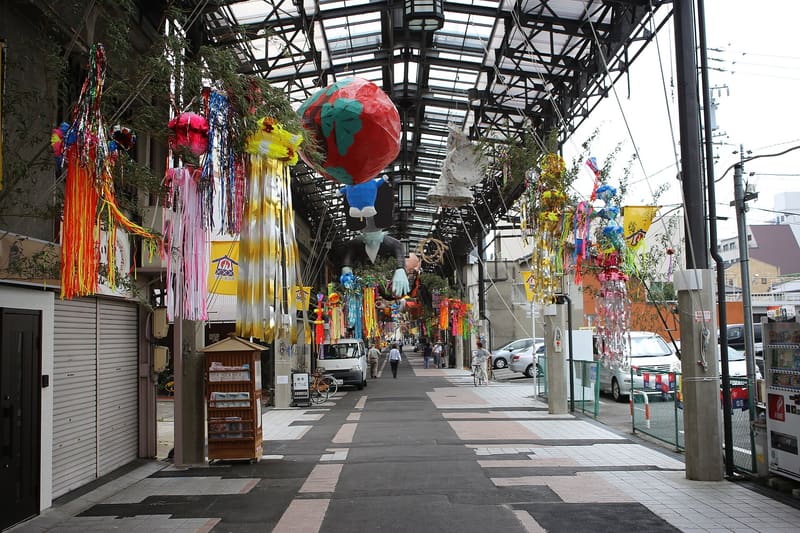 Endōji Arcade100 mphoto by 円周率3パーセント · CC BY-SA 4.0
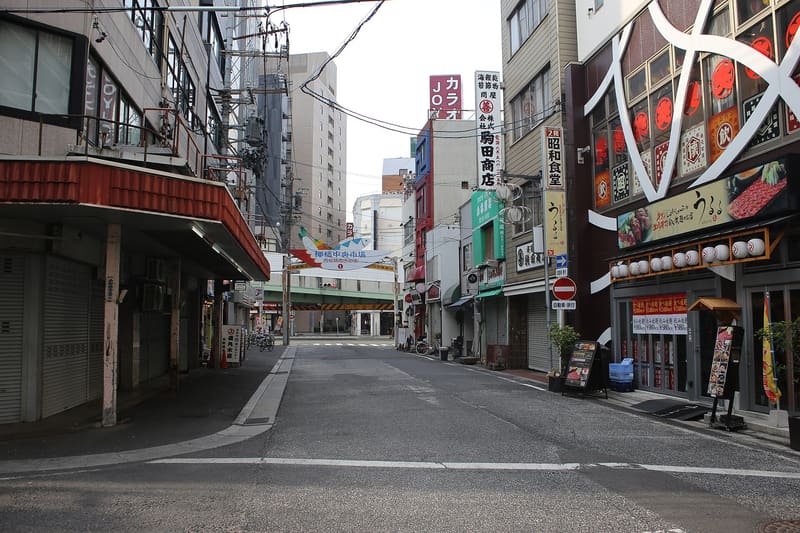 Yanagibashi Central Market700 mphoto by 円周率3パーセント · CC BY-SA 4.0
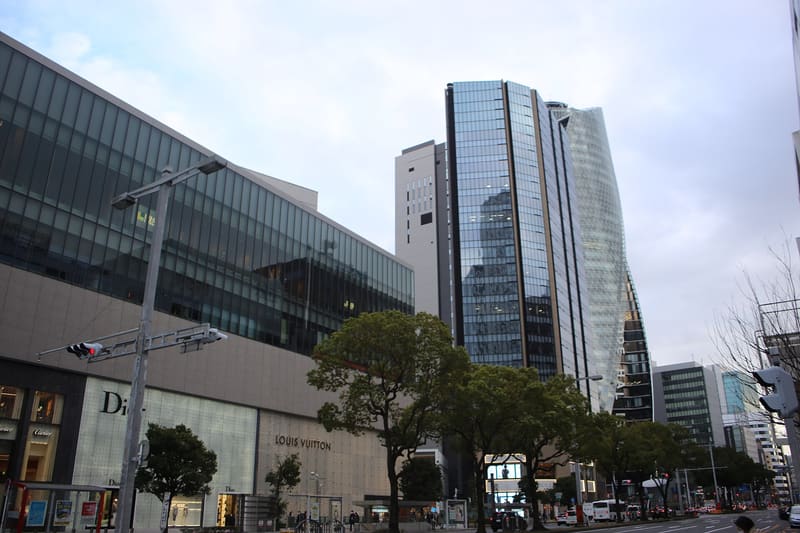 Sky Promenade, Midland Square800 mphoto by 円周率3パーセント · CC BY-SA 4.0
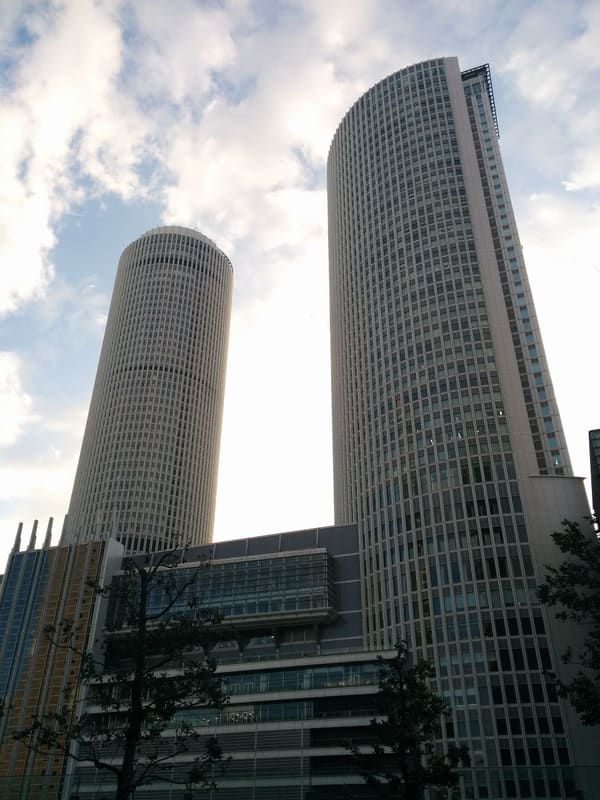 JR Central Towers1000 mphoto by Pvcba · CC0