
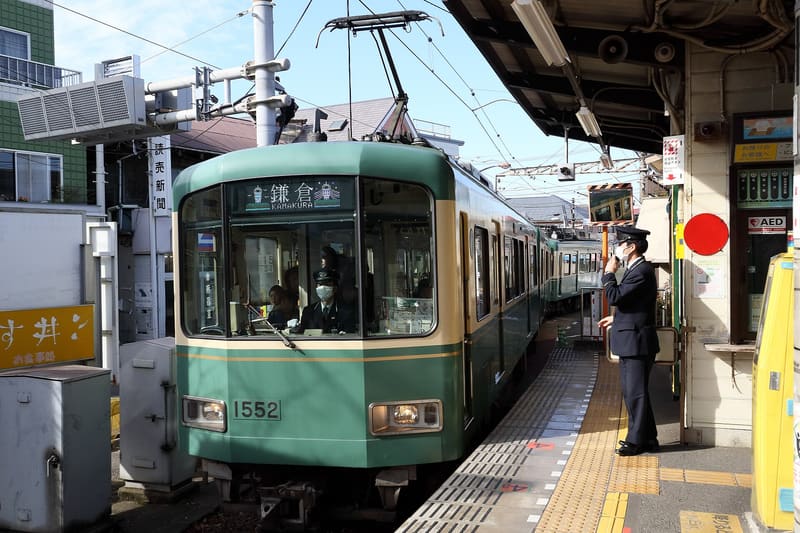
Ten kilometres right up against the houses: in some stretches the track is the pavement.
It is not a rebuilt tourist railway: it is a tram that has kept the route of a century ago, and that route ran where the houses now stand. So the train brushes past walls, crosses someone's front entrance, and on some stretches nothing separates the track from the pavement. When you travel from Kamakura towards Fujisawa the sea is on the left, but the seats are benches along the sides: anyone who wants to see it stays standing at the window.
Ten kilometres and fifteen stations between Kamakura and Fujisawa, along the coast. The full route takes thirty-four minutes. Since 1949 it has been the line linking central Kamakura with Hase, Shichirigahama, Koshigoe and Enoshima, that is, almost all the coastal places on this map.
ℹ️ A single fare is between 190 and 310 yen depending on distance. There is a one-day ticket for the line, and combined passes with Odakyū. ⚠️ At weekends and over long holiday weekends there are long queues to board, and the carriages are terrible with luggage. Many eateries along the line close between 14:00 and 15:00. At the Kamakura-kōkōmae level crossing it is forbidden to stop in the middle of the road to take photos and to step onto the tracks.
🚉 Kamakura · 1 min walk
Holidays in Japan? Plan them with us.Over 2,000 real places, a day-by-day itinerary.FreeOpen the map →Sources: enoden.co.jp · travel.gaijinpot.com · tripadvisor.com
Nearby
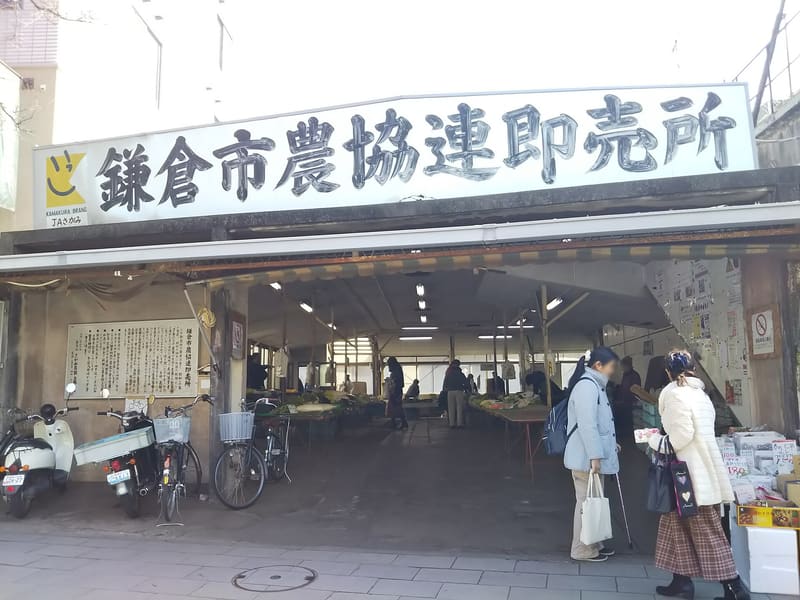 Kamakura Farmers' Market, the Renbai200 mphoto by 妖精書士 · CC0
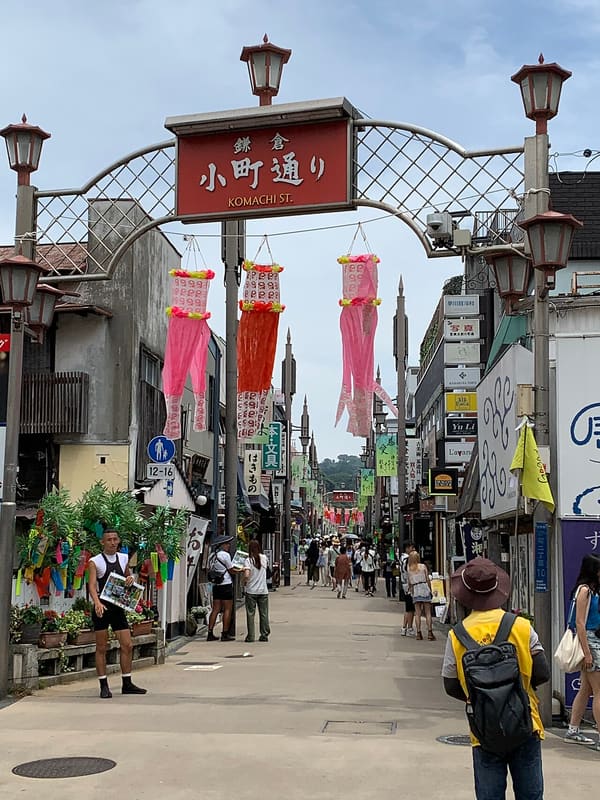 Komachi-dori300 mphoto by ARandomName123 · CC BY-SA 4.0
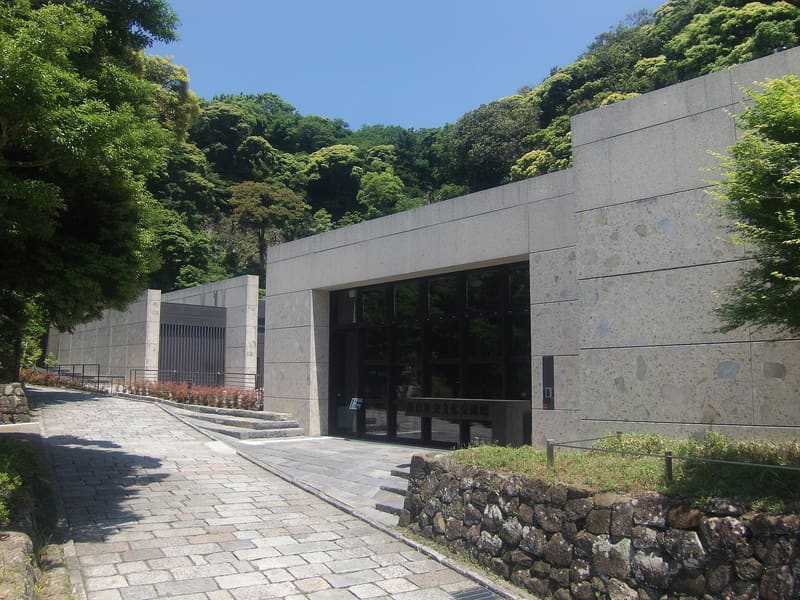 Kamakura Museum of History and Culture500 mphoto by Indiana jo · CC BY-SA 4.0
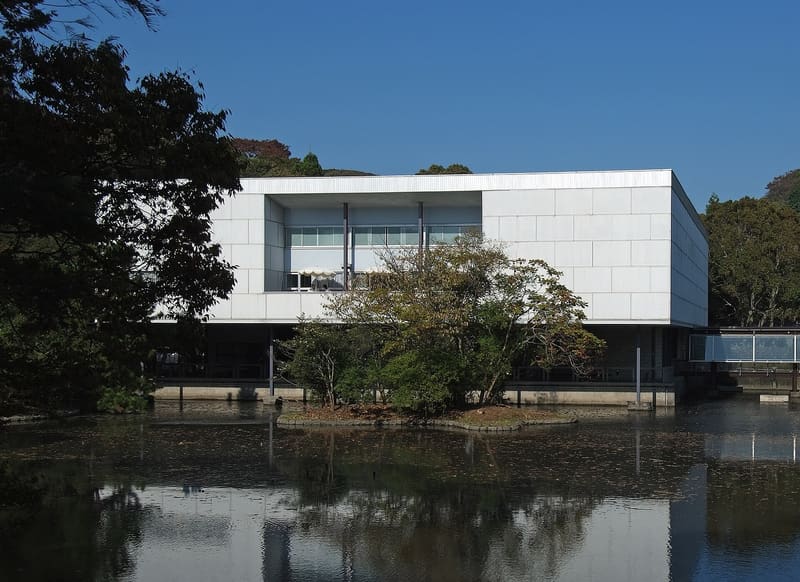 Kamakura Bunkakan Tsurugaoka Museum800 mphoto by Wiiii · CC BY-SA 3.0