
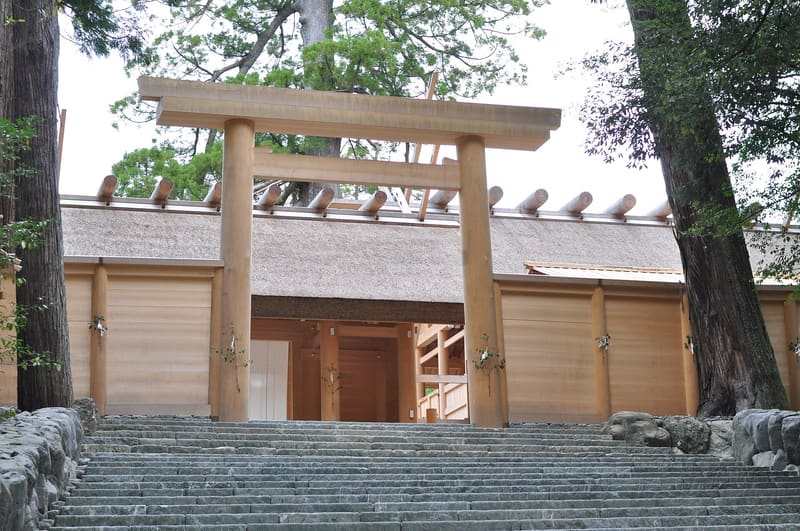
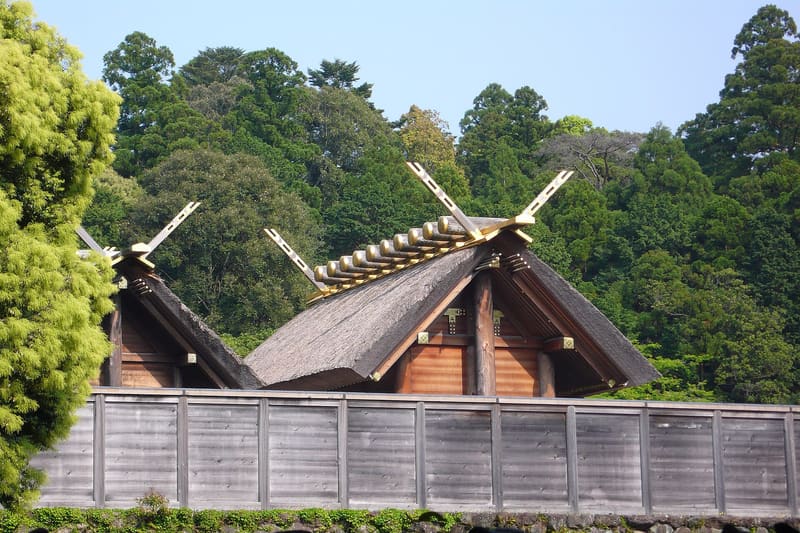
Every 20 years the shrine is rebuilt exactly the same: the last time, the 62nd, was in 2013.
On arrival you cross the Uji Bridge and walk through the sacred forest before reaching the main sanctuary, which is never seen up close: only a thatched roof beyond a white fence, without nails or paint. Every 20 years the building is rebuilt exactly the same on an adjacent twin plot, and the old one is dismantled: the last time, the 62nd since 690, was in 2013. The mirror that tradition says is kept here is shown to no one, not even the emperor.
The Naiku (内宮), formally Kōtai Jingū, is dedicated to Amaterasu, the sun goddess from whom the imperial house claims descent. It is the most important of the 125 shrines (2 main shrines, 14 betsugū, 43 sessha, 24 massha, 42 shokansha) that make up the Ise Jingū complex, spread across four cities in the prefecture. The complex is not part of Japan's cultural property system: the law protects what does not change, and here the identity of the place lies precisely in remaking itself identical every 20 years (式年遷宮, Shikinen Sengū).
ℹ️ Free entry. Open 5:00–17:00 in the winter months, extended to 18:00 from January to April and in September. The main sanctuary alone takes 30–45 minutes; with the subsidiary shrines (別宮), 45–90 minutes. Photography is forbidden beyond the second fence.
Holidays in Japan? Plan them with us.Over 2,000 real places, a day-by-day itinerary.FreeOpen the map →Sources: isejingu.or.jp · ja.wikipedia.org
Nearby
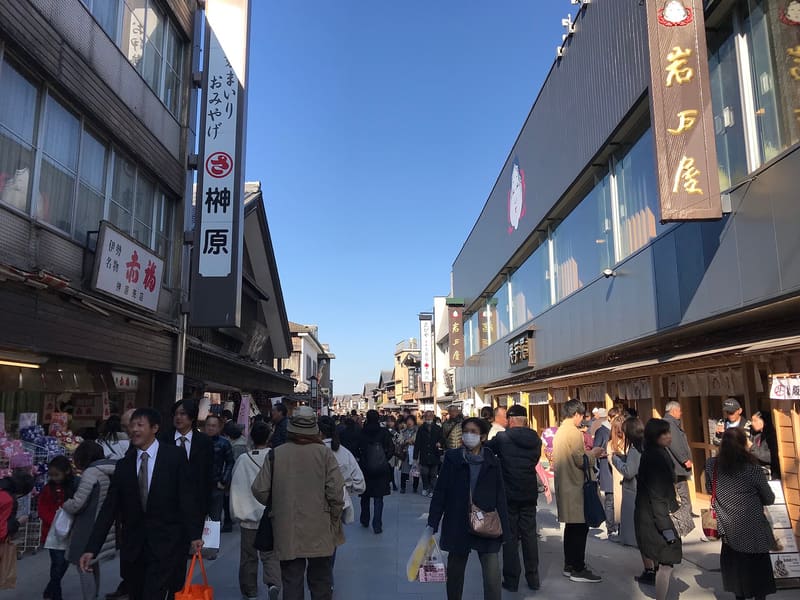 Oharaimachi and Okage Yokocho4.4 kmphoto by そらみみ · CC BY-SA 4.0
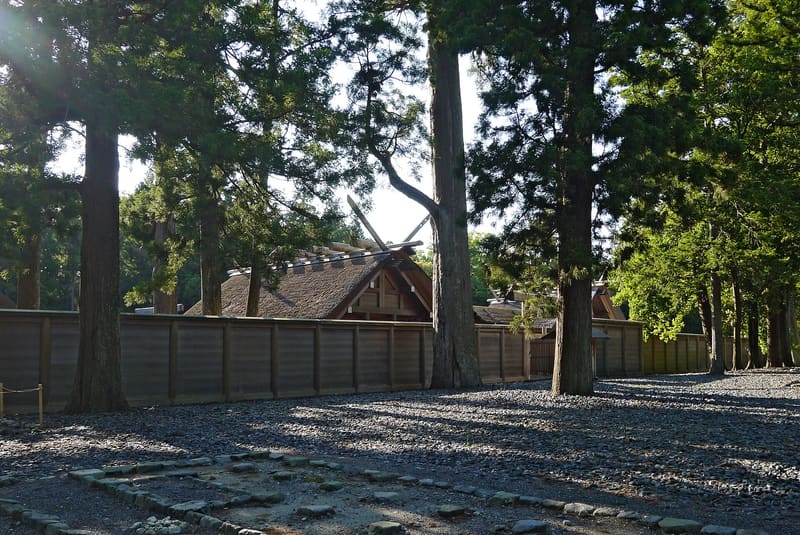 Ise Jingu Geku7.3 kmphoto by Oilstreet · CC BY 2.5
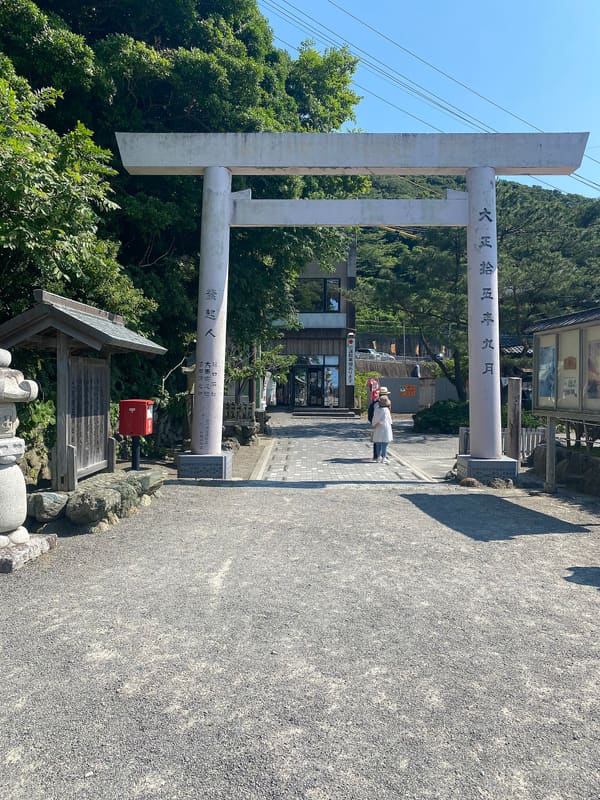 Futami Okitama Jinja — Meoto Iwa8.1 kmphoto by Immanuelle · CC BY 4.0
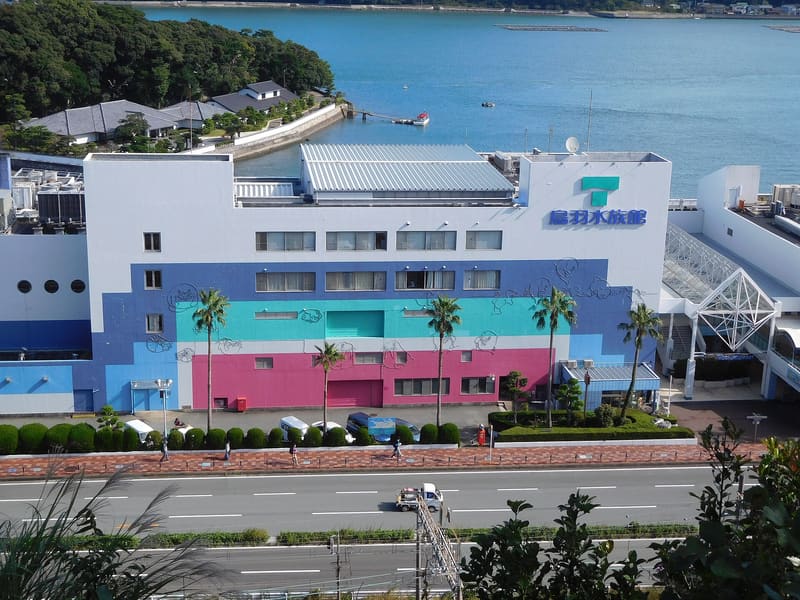 Toba Aquarium8.9 kmphoto by Miyuki Meinaka · CC BY-SA 4.0