
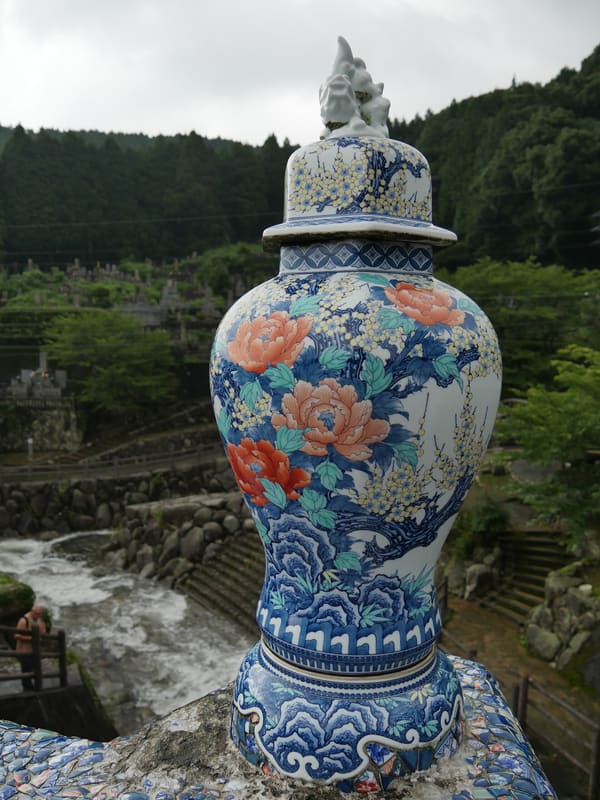
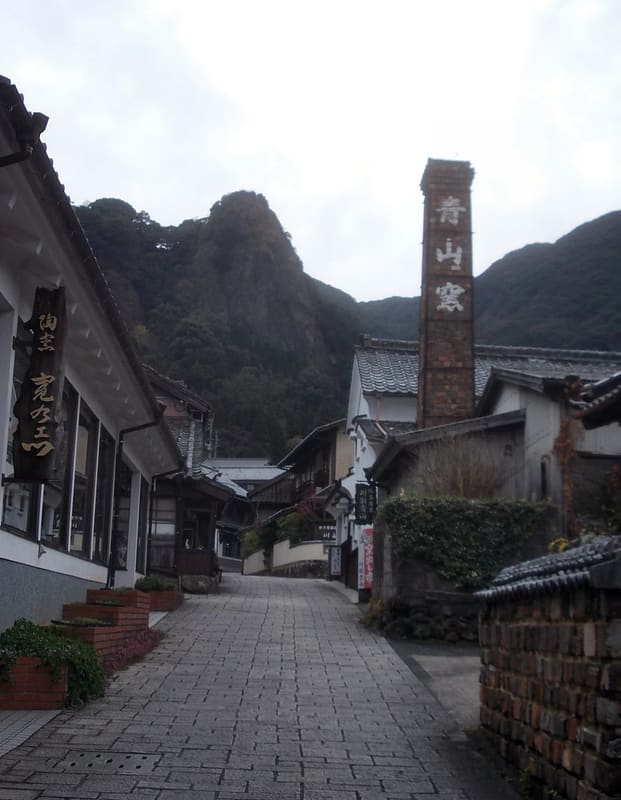
From 1675 to 1871, the secret Nabeshima kiln: no entry for anyone who was not a craftsman.
The road climbs into a rocky gorge where about thirty kilns still work today, among ceramic signs and brick chimneys. In 1675 the Nabeshima clan moved its official kiln here, the one that produced the Nabeshima porcelain reserved for the shogun and allied lords: craftsmen from the other kilns of Arita and Imari were forbidden to enter, so that techniques and designs guarded for two centuries would not leak out.
An isolated valley chosen by the Saga domain in 1675 (Enpō 3) as the seat of the secret official kiln of the Nabeshima clan, in operation until the abolition of the domains in 1871, with about 31 workers, counting potters, decorators and apprentices. Today some thirty workshops operate here, carrying on the tradition of Nabeshima porcelain, whose contemporary transmission includes a Living National Treasure (the 14th Imaemon, 2014).
ℹ️ You can walk freely along the main street; shops and kilns keep their own hours (roughly 9:00–17:00). Bus from Imari (15–20 minutes) or car; car parks along the road.
🚉 Okawachiyama · 22 min walk
Holidays in Japan? Plan them with us.Over 2,000 real places, a day-by-day itinerary.FreeOpen the map →Sources: ja.wikipedia.org
Nearby
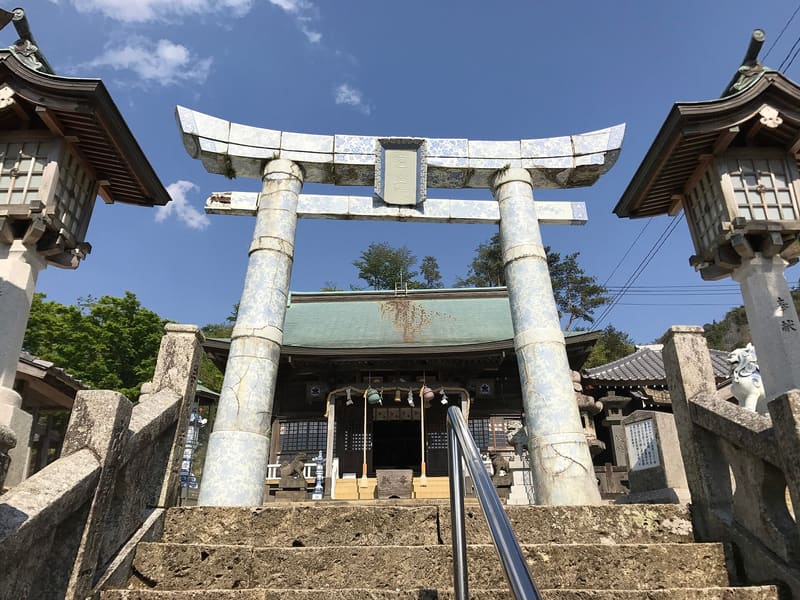 Sueyama Shrine, the porcelain torii5.8 kmphoto by そらみみ · CC BY-SA 4.0
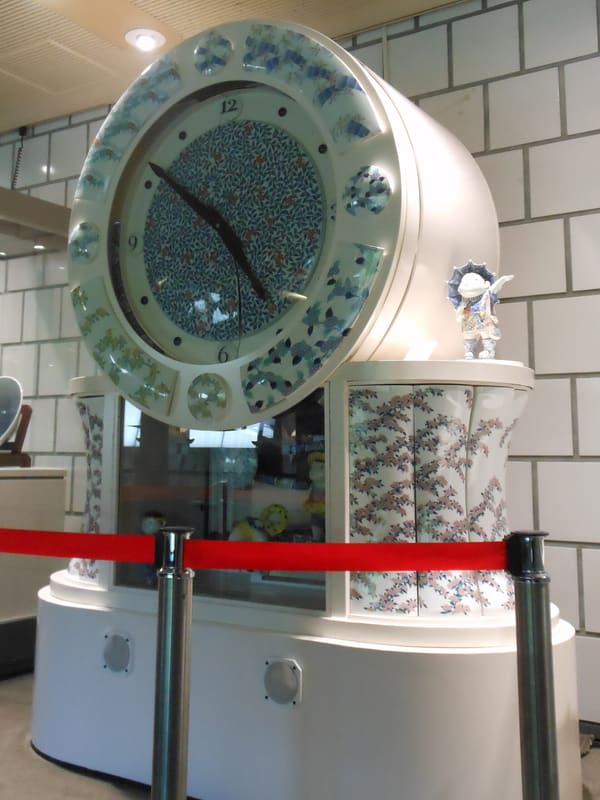 Kyūshū Ceramic Museum7 kmphoto by Pekachu · CC BY-SA 4.0
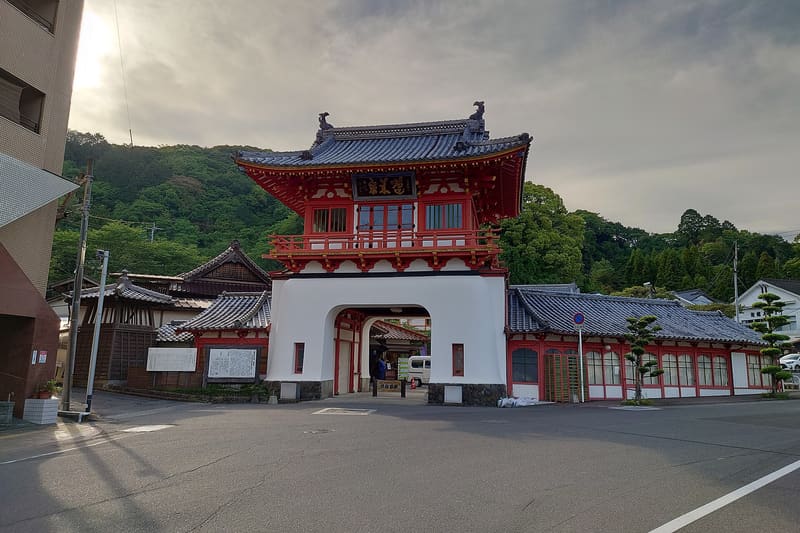 Takeo Onsen Rōmon Gate12.1 kmphoto by Viy4092 · CC BY-SA 4.0
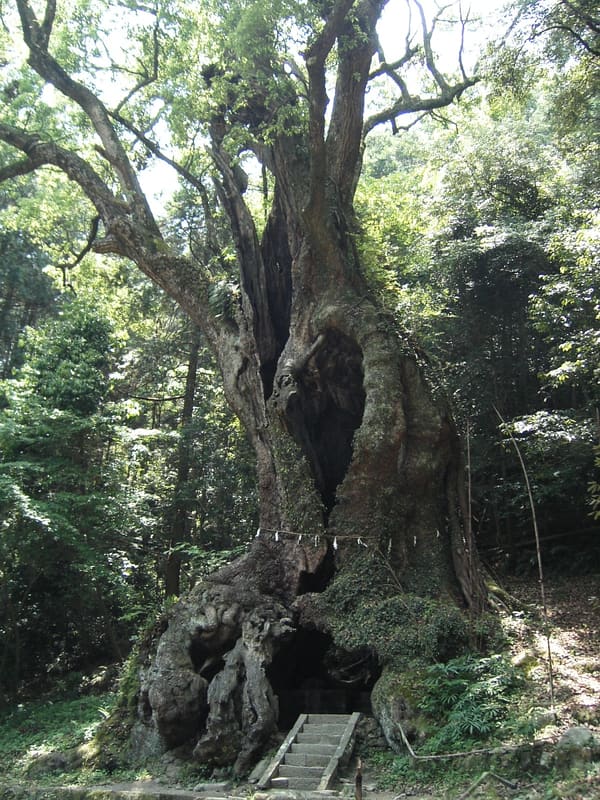 Great Camphor Tree of Takeo13.1 kmphoto by UltraH · CC BY-SA 3.0