
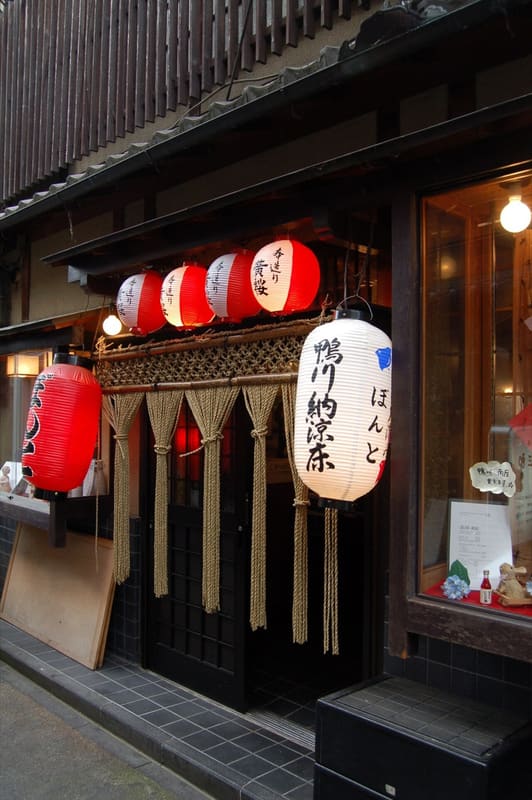
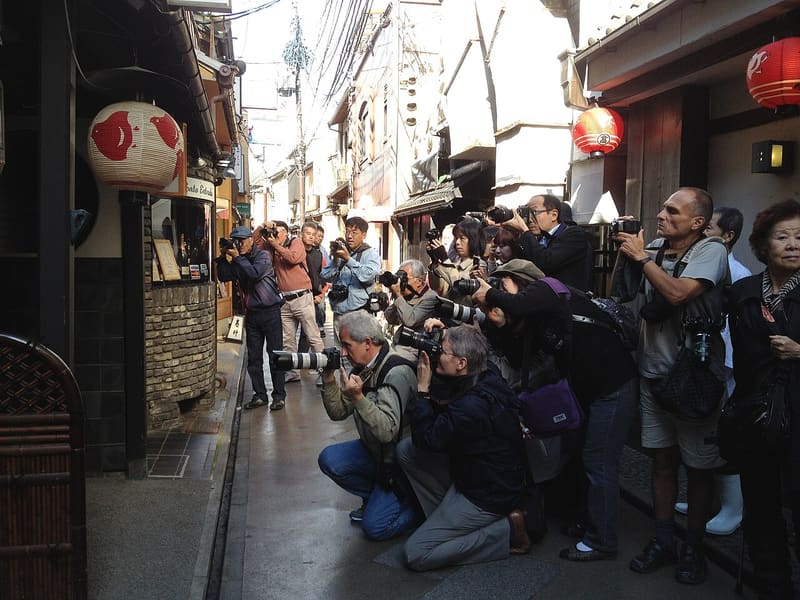
500 metres between two rivers: the name comes, they say, from the ‘pon’ of a drum struck between them.
The alley, just under two metres wide and about 550 long, runs narrowly between the Kamo River and the Takase Canal, and it is one of the five historic districts of geiko and maiko (the geisha of Kyoto and the apprentices who accompany them), along with Gion. Several explanations circulate for the name: one derives it from a play on words between the two watercourses (皮, ‘skin’, also for the rivers) and the ‘pon’ sound of a drum struck between two stretched skins; another from the Portuguese ponta, ‘point’. The first teahouses appeared in 1712 and official permission for geiko came in 1813. From May to September, the restaurants on the Kamo side open terraces suspended over the water (川床, kawadoko), a tradition shared with other establishments in the city along the same river.
The alley came into being after the embankment works on the Kamo and the Takase in 1670, when the reclaimed land was built up with terraced houses; today it is as much a place to eat as a traditional entertainment district that is still active.
ℹ️ A public alley, open at all times. The venues keep their own hours, mostly in the evening; the river terraces (kawadoko) operate from May to September.
🚉 Kyoto Kawaramachi · 2 min walk
Holidays in Japan? Plan them with us.Over 2,000 real places, a day-by-day itinerary.FreeOpen the map →Sources: kamogawa-odori.com · ja.wikipedia.org
Nearby
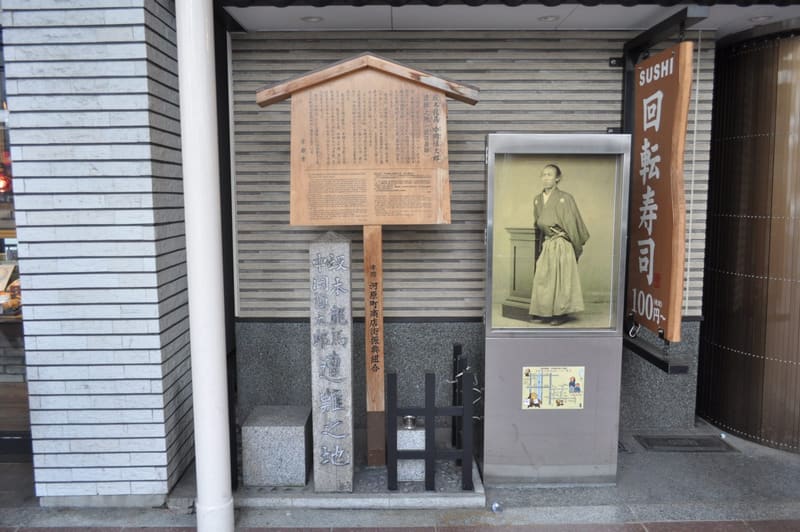 Ōmiya Site — ambush on Sakamoto Ryōma200 mphoto by Tokuzo in Edo Village (江戸村のとくぞう) · CC BY-SA 4.0
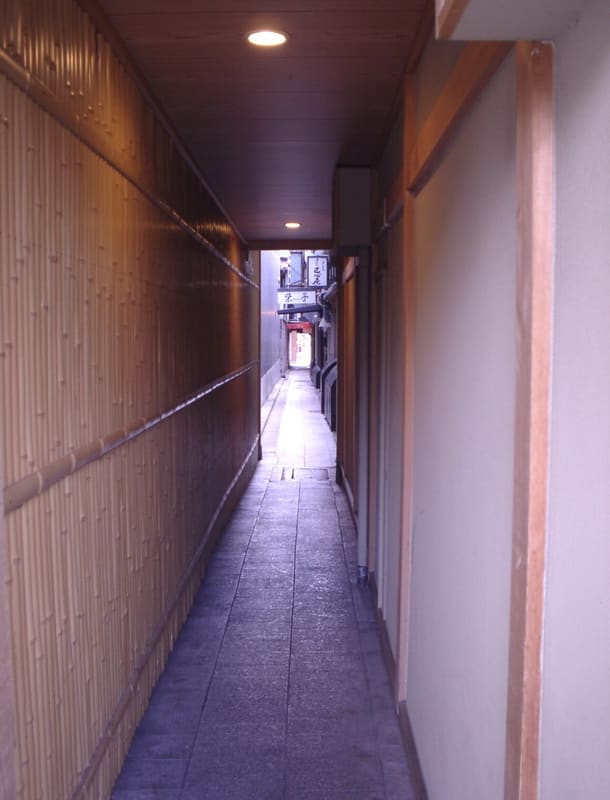 Gion and Hanamikoji-dori400 mphoto by yasui · CC BY-SA 3.0
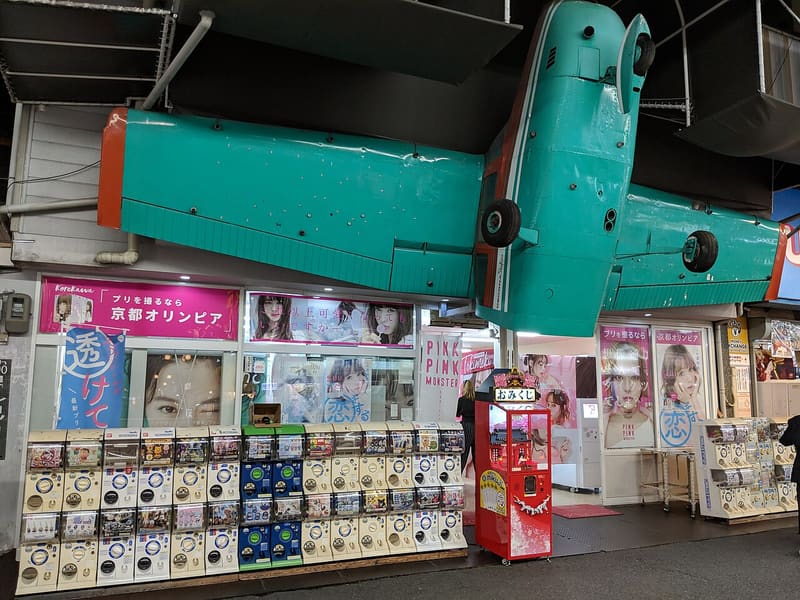 Teramachi and Shinkyogoku400 mphoto by Michael Ocampo from United States · CC BY 2.0
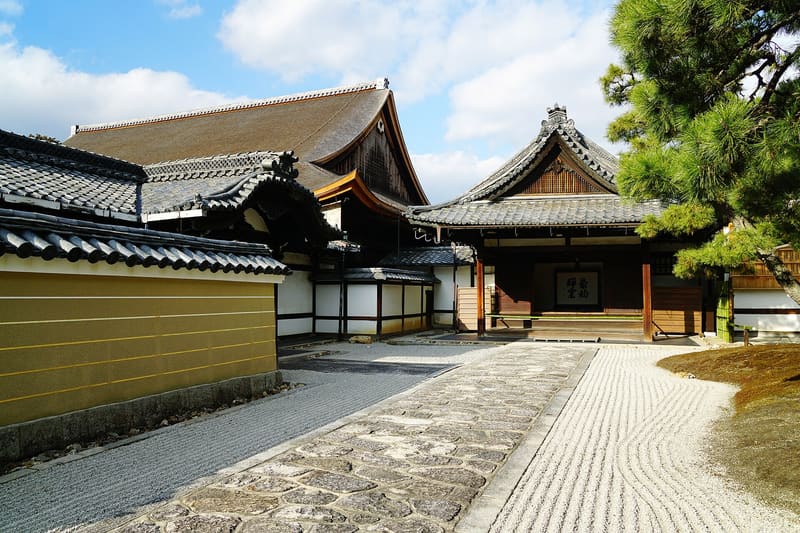 Kennin-ji500 mphoto by 663highland · CC BY-SA 4.0